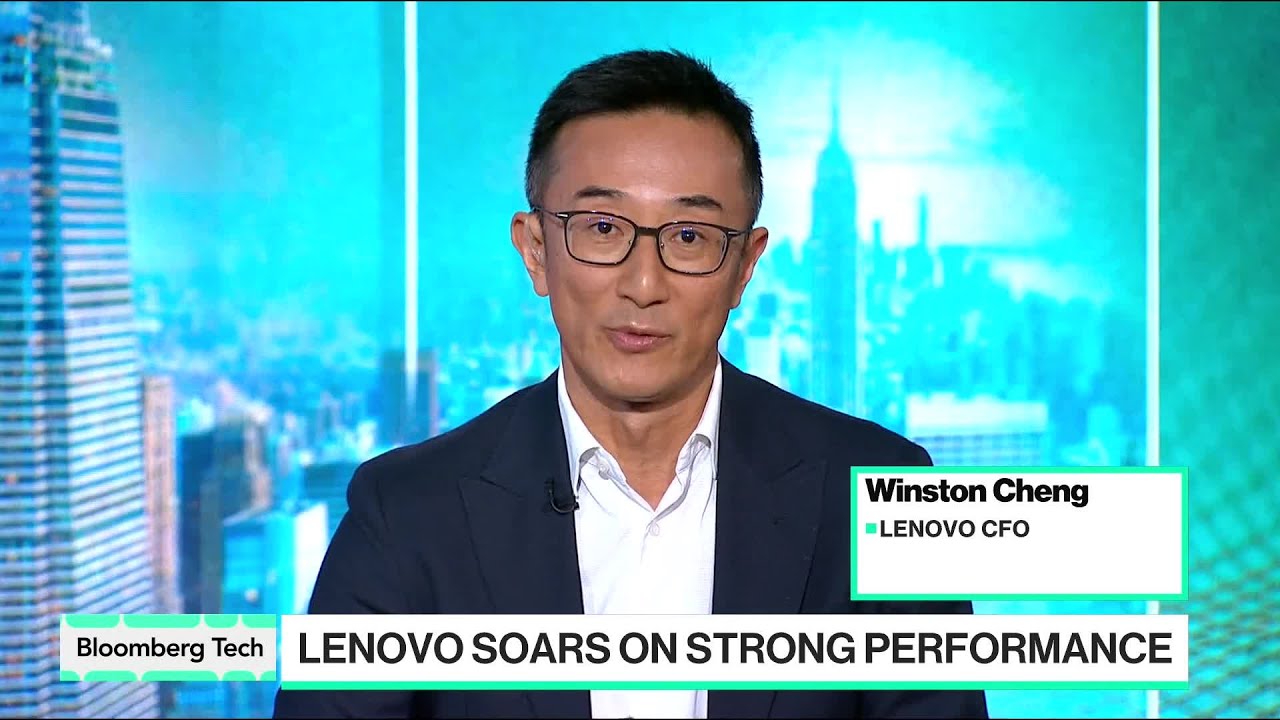
Winston Cheng, CFO of Lenovo, discusses the company’s evolving role beyond being the world’s leading PC maker, emphasizing its comprehensive portfolio that spans PCs, tablets, and smartphones. This diverse product range forms the foundation for Lenovo’s AI-related devices and infrastructure, supporting a hybrid strategy that extends from personal devices to cloud computing. Lenovo’s infrastructure business, particularly in AI training and inference, has shown significant growth, contributing to the company’s strong market performance.
Cheng highlights that Lenovo views the current period as the “AI decade,” marking the beginning of a long-term journey fueled by over a decade of investment in AI capabilities. The company’s unique ability to produce AI devices and infrastructure at scale globally, combined with its acquisition of IBM’s server business in 2015, positions Lenovo well to serve both hyperscalers and enterprises. This foundation includes advanced technologies like industry-leading liquid cooling, which supports high-performance computing essential for AI workloads.
Addressing the impact of AI on PC demand, Cheng notes that AI-related revenues accounted for about 38% of Lenovo’s total revenues in the last quarter, with AI PCs playing a significant role. As AI training and capabilities advance, the need for higher-performance devices to interact with AI agents is driving enterprise demand for new PCs. Lenovo is actively engaging with AI companies and forming partnerships to capitalize on this trend, reflecting a broader industry shift toward integrating AI into everyday computing.
Regarding supply chain challenges, Cheng acknowledges that the surge in AI infrastructure development is causing component shortages, particularly in memory, CPUs, and GPUs. This imbalance has led to increased memory prices, which Lenovo can pass through in its infrastructure business due to strong demand and pricing power. However, on the consumer device side, supply constraints have impacted market shares, especially in lower-end segments, as reflected in recent IDC data.
Finally, Cheng explains how Lenovo manages internal competition for scarce components like high-bandwidth memory across its diverse business lines. The company’s broad portfolio and strategic partnerships with suppliers enable accurate demand forecasting and supply allocation. Lenovo prioritizes maintaining supply for its flagship products, such as the ThinkPad, ensuring long-term customer satisfaction while balancing the needs of both its PC and infrastructure businesses.