The video, presented by Richard from The Plain Bagel, explores the current state of the artificial intelligence (AI) industry and addresses concerns about whether we are in an AI bubble similar to the dotcom bubble of 2000. Since the launch of ChatGPT three years ago, generative AI has advanced rapidly, with AI-generated images and videos improving significantly and large language models becoming sophisticated enough to replace certain workflows, leading to layoffs in some companies. Despite this progress, many investors and institutions, including Bank of America, the International Monetary Fund, and the Bank of England, have expressed concerns about soaring valuations and the sustainability of the AI market. Even prominent figures like Michael Burry and OpenAI’s CEO Sam Altman have acknowledged the possibility of a bubble.
The AI ecosystem is composed of several key players: AI chip manufacturers like Nvidia and AMD, infrastructure providers such as Amazon, Microsoft, and Oracle, and AI companies themselves, ranging from large firms like Meta to numerous startups including OpenAI and Anthropic. OpenAI, despite being the most successful AI company, operates at a significant loss and is heavily reliant on investor funding to support its ambitious expansion plans, including massive data center buildouts and multi-billion-dollar deals for compute power and chips. The scale of investment is staggering, with estimates suggesting that AI-related capital expenditures could reach $7 trillion globally over five years, representing a substantial portion of total capital spending in the U.S.
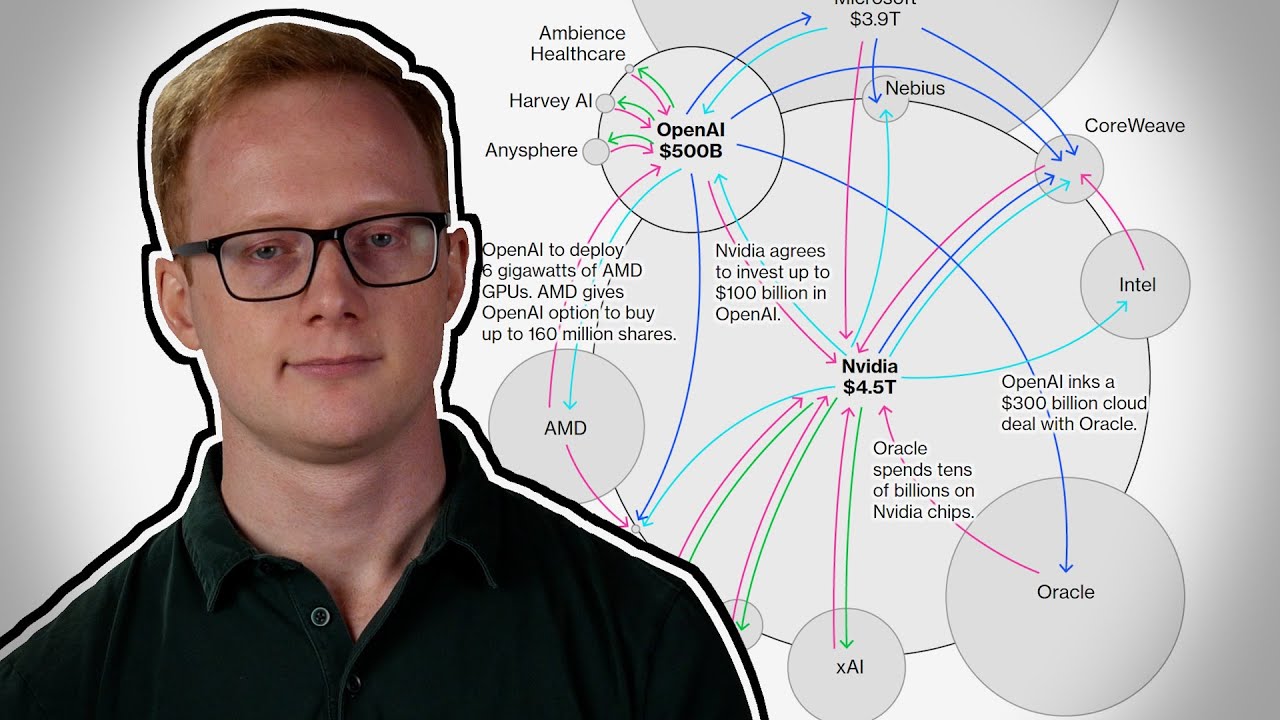
A notable concern highlighted in the video is the circular financial relationships within the AI industry, particularly involving Nvidia. Nvidia invests in AI companies that, in turn, purchase its chips, creating a feedback loop that raises questions about the sustainability and transparency of profits. This vendor financing approach, reminiscent of tactics used during the dotcom bubble, could potentially mask the true financial health of these companies. Additionally, the rapid buildout of AI infrastructure faces practical challenges such as electricity supply constraints, regulatory hurdles for power plants, and the short lifespan of cutting-edge hardware, all of which could impact the industry’s growth and profitability.
Despite these risks, there are important differences between the current AI market and the dotcom bubble. Valuations, while high, have not yet reached the extreme levels seen in 2000, and many large tech companies backing AI ventures have strong financials, including substantial cash reserves and relatively low debt. Improved reporting standards and a different economic environment also distinguish today’s market. While some AI companies remain unprofitable, the overall tech sector is generating significant cash flow, which provides a buffer against potential downturns. Nvidia’s investments in the AI ecosystem can be seen as strategic moves to foster future demand rather than purely speculative financing.
In conclusion, Richard suggests that while there is likely some form of bubble or overvaluation in the AI space, it is not necessarily a crisis akin to the dotcom crash. The AI industry is experiencing rapid growth and significant investment, but the path to profitability and sustainable demand remains uncertain. Market corrections, consolidation, and disappointments are probable, but the technology itself holds promise. Investors should approach the AI sector with caution, balancing enthusiasm with a clear understanding of the risks and complexities involved. The video encourages viewers to consider all perspectives and remain vigilant as the AI landscape continues to evolve.