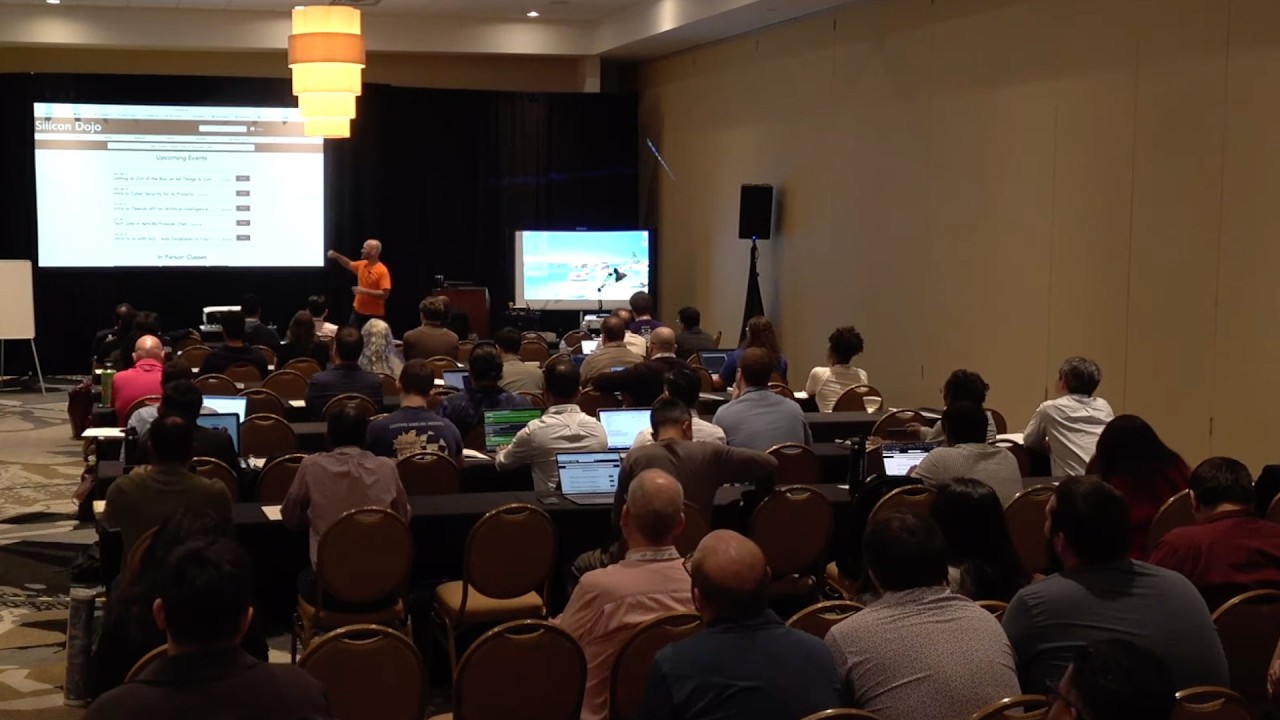
In this presentation, Eli the Computer Guy shares his extensive experience in technology and online education, emphasizing the importance of failure as a learning tool. He introduces Silicon Dojo, a crowdfunded, gatekeeper-free, hands-on technology education platform that offers practical classes without sponsors or corporate influence. Eli challenges the common misconception that artificial intelligence (AI) is magical, urging professionals to understand AI as a technology stack composed of familiar components like UI/UX, programming languages, operating systems, data stores, APIs, and models, rather than an enigmatic force.
Eli demonstrates practical AI applications using Raspberry Pi devices, highlighting their capability to run local AI models such as OpenAI’s Whisper for speech-to-text and Olama for language processing. He explains the challenges of deploying AI on low-power devices, including managing dependencies like PyAudio and handling Linux sound systems. Through simple Python scripts, he shows how to convert speech to text, process queries with local or cloud-based AI models, and convert text back to speech using tools like pyttsx3, illustrating that sophisticated AI interactions can be achieved with minimal code.
The presentation also covers integrating AI with physical hardware using Raspberry Pi’s GPIO pins and relays to create interactive IoT systems. Eli builds a voice-controlled environment where LEDs indicate system states (listening, processing, speaking), and commands like turning lights on or off are executed. He stresses the importance of architectural decisions in AI deployments, such as balancing local processing versus cloud API calls, considering power consumption, privacy, and cost. The Raspberry Pi’s affordability and GPIO capabilities make it ideal for distributed smart home or environmental control systems.
Eli further expands the system by incorporating an Arduino microcontroller with Wi-Fi to monitor environmental sensors and control devices remotely. The Arduino sends sensor data (e.g., temperature) to a cloud server hosted on Digital Ocean, which interacts with AI services and webhooks. Using Twilio and 11 Labs, he creates a telephone-based AI assistant that can respond to voice commands, control devices like fans, and provide real-time environmental information. This setup demonstrates how AI can be integrated into real-world applications combining hardware, cloud services, and telephony.
Throughout the talk, Eli emphasizes practical considerations such as cost management, API usage limits, security, and user experience challenges like latency and non-verbal communication cues. He warns about potential pitfalls like runaway API calls and the need for careful prompt engineering. The session concludes with a discussion on the evolving landscape of AI-powered business tools, highlighting 11 Labs as a promising platform for deploying AI assistants in small businesses, and encourages attendees to experiment with these technologies while being mindful of architectural and operational complexities.