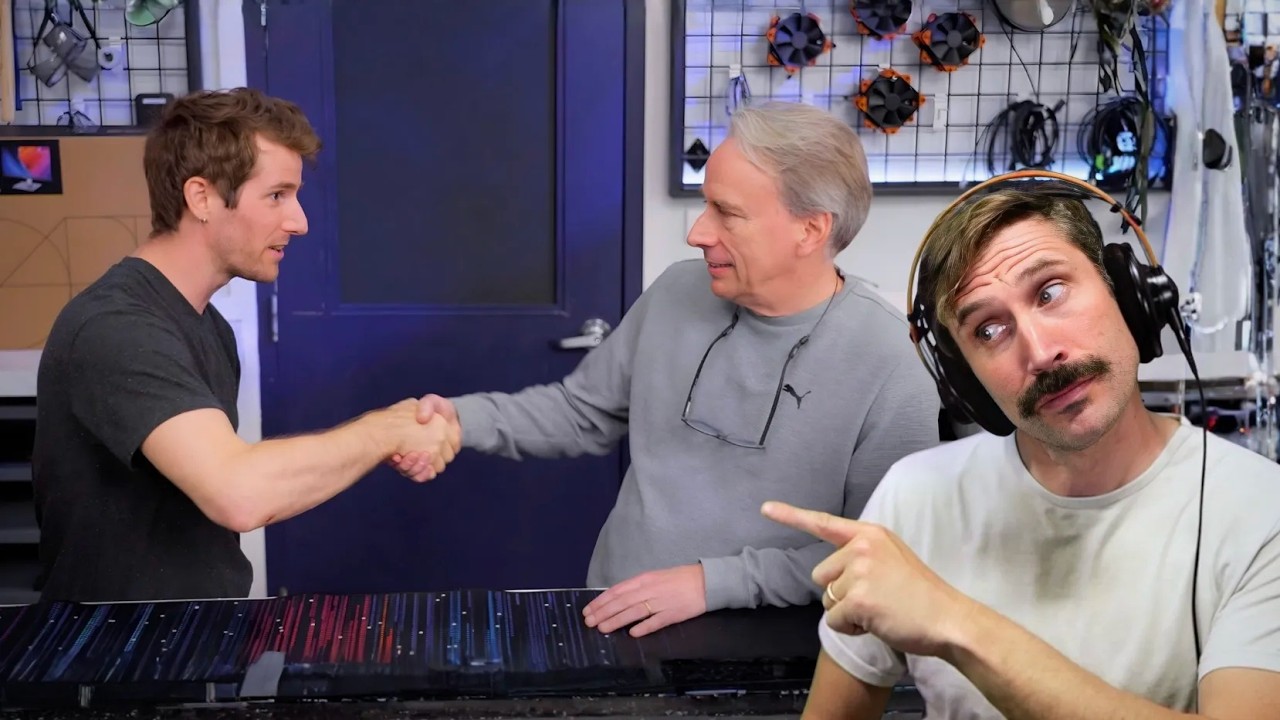
In this discussion, Linus talks candidly about the current state of AI, particularly generative AI, debating whether it is a bubble, a computing revolution, or both. He acknowledges that AI is indeed both a bubble and a revolution, highlighting the hype surrounding it while also recognizing its potential to change society and skilled jobs. However, he tempers expectations by suggesting that AI might not be as revolutionary as some claim, pointing out the paradox of calling AI transformative yet downplaying its overall impact simultaneously.
The conversation then shifts to the ethical and practical implications of AI in creative fields, especially coding and art. Linus raises concerns about AI models being trained on the work of real people without proper credit or compensation, likening it to large-scale theft. He notes the stark contrast between the reactions of the artistic community, which is largely upset, and programmers, who seem more accepting or indifferent. This dichotomy puzzles him, as programmers arguably have more to lose but appear less resistant to AI integration in their work.
Linus also discusses the quality of AI-generated content, particularly in programming. While AI tools like GitHub Copilot can produce syntactically correct and seemingly perfect code snippets, the overall architecture and maintainability of AI-generated code often fall short. He shares anecdotes about teams struggling with buggy, poorly structured code despite the AI’s seemingly flawless individual contributions. This highlights the limitations of AI as a coding assistant and the continued need for human oversight and expertise.
Despite the challenges, Linus remains optimistic about AI’s role as a productivity tool rather than a job replacer. He believes programmers will still be essential for maintaining and refining AI-generated outputs. He also draws parallels to other fields, such as photography and chess, where AI has transformed the landscape but hasn’t eliminated the value of human skill and creativity. The key, he suggests, is adapting to this new reality and leveraging AI as a complement rather than a replacement.
Finally, Linus touches on the broader market dynamics around AI, warning of an inevitable crash or correction due to the current hype and speculation. He humorously advises caution in financial matters, emphasizing practical wisdom like saving money and avoiding unnecessary debt. Overall, the conversation provides a balanced and nuanced perspective on AI’s promises, pitfalls, and the cultural and economic shifts it is driving.