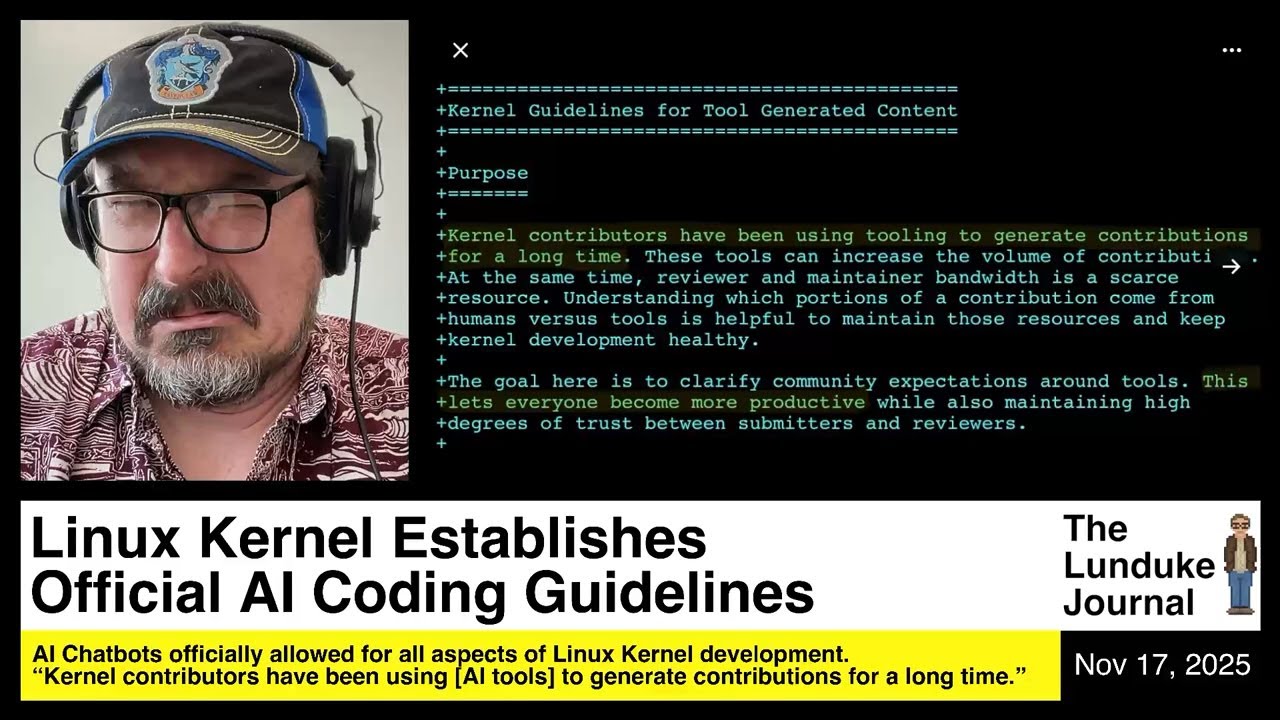
The Linux kernel management team, under the Linux Foundation, has officially established guidelines for the use of AI-generated content in kernel development. This includes contributions created by AI chatbots and code generators. The guidelines acknowledge that kernel contributors have been using such tools for some time and aim to clarify community expectations to maintain productivity and trust between submitters and reviewers. Contributors are encouraged to disclose when AI tools have been used in their submissions, whether for code generation, bug fixes, testing, or generating change logs, to help others discover useful AI tools.
The guidelines provide examples of acceptable AI-assisted contributions, such as AI-generated fixes, new functions created by coding assistants, or change logs written or translated by AI. However, the final decision on how to handle AI-generated contributions rests with individual maintainers, who may treat them like any other submission, reject them outright, or review them with extra scrutiny. Interestingly, reviewers might also suggest better AI prompts to improve the quality of AI-generated code, effectively turning code review into prompt engineering.
This move by the Linux kernel team is significant and somewhat controversial. It marks a major shift in how one of the most critical open-source projects approaches development, openly embracing AI tools rather than shunning them. The Linux kernel maintainers, including Linus Torvalds, who is known for his blunt critiques of code quality, retain full discretion to accept or reject AI-generated patches. Yet, the endorsement of AI tools signals a new era where AI-assisted coding is normalized in core software development.
The trend is not isolated to the Linux kernel. Fedora, a major Linux distribution, has also adopted a policy allowing AI-assisted contributions across its projects. Moreover, companies like Red Hat are incentivizing employees to integrate AI into their daily work and product development. This corporate push reflects a broader industry movement toward embedding AI into software engineering workflows, encouraging developers to leverage AI for coding, documentation, and testing.
Despite the enthusiasm, the video’s presenter expresses deep concern about this direction. He worries that over-reliance on AI tools could degrade developers’ skills and lead to lower-quality code in the long term. The fear is that when the current AI hype eventually subsides, the software ecosystem might suffer due to diminished human expertise. The presenter views the official acceptance of AI-generated code in the Linux kernel as a risky and potentially harmful development, urging caution and critical reflection on the implications of this shift.