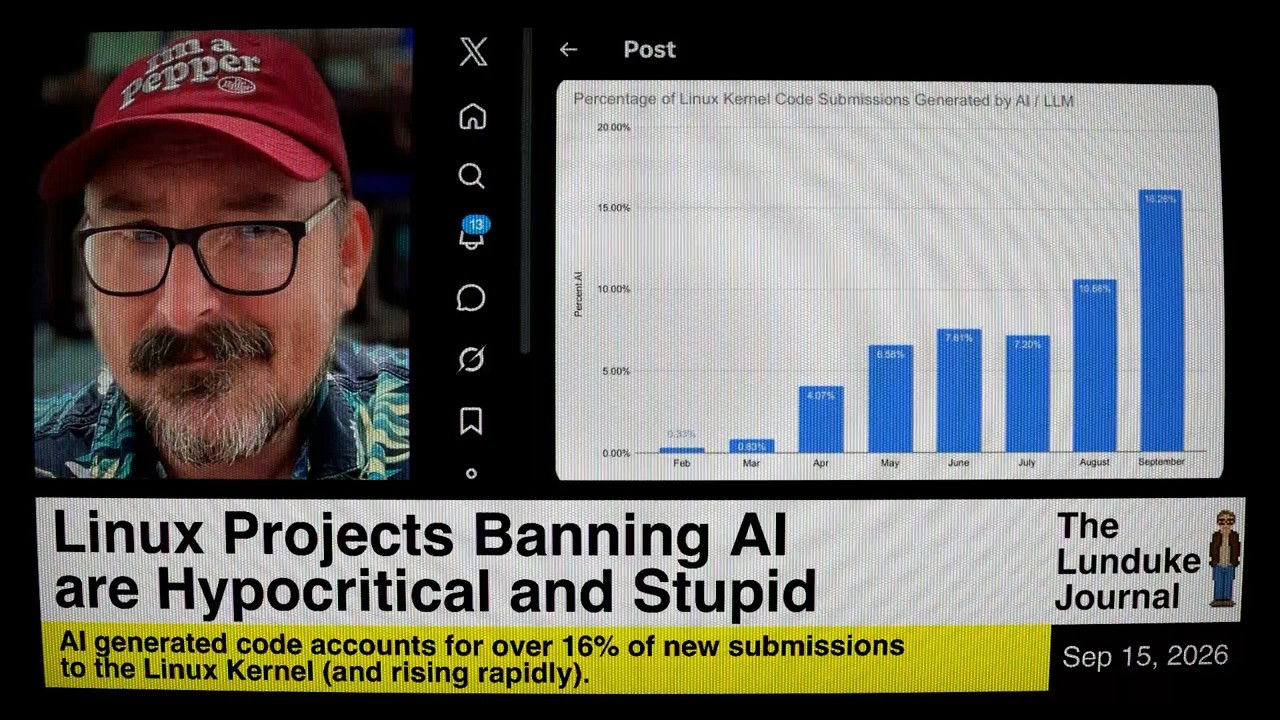
The video criticizes Linux projects and open-source communities that outright ban AI-generated code, labeling such bans as hypocritical and foolish. The speaker highlights that AI-generated code already constitutes a significant and growing portion of Linux kernel contributions—over 16% as of September—and this trend is rapidly increasing. Despite this, some Linux distributions and repositories like FlatHub have imposed strict bans on AI-assisted code, which the speaker argues is inconsistent given that these projects rely heavily on AI-generated code at their core.
The speaker discusses the Debian Project’s ambivalent stance on AI, noting internal conflicts and potential forks by developers opposed to AI inclusion. However, these forks would still be based on the Linux kernel, which is heavily AI-influenced. Linus Torvalds, the Linux kernel creator, openly supports AI as a useful tool, emphasizing that natural intelligence is not always superior. The speaker contrasts this with other projects like NetBSD and Haiku OS, which have banned AI contributions, but points out that those opposing AI often continue to use AI-developed systems, revealing a disconnect between their rhetoric and actions.
Corporate involvement is also examined, with Red Hat and IBM actively encouraging AI use among their developers, offering bonuses for AI-related work. This corporate embrace of AI is reflected across many Linux desktop environments and tools, further underscoring the impracticality of banning AI code. The speaker suggests that those who oppose AI should either use or create projects that do not incorporate AI, rather than hypocritically building on AI-heavy foundations while denouncing AI.
The video also touches on the broader societal and political context of AI acceptance, noting a divide where some on the political left are vehemently anti-AI despite benefiting from it, while others, often on the right, are more accepting or cautious. The speaker draws parallels to past scare tactics used around issues like acid rain, the ozone hole, and COVID-19, suggesting that fear is being used to control narratives around AI. Despite acknowledging legitimate concerns about AI, the speaker emphasizes AI’s usefulness, engineering marvel, and the significant time savings it offers in various tasks.
Finally, the speaker shares their own approach with the Elkos Linux distribution, which excludes AI features by default but does not prevent users from installing AI tools if they choose. They acknowledge that AI has been used in developing parts of Elkos, including a paint program entirely generated by AI, illustrating a pragmatic stance. The speaker concludes that banning AI in Linux projects is not only hypocritical but pointless, urging a realistic acceptance of AI’s role in modern software development while allowing users freedom of choice.