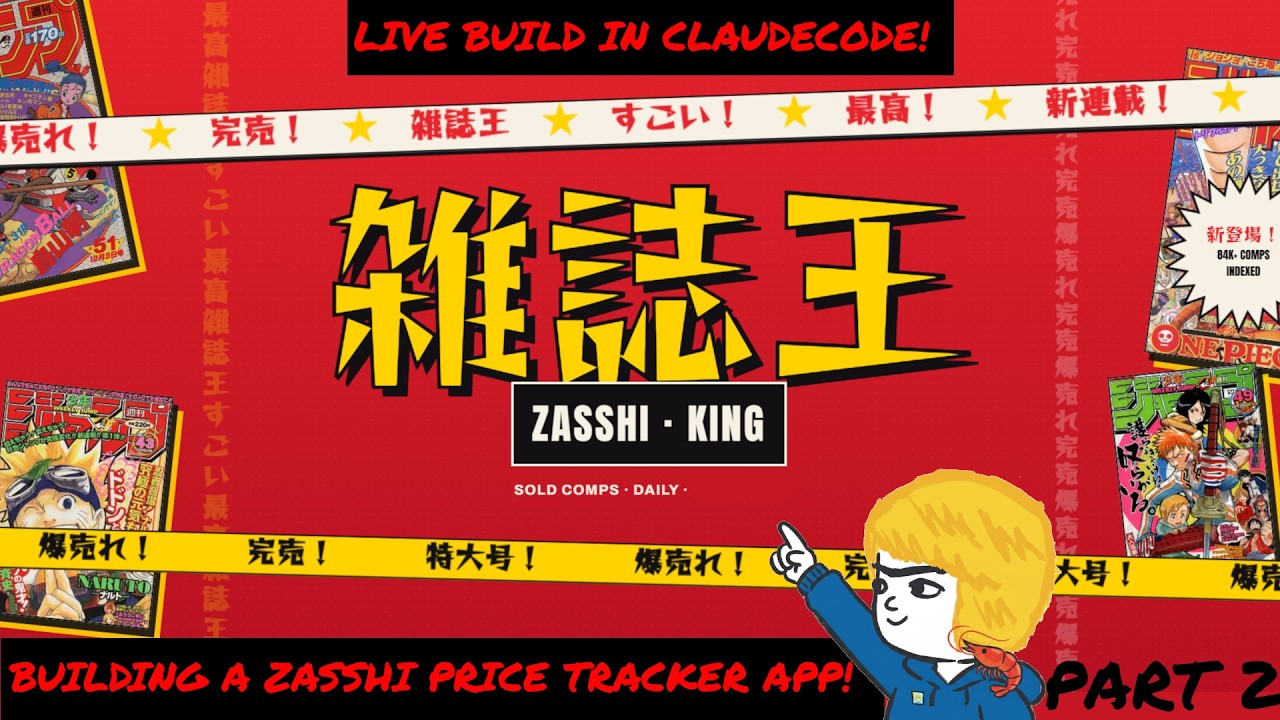
In this second part of the live build series, the creator continues developing “Zashi King,” a price tracker app for Japanese manga magazines like Weekly Shonen Jump. The video adopts a slower, more detailed pace to showcase the entire development process, including debugging and problem-solving. The front end, built in ClaudeCode, is functional but still requires refinement, such as fixing non-working buttons and improving layout issues. The developer discusses hosting over 2,000 cover images locally and serving them via Vercel’s Edge CDN, despite the large repository size, to ensure crisp image quality.
The main focus is integrating real marketplace data into the app. The developer connects various data sources, including Japanese marketplaces like Yahoo Auctions and US marketplaces like eBay, to track active listings and sold prices. Challenges arise with scraping data due to security blocks and API access limitations, particularly with eBay. The developer applies filters to clean up inaccurate or irrelevant listings and works on displaying price history charts with sold and active listings distinguished clearly. They also implement features like hover details for sold conditions and color-coded indicators to differentiate Japanese and Western markets.
A significant milestone is setting up a daily cron job to automate data scraping and database updates. The developer chooses Railway as the hosting platform for this backend task, configuring the environment and resolving issues related to database connections and asynchronous code execution. Despite occasional crashes due to external service hiccups (e.g., eBay downtime), the cron job eventually runs successfully, ensuring the app’s data stays current without manual intervention. This automation is crucial for maintaining the app’s reliability and usefulness.
On the user interface side, the developer adds a search bar and a dropdown menu for key manga series, allowing users to find first appearances of characters and key issues easily. They also plan premium features like an arbitrage detector to spot price differences between markets and a watchlist with notifications for price alerts. The UI is polished by fixing overlapping elements, improving formatting, and adjusting chart layouts to better utilize screen space. The developer emphasizes the importance of these small refinements to enhance user experience.
Looking ahead, the developer plans to finalize premium features, integrate payment gating (potentially using Stripe or Lemon Squeezy), and deploy the app fully on Vercel. They anticipate this will conclude the build series, with possible future videos focusing on marketing strategies using AI tools. Overall, this video provides an in-depth, transparent look at the complexities of building a data-driven app from scratch, highlighting both technical challenges and design considerations.