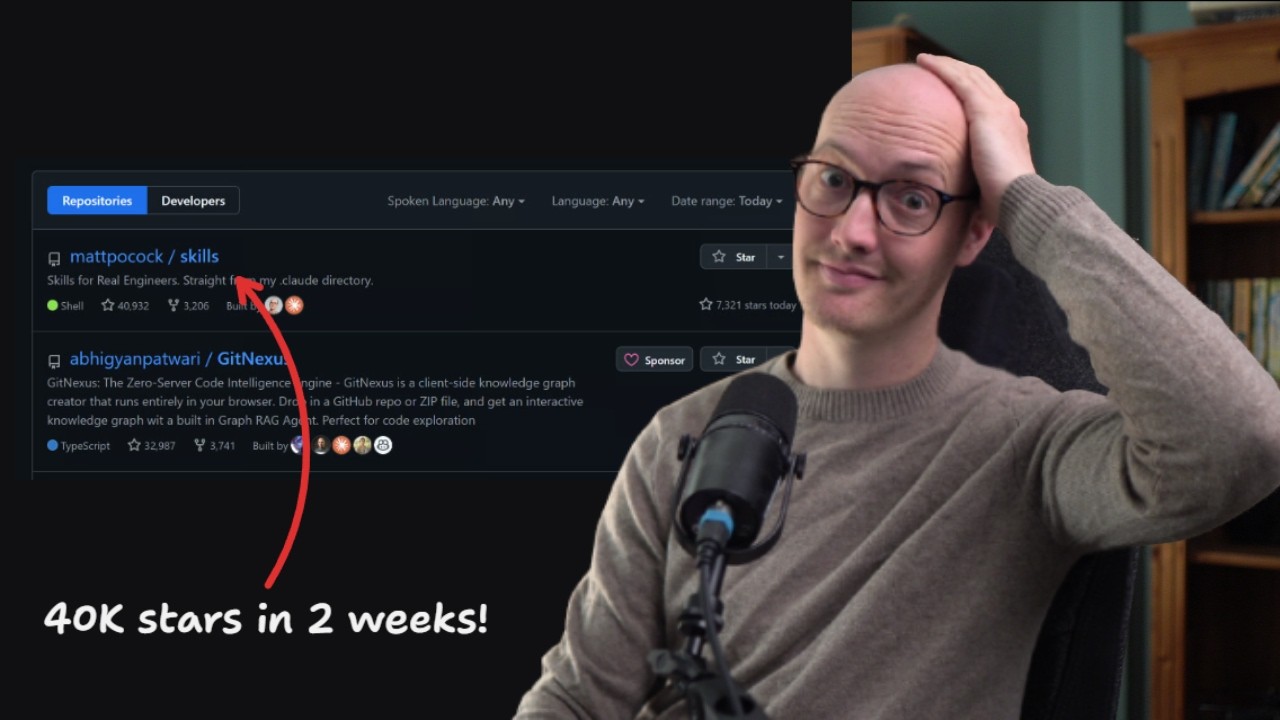
In this live stream, the creator shares the exciting news that their “skills” repository has become the top trending project on GitHub, rapidly gaining over 40,000 stars. They discuss the viral success of a recent talk and the impact it has had on their business and online presence. The stream focuses on recording new content, particularly around AI coding agents and tools they have developed, such as “Sand Castle,” a TypeScript library designed to orchestrate AI agents running in isolated sandboxes. The creator demonstrates their custom-built video recording and editing setup, emphasizing the innovative workflow they use to produce content efficiently.
The main part of the stream is dedicated to a detailed tutorial on Sand Castle. The creator explains the motivation behind building Sand Castle: the need for a simple, flexible way to run AI coding agents AFK (away from keyboard) without constant permission prompts, while maintaining security through sandboxing. They walk through setting up a new repository, installing Sand Castle, selecting agents and sandbox providers, and integrating with GitHub issues as a backlog manager. The demo showcases how Sand Castle can parallelize multiple agents to plan, implement, review, and merge code changes autonomously, significantly boosting development velocity.
Following the Sand Castle tutorial, the creator discusses plans for future videos and gathers viewer input on topics such as improved codebase architecture and the economics of token usage in AI models. They dive into the concept of “deep modules” in software design, explaining how modules with simple interfaces hiding complex implementations improve maintainability and leverage. Using diagrams, they illustrate key architectural concepts like modules, interfaces, seams, adapters, depth, locality, and leverage, drawing from established software design principles to help viewers understand how to rescue and improve messy or AI-generated codebases.
The stream also features a live demonstration of the “improved codebase architecture” skill running on the creator’s own course video manager codebase. This AI-powered skill analyzes the codebase to identify opportunities for refactoring and deepening modules, proposing concrete design improvements and generating GitHub issues for further action. The creator emphasizes that while AI agents can handle tactical programming tasks, human judgment remains essential for strategic decisions. They encourage regular use of such skills to maintain code quality and highlight the importance of good testing practices and clear architectural boundaries.
Throughout the stream, the creator interacts with viewers, answering questions about AI tools, software engineering practices, and their personal workflow. They reflect on the challenges and opportunities AI brings to software development, stressing that foundational software engineering skills remain crucial even as AI provides new leverage. The session concludes with the creator expressing enthusiasm for the evolving AI ecosystem, sharing plans for upcoming content, and inviting viewers to follow their newsletter and GitHub repositories for more insights and tools.