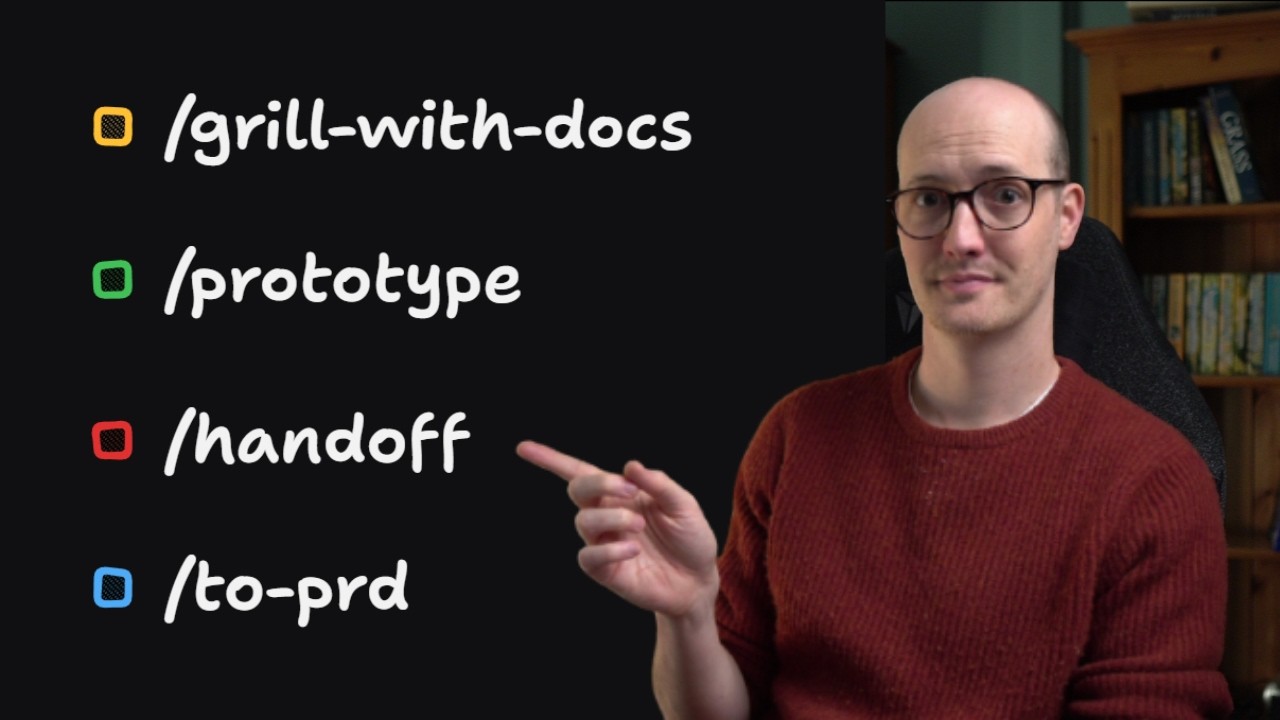
In this live AI coding session, the host begins by setting up and interacting with viewers, sharing updates about his recent illness and his streaming habits. He introduces the main project for the session: building an extension to his course video manager platform, a tool he uses to manage his entire business workflow. The key feature to be developed is a deliverables calendar, designed to schedule and track courses, videos, and pitches, providing a planning and inventory tool that integrates with existing entities in the platform. The host emphasizes the importance of language and domain modeling, working closely with an AI assistant (Claude) to clarify concepts like “deliverables” and how they relate to courses, pitches, and videos.
The session delves into detailed discussions about the data model for the deliverables calendar, debating whether deliverables should include courses, pitches, videos, or tasks, and how these should be represented on the calendar. The host and AI explore different design possibilities, focusing on simplicity and manual control rather than automated status updates. They decide on a flexible, informational calendar where deliverables have a manual lifecycle (planned, done, cancelled) and can be linked to multiple related entities. This phase highlights the iterative nature of AI-assisted design, with the host guiding the AI to refine the glossary and domain model to better fit his vision.
Following the conceptual work, the host uses the AI’s prototyping skill to generate multiple UI prototypes for the deliverables calendar. These prototypes include various calendar views such as a month grid, vertical agenda, and swim lanes, each with different visual treatments and usability features. Viewer feedback is solicited to choose the preferred design, leading to further refinements like reducing color palettes, improving past event visibility, and grouping deliverables by week. This iterative prototyping process demonstrates how AI can assist in both design ideation and user experience considerations, producing a polished and user-friendly interface concept.
With the prototype finalized, the host transitions to implementation using an AI-driven development workflow called Sand Castle. This system runs multiple AI agents in parallel to plan, implement, review, and merge code changes based on the previously created product requirements document (PRD). The host monitors the process, explaining how the agents operate in isolated sandboxes, perform test-driven development, and adhere to coding standards. The session showcases the practical application of AI in automating significant portions of software development while maintaining human oversight for quality assurance and decision-making.
Throughout the stream, the host answers viewer questions on topics ranging from AI coding best practices, managing AI-generated code quality, architectural decisions, and personal development philosophies. He shares insights on software design books that influenced his approach, the importance of prototyping, and balancing AI assistance with active human engagement to avoid “cognitive surrender.” The session concludes with reflections on the evolving role of AI in software engineering, the benefits of modular design for AI agents, and encouragement for developers to embrace AI tools thoughtfully to enhance productivity and creativity.