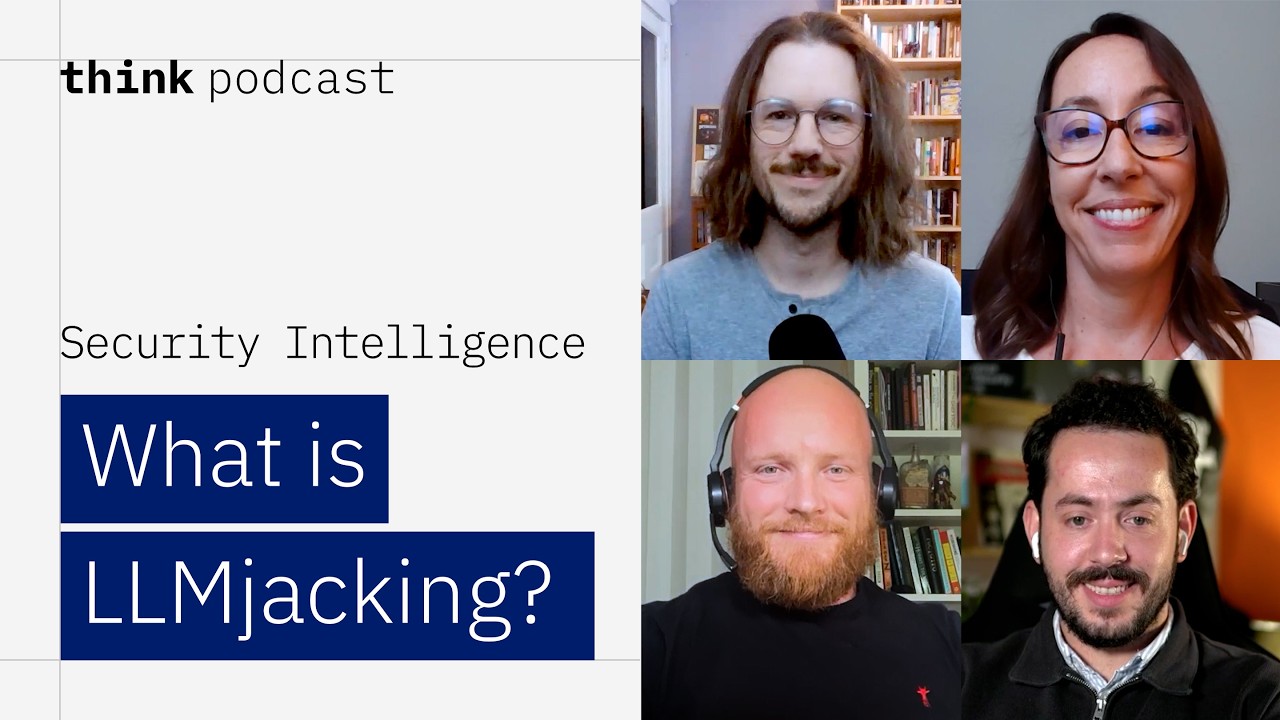
The podcast episode from IBM’s Security Intelligence focuses on the emerging cybersecurity threat known as “LLMjacking,” where hackers steal AI API keys to exploit AI services at the victim’s expense. Unlike traditional data breaches, these attackers primarily aim to use the victim’s AI resources for their own purposes, resulting in potentially massive financial charges. A striking example shared involved a small startup in Mexico that faced an $82,000 bill in 48 hours due to stolen API keys, compared to their usual $180 monthly spend. The panelists emphasize that this threat is evolving alongside cloud computing and cryptocurrency mining attacks, highlighting the need for heightened awareness and protection of AI API keys as critical assets.
Experts stress that AI API keys should be treated with the same level of security as passwords or other sensitive credentials. The discussion highlights the importance of implementing guardrails such as usage limits, spending caps, and anomaly detection to prevent or quickly identify unauthorized use. However, attackers often exploit these keys so rapidly that existing controls may fail to detect misuse in time. The panelists advocate for improved secrets management, secure storage practices, and automation in cloud security to reduce the risk of exposure, especially within DevOps pipelines where keys are frequently integrated.
The conversation then shifts to the broader impact of AI on cybersecurity, particularly in adversary simulation and offensive security research. AI tools are accelerating the speed and sophistication of attacks, necessitating a shift in how security teams operate. While AI can automate routine tasks and enhance efficiency, human oversight remains crucial to interpret results, maintain accountability, and manage complex incident response processes. The panelists agree that AI should augment human expertise rather than replace it, emphasizing the need for frameworks that balance automation with human judgment to ensure safe and effective use.
Addressing the challenge of patching vulnerabilities in the age of rapid AI-driven attacks, the experts discuss the feasibility of shortening patch windows from two weeks to as little as three days. They caution that patching is only one aspect of a comprehensive defense strategy and that factors such as vendor patch availability, system complexity, and operational constraints complicate rapid deployment. Instead, they advocate for defense-in-depth approaches, increased automation, and improved visibility into critical assets to enable faster detection and response. The panel underscores the importance of agility and machine-assisted defense to keep pace with evolving threats.
In closing, the panelists offer practical advice for organizations navigating these challenges. Key recommendations include treating AI API keys as highly sensitive secrets, adopting an “assume breach” mindset to prepare for inevitable incidents, and prioritizing proactive security measures such as incident response planning and continuous monitoring. They stress the value of preparation, education, and collaboration between security and development teams to build resilient defenses. Ultimately, the episode highlights that while AI introduces new risks, it also offers opportunities to enhance cybersecurity when integrated thoughtfully with human expertise and robust processes.