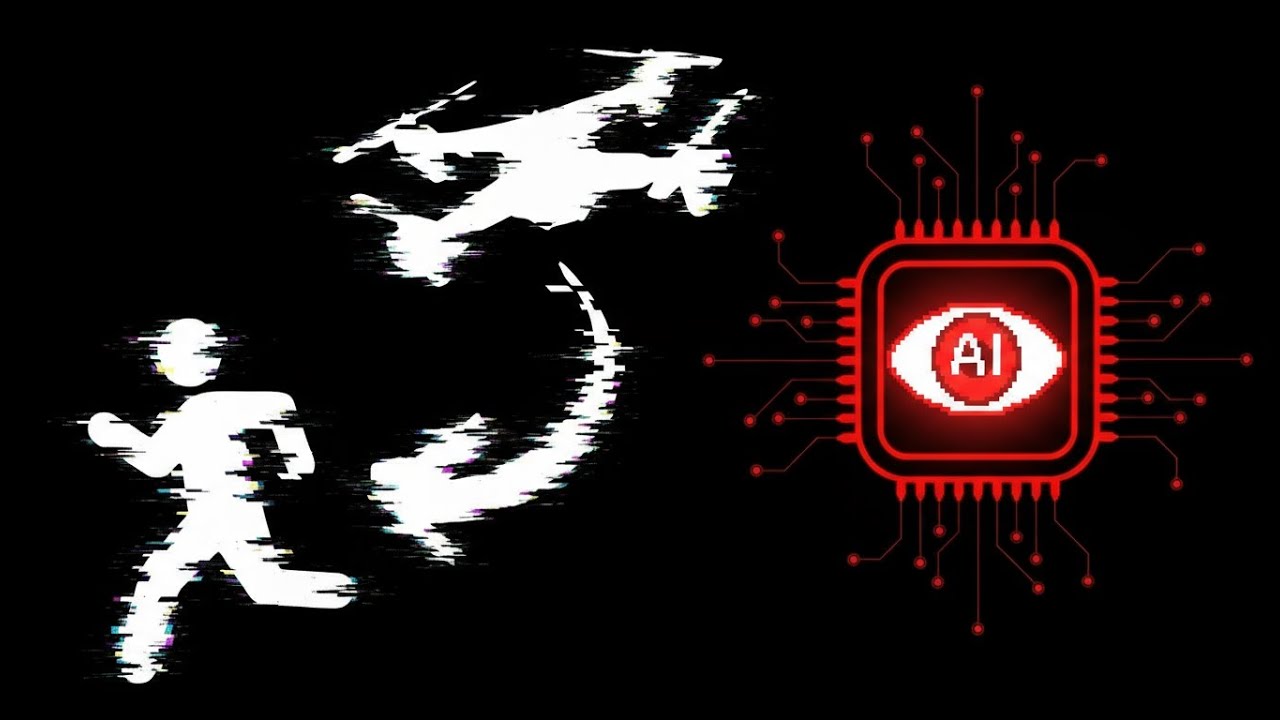
The video showcases a local AI-powered security system using the Qwen 3VL vision-language model to efficiently detect specific objects or people, such as someone wearing an orange jacket, through natural language prompts without complex training. It also demonstrates integrating this AI detection with a drone deterrent and explores the potential for further innovative, customizable security and automation solutions using local AI models and hardware.
In this video, the creator demonstrates a local AI-powered security system using the Qwen 3VL vision-language model, which is highly efficient even at smaller sizes like the 2 billion parameter version. The setup involves using an old Android phone as a mobile IP camera streaming video to a local system. The AI model analyzes snapshots taken every two seconds to detect the presence of a person in the frame, returning a simple true or false output for fast processing. This streamlined approach allows for real-time monitoring with low latency, making it practical for home security applications.
The creator showcases the speed and accuracy of the Qwen 3VL model by running it locally on a powerful GPU, demonstrating its ability to quickly identify objects and interpret images with reasoning capabilities. The model can answer questions about images, such as identifying a GPU or explaining a neural network architecture diagram, all within moments. This highlights the model’s versatility and efficiency, making it suitable for various vision-language tasks beyond simple detection.
Building on the basic person detection, the video explores more specialized use cases by leveraging the model’s ability to understand detailed prompts. For example, the system can be configured to trigger an alarm only if a person wearing a specific item, like an orange jacket, is detected. This eliminates the need for complex bounding box training or specialized machine learning models, allowing for highly customizable and precise detection using just natural language instructions. The creator also demonstrates a similar setup for monitoring whether curtains or blinds are open or closed, showing the model’s flexibility in different scenarios.
The highlight of the project is integrating the AI detection system with a drone that acts as a deterrent. When the system detects a person wearing an orange jacket, it automatically launches the drone, which flies up, moves toward the intruder, performs a spin maneuver, and then lands. This creates an intimidating presence designed to scare away potential intruders. The drone’s activation is tightly coupled with the AI’s boolean output, ensuring it only responds to specific triggers, making the system both smart and reactive.
Finally, the creator reflects on the potential of combining local AI models with hardware for innovative security and automation solutions. They mention plans to experiment further with devices like the Flipper Zero and Raspberry Pi, aiming to build more integrated systems that leverage AI for real-world applications. The video emphasizes the fun and creativity involved in working with local large language models and vision models, encouraging viewers to explore similar projects and highlighting the endless possibilities in this emerging field.