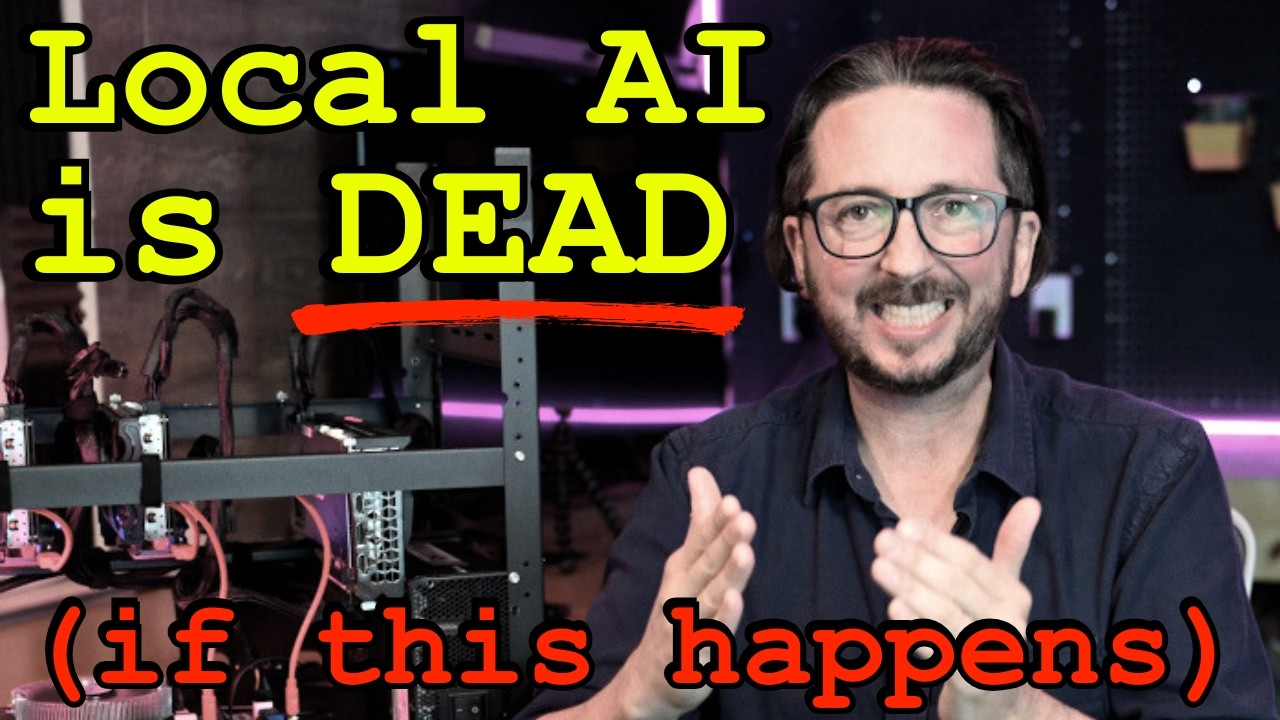
The video discusses the significant challenges facing local AI development, particularly focusing on potential restrictions imposed by the Chinese Ministry of Commerce on open-source AI models. These restrictions could limit access to advanced Chinese AI models for both domestic and international users, especially those in the U.S., creating a divide between those with privileged access to cutting-edge AI technology and those without. The speaker highlights the geopolitical implications of these developments, suggesting that powerful entities may be orchestrating these changes to control AI accessibility and maintain dominance, potentially leading to a stratified future where only select groups benefit from AI advancements.
A major concern raised is the impact of these restrictions on the local AI hardware market, especially All-In-One (AIO) systems like Nvidia’s DGX Spark and other high-end machines designed for AI workloads. Without access to the latest open-source models, the demand and viability of these expensive AIO products could sharply decline, leading to a potential sell-off and devaluation of such hardware. Conversely, DIY AI setups using more common GPUs might fare better, though they too could face challenges if open-source model availability diminishes. The speaker draws parallels to past events in the GPU market, such as the Ethereum mining crash, to illustrate how hardware values can fluctuate dramatically based on external factors.
The video also critiques the current AI ecosystem’s focus on product over use case and political implications, emphasizing the importance of personal access to AI technology. Cloud AI services, while convenient, come with rising costs and risks of regulatory capture, where large corporations gain disproportionate influence over AI development and access. This dynamic threatens the open-source community and independent users, potentially relegating many to a permanent underclass without meaningful AI capabilities. The speaker urges viewers to download and preserve open-source models locally before access becomes restricted, highlighting the urgency of proactive measures.
On a broader scale, the speaker speculates about the existence of advanced geopolitical AI systems guiding strategic decisions behind the scenes, possibly influencing legislation and market dynamics to favor certain players. This raises concerns about transparency, control, and the future trajectory of AI development globally. The video stresses that these developments are not random but likely part of a coordinated effort, with significant consequences for innovation, competition, and individual empowerment in the AI space.
In conclusion, the video calls for awareness and action from the AI community and general public. It encourages viewers to support independent content creators who provide unbiased insights, to be cautious with investments in local AI hardware, and to prepare for a future where AI access may be increasingly restricted and controlled. The speaker underscores the importance of understanding these geopolitical and economic forces shaping AI’s future and advocates for preserving open access to AI technology to avoid deepening inequalities in intelligence and opportunity.