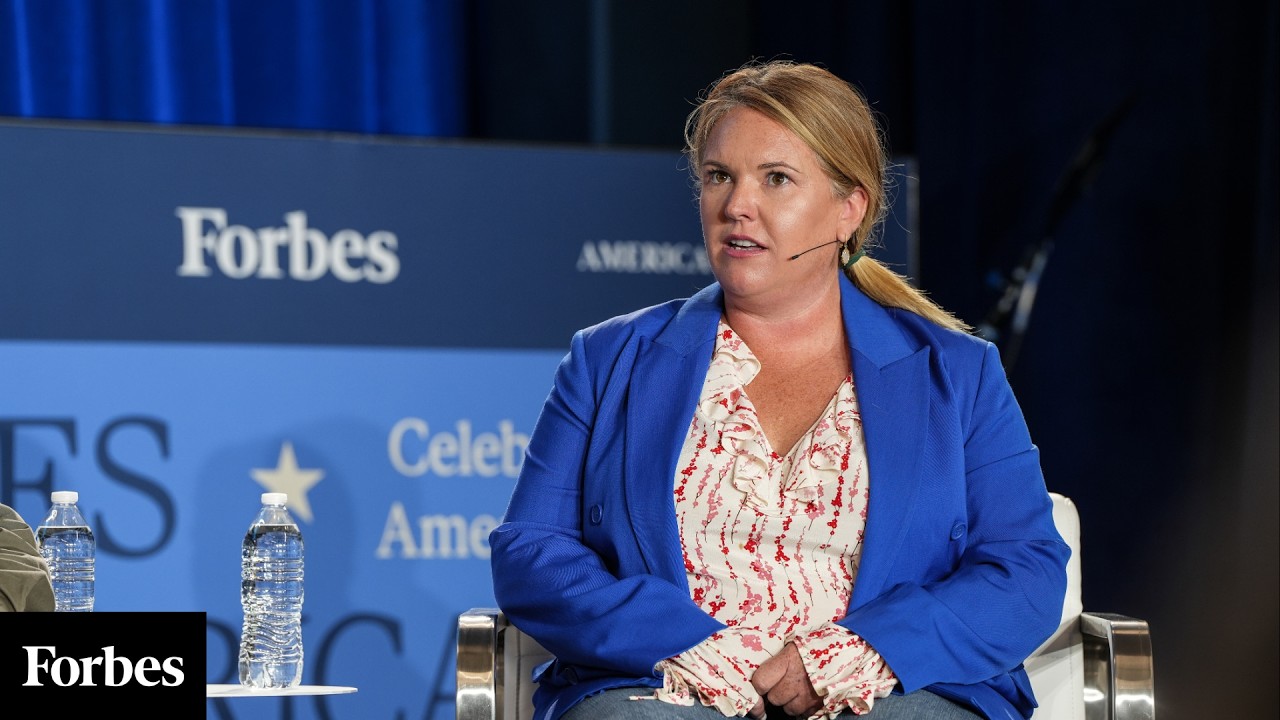
The panel discussion featured experts from Lockheed Martin, Applied Minds, and Deloitte Consulting, moderated by Forbes senior writer Rich Nieva, focusing on the future of space exploration, AI, and robotics. The conversation began with reflections on the Artemis 2 mission, highlighting the excitement and significance of sending humans into deep space for the first time in over 50 years. Panelists expressed pride and enthusiasm for renewed human space exploration and the development of sustained infrastructure in space.
Bran Ferrin, with a background as a Disney Imagineer, discussed the transformative impact of AI on entertainment and creative industries. He emphasized AI as a powerful tool for creative empowerment, enabling faster research and innovation while acknowledging concerns about job displacement. Tally Bainard from Lockheed Martin explained LiDAR technology, its role in autonomous navigation during space missions like OSIRIS-REx, and its broader applications beyond self-driving cars. McKenna McGrew from Deloitte elaborated on quantum science, distinguishing current quantum computing capabilities from future fault-tolerant systems that promise to surpass classical supercomputers.
The panelists reflected on the unique moment AI represents compared to past technological shifts, noting how AI accelerates design and innovation, particularly in hardware-centric industries like aerospace. They discussed societal challenges, emphasizing the need for individuals to understand AI’s personal and professional impacts and the importance of equitable access to emerging technologies to prevent widening societal divides. The space industry’s evolution was also addressed, highlighting increased accessibility, reduced costs, and the rise of commercial players challenging traditional government-led models.
Regarding futuristic concepts like space-based data centers, the panelists expressed cautious optimism, acknowledging significant engineering challenges such as radiation and cooling but recognizing the potential benefits of free solar power and proximity to space-based users. The discussion also touched on the imminent arrival of humanoid robots in everyday life, with panelists agreeing that advanced, interactive robots are already emerging and will become increasingly accessible and affordable within the next five years.
The event concluded with a presentation from Xenia Bulatov, CEO of Ultimate Bots, showcasing their humanoid sports league where robots compete in disciplines like martial arts and dancing. Ultimate Bots aims to advance consumer robotics by creating standards through competitive sports, providing a live testbed for physical AI, and fostering cultural adoption of robotics. They introduced tools enabling anyone to train humanoid robot motions and announced their first season of events, emphasizing the role of robotics in shaping a future where humans and machines interact beyond fear and abstraction.