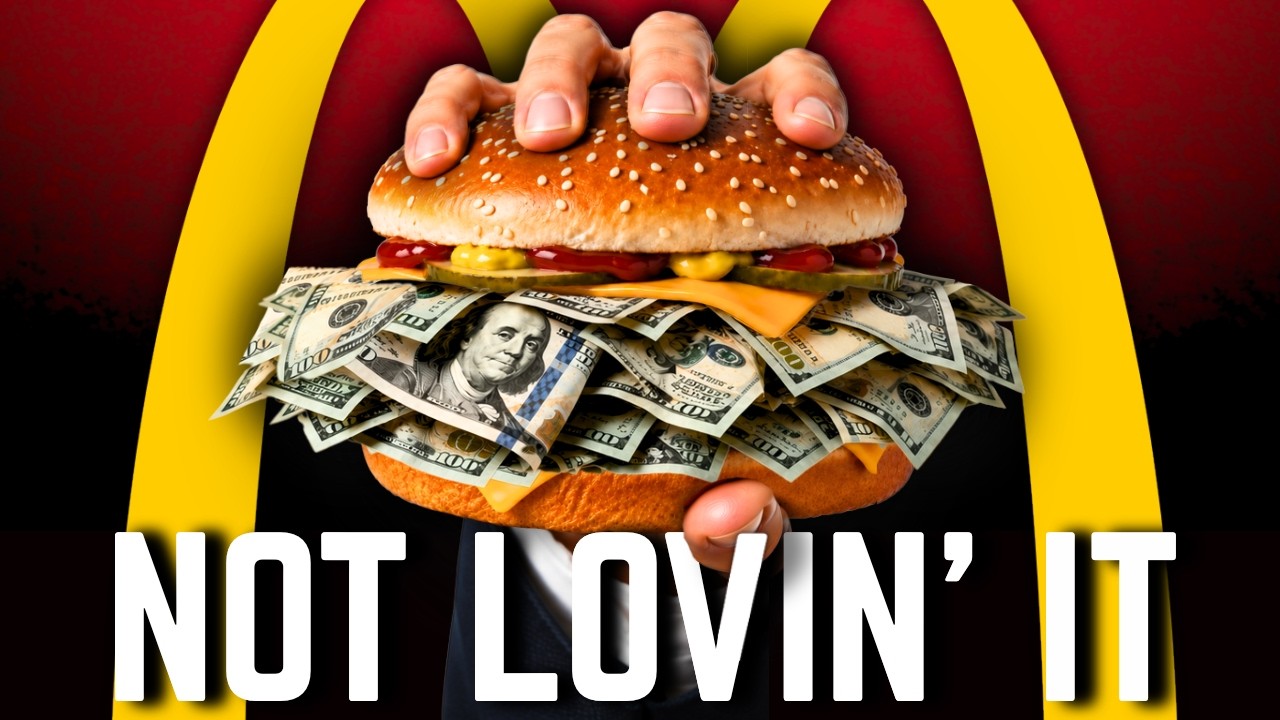
The video critically examines McDonald’s recent decline in value and customer satisfaction, highlighting how the fast-food giant has more than doubled its menu prices over the past decade, outpacing inflation and other competitors. Despite 80% of Americans now viewing fast food as a luxury, McDonald’s is experiencing its worst year since before the Great Recession. The creator tests McDonald’s claim of unbeatable value by ordering a simple meal—a double cheeseburger, fries, and a drink—and compares it to similar offerings from a local fast-food chain, a sit-down cafe, and a homemade version. The McDonald’s meal took over 15 minutes to receive, cost $8.30, and was criticized for poor taste and quality.
In comparison, the local fast-food competitor, Peter’s, though 25% more expensive at $10.39, provided significantly more food and protein, with a faster service time of under six minutes. The cafe meal, priced at $13.53 (or $15.53 with a drink), offered the highest quality and quantity of food, with a wait time of just over eight minutes. The homemade meal, costing about $8.44 and taking nearly 19 minutes to prepare, delivered the best value in terms of food quantity and protein content, despite a slightly longer preparation time than McDonald’s. The creator found the homemade burger to be tastier and more satisfying than McDonald’s offering.
The video also touches on ethical concerns, referencing a 2025 investigation into McDonald’s chicken suppliers in France, which revealed severe animal welfare issues. To counteract such industrial farming practices, the creator promotes Farmkind, an organization supporting animal welfare improvements in agriculture. Farmkind directs donations to charities that have successfully influenced major corporations, including McDonald’s, to adopt more humane practices, emphasizing the importance of supporting systemic change in the food industry.
Throughout the video, the creator expresses frustration with McDonald’s CEO’s dismissive attitude toward customer value and product quality, criticizing the company’s greed and disconnection from its customer base. The creator personally found McDonald’s food unpalatable and not worth the price or wait time, contrasting sharply with competitors and homemade options. This disconnect, combined with rising prices and declining quality, suggests McDonald’s is losing its traditional customer base, particularly lower-income consumers who once relied on it for affordable meals.
In conclusion, the video argues that McDonald’s failure to provide cheap, fast, and quality food is a symptom of broader corporate greed and abandonment of working-class customers. The creator warns that, like other once-dominant companies that have disappeared, McDonald’s could face a similar fate if it does not adapt. The video encourages viewers to be mindful of where they spend their money and to support businesses and practices that offer genuine value and ethical standards. The creator commits to producing more investigative content to expose such issues and help consumers make informed choices.
Useful Links