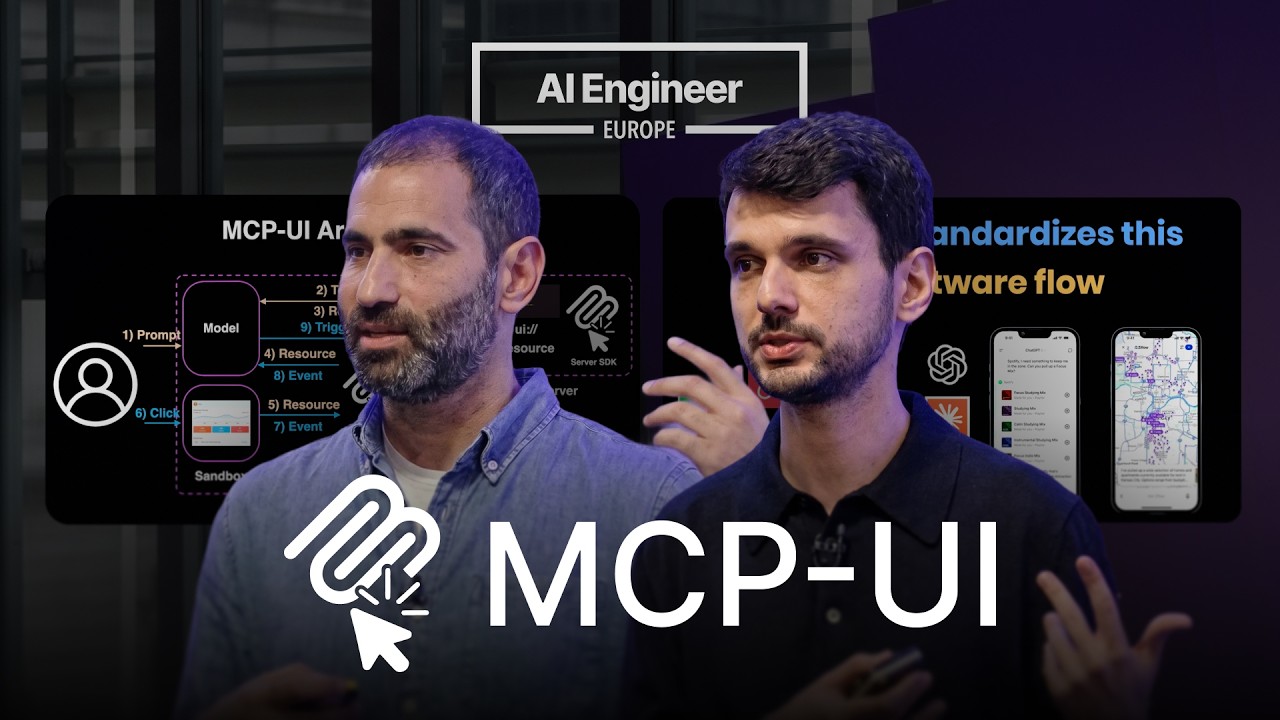
In this talk, Liad Yosef and Ido Salomon introduce MCP apps, a new standard for embedding interactive user interfaces (UI) within chat-based AI assistants like ChatGPT, Claude, and others. They explain that traditional chat interactions rely heavily on text, which is limiting and often strips away the identity and branding of the original data sources. MCP apps solve this by allowing companies to send their own interactive UI components directly into the chat, preserving their branding and providing a richer, more intuitive user experience. This approach enables users to interact with familiar interfaces from services like Shopify, Hugging Face, and Booking.com seamlessly within their AI assistant.
The core innovation of MCP apps lies in passing UI as resources over the Model-Chat-Protocol (MCP), enabling not just static presentation but fully interactive applications inside chat environments. Unlike previous models where UI interactions communicated directly with backend services, MCP apps standardize message passing through the host, maintaining context and control. This architecture allows for bidirectional communication where user actions in the UI send messages back to the host, which then decides how to handle them, ensuring a cohesive and secure interaction flow.
MCP apps have seen rapid adoption and support from major platforms such as VS Code, GitHub Copilot, Claude, and ChatGPT, with many companies already integrating MCPUI widgets into their services. The community around MCP apps is vibrant, with workshops, plugins, and companies dedicated to building and supporting these applications. The MCP apps specification continues to evolve through a public workgroup, with ongoing efforts to enhance features like reusable views and enabling AI models themselves to interact directly with UI components, further closing the loop between user, UI, and AI.
The speakers emphasize that MCP apps represent a fundamental shift in how we think about the web and software distribution. Instead of navigating multiple websites and apps, users will interact with personalized assistants that aggregate and present only the relevant UI chunks from various services. This new paradigm benefits all parties: companies retain their brand identity, users enjoy streamlined experiences, and hosts manage interactions securely and contextually. MCP apps also support a spectrum of UI generation methods, from predefined and declarative UIs to fully generative interfaces created on the fly by AI models.
Finally, the talk highlights the immense potential of MCP apps given the massive and rapidly growing user base of AI assistants, which now surpasses the early adoption rates of smartphones. Developers can easily get started by using the official MCP apps SDK and participating in the open-source community. The presenters encourage engagement with the evolving specification and community discussions, framing MCP apps not just as a technical protocol but as a transformative opportunity to rethink and rebuild user experiences for the next generation of intelligent applications.