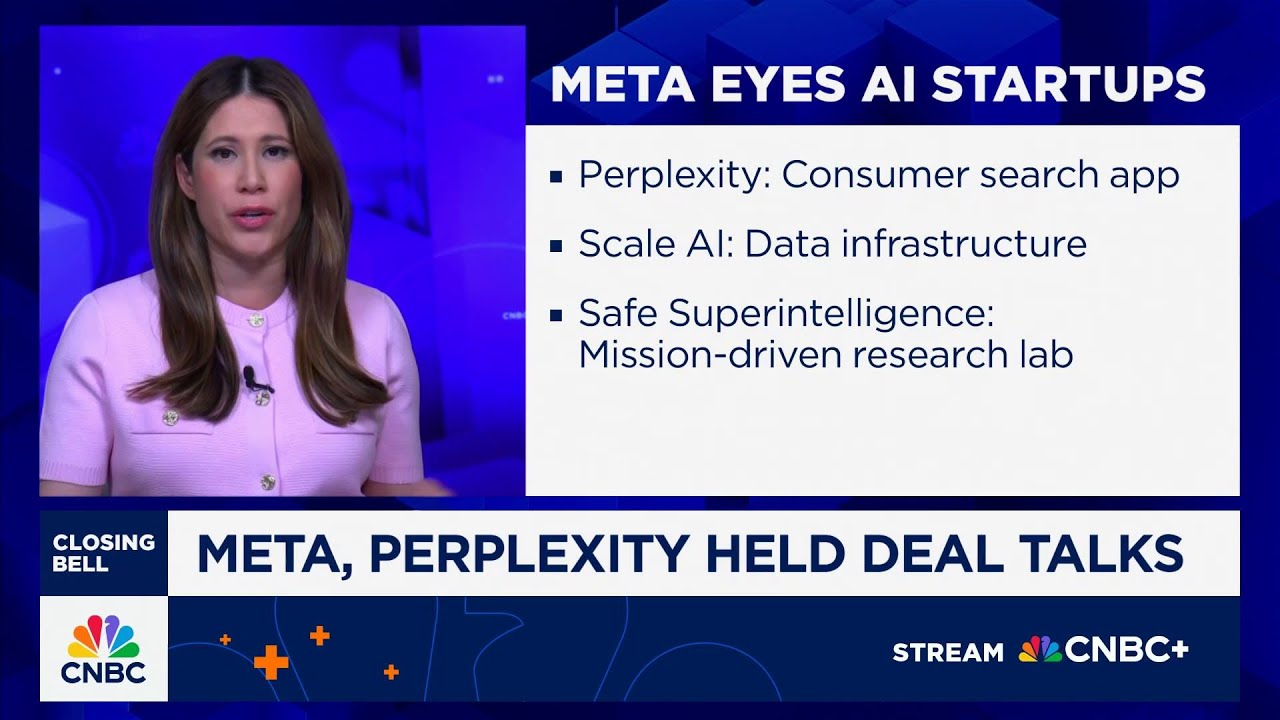
Meta CEO Mark Zuckerberg pursued acquiring AI startup Perplexity before finalizing a deal with Scale AI, reflecting a broader, somewhat scattered strategy driven by FOMO to build AI capabilities across different technology layers. Meanwhile, industry dynamics highlight skepticism about Meta’s approach and note Google’s continued strong AI leadership despite its exclusion from a recent influential tech ranking.
The video discusses Meta CEO Mark Zuckerberg’s recent aggressive moves in the AI sector, highlighting his interest in acquiring the AI startup Perplexity. According to sources, Zuckerberg approached Perplexity ahead of his deal with Scale AI, but the discussions did not result in a deal. Some sources say Perplexity walked away, while others suggest it was a mutual decision. This move is part of Zuckerberg’s broader strategy to build momentum in AI by targeting various layers of the technology stack, from consumer-facing AI applications like Perplexity to infrastructure companies like Scale AI and research labs like SSI.
The narrative emerging from these moves suggests that Meta’s AI campaign is driven more by a fear of missing out (FOMO) than by a coherent, unified strategy. The companies Zuckerberg is interested in are quite different in their missions and focus areas, which indicates a scattergun approach rather than a clear roadmap. This has led to some successes but also notable misses, and there is skepticism about whether Meta can build the trust and credibility needed to lead in AI through these acquisitions and hires alone.
There is also speculation that Zuckerberg’s interest in Perplexity was partly motivated by a desire to secure the asset before competitors like Apple could. Industry insiders have suggested that Apple might benefit from acquiring AI startups like Perplexity or Anthropic to bolster its AI capabilities. However, the high valuations of these startups and the founders’ preferences for purpose-driven missions over just financial gain make such acquisitions challenging. Top AI researchers are motivated by the potential to achieve breakthroughs in superintelligence and value recognition in the scientific community, not just salary or ownership stakes.
The conversation then shifts to a recent tech industry ranking by investor Philippe Laffont, who released a list of the next tech order but notably excluded Alphabet (Google) from it. This omission surprised many given Google’s strong position in AI, including its Gemini model, which third-party benchmarks have rated as the best and most cost-effective on the market. Despite some challenges, Google continues to innovate and expand, particularly with projects like Waymo, and remains a significant player in the AI and tech landscape.
The exclusion of Alphabet from Laffont’s list raises questions about perceptions of innovation and leadership in the tech industry. While Meta is seen as playing catch-up and facing its own challenges, Google is still firing on many cylinders. The discussion highlights the complexities of evaluating tech giants and the evolving dynamics of AI development, where purpose, innovation, and strategic positioning all play critical roles in shaping the future of the industry.