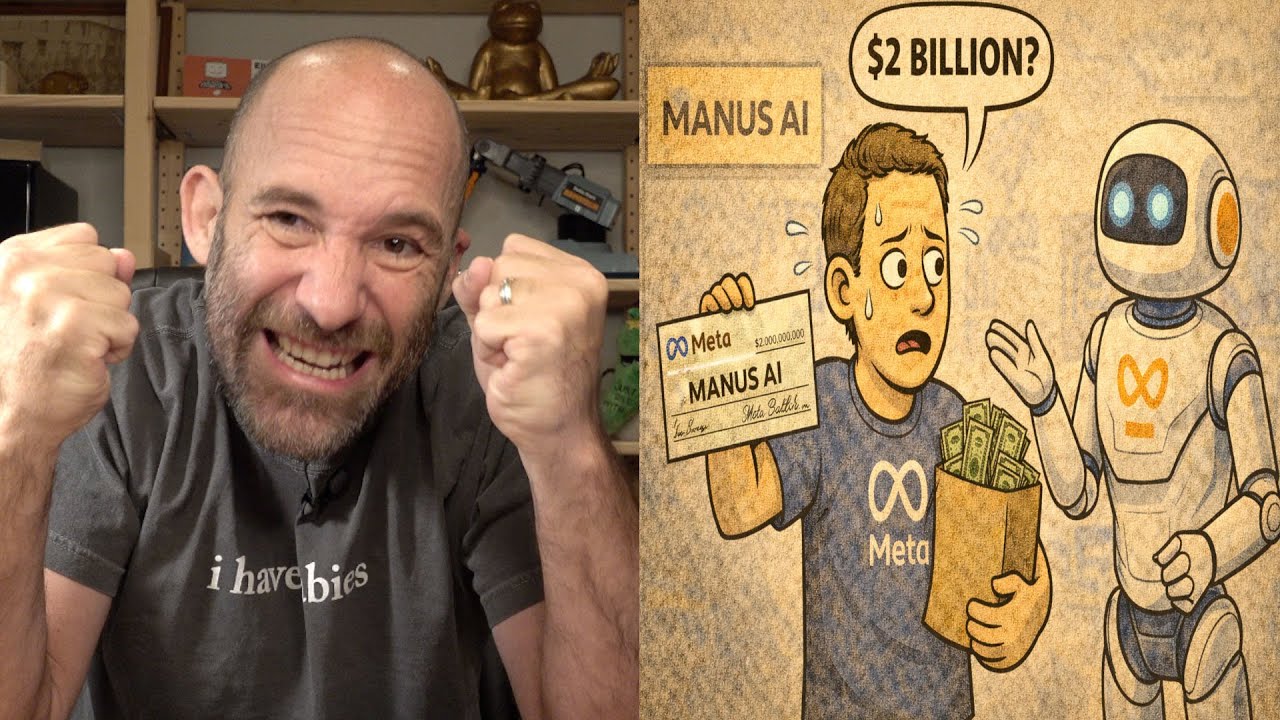
Eli the Computer Guy critiques Meta’s $2 billion acquisition of Manus AI as a desperate, ego-driven move by Mark Zuckerberg to stay relevant in the competitive AI landscape, warning that such big tech buyouts often destroy the value of innovative startups. He expresses skepticism about the business logic and long-term benefits of these acquisitions, highlighting concerns over misleading metrics, geopolitical tensions, and the tech industry’s shift from genuine innovation to hype and speculation.
In this video, Eli the Computer Guy discusses Meta’s recent $2 billion acquisition of Manus AI, a Singapore-based developer of general-purpose AI agents originally founded in China. He frames the acquisition within a broader pattern of big tech companies, like Meta and its CEO Mark Zuckerberg, desperately buying up startups in an attempt to maintain relevance and appear innovative. Eli draws parallels to past tech industry missteps, such as Yahoo’s acquisition spree under Marissa Mayer and Sun Microsystems’ failed stewardship of open-source projects, arguing that these purchases often lack a coherent integration plan and ultimately destroy valuable products.
Eli expresses concern that the current wave of AI acquisitions is driven less by sound business strategy and more by the personal insecurities and egos of tech leaders. He suggests that figures like Zuckerberg and Elon Musk are motivated by a need for validation and public adoration, rather than by a genuine desire to solve problems or improve technology. This, he argues, leads to reckless spending and the absorption of promising startups into corporate structures where their original value is often lost or diluted.
The video highlights Manus AI’s rapid growth, noting its claimed $100 million annualized revenue and millions of users. However, Eli cautions viewers to be skeptical of such metrics, pointing out that “annualized” figures can be misleading. He also questions whether Manus’ business model is truly synergistic with Meta’s core operations, which are primarily based on advertising and social platforms, rather than enterprise AI solutions. The acquisition, he suggests, seems more like a reactionary move to stay competitive in the AI space than a well-thought-out strategic decision.
Eli also touches on the geopolitical implications of the deal, noting that Manus was originally a Chinese company and that Meta is now taking steps to sever its Chinese ties. He sees this as part of the broader US-China tech rivalry, with companies relocating and restructuring to navigate regulatory and political pressures. He warns that as tech giants continue to scoop up AI startups, many innovative projects risk being stifled or abandoned, much like the now-defunct Zobni product he nostalgically recalls.
Ultimately, Eli laments the current state of the tech industry, arguing that it has shifted from genuinely improving people’s lives to chasing hype and financial speculation. He worries that the AI boom is less a bubble and more a large-scale fraud, with vast sums of money being funneled into projects that may never deliver on their promises. He calls for a return to a technology culture focused on real value and problem-solving, rather than ego-driven acquisitions and empty promises.