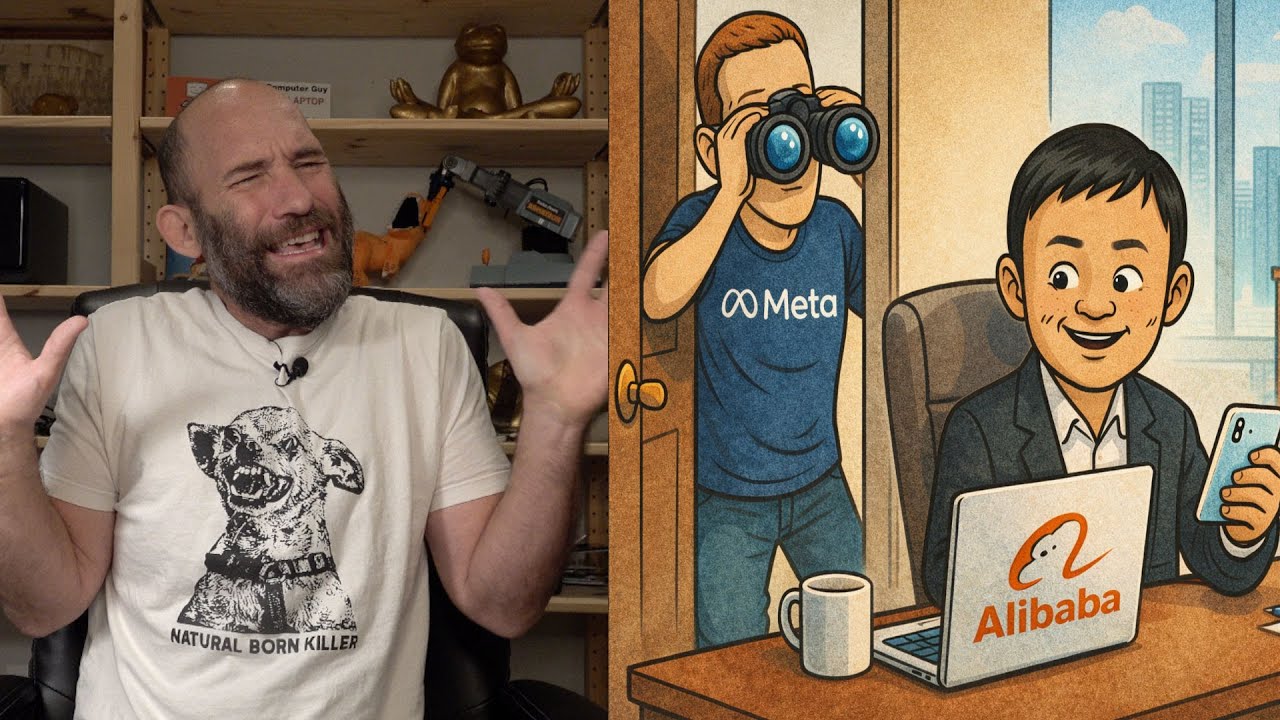
Eli the Computer Guy explains how Meta’s initially permissive Llama model was leveraged by Chinese companies like Alibaba to develop advanced AI models such as Qwen, which Meta is now reportedly using to train its new, more closed-source Avocado model. He critiques US political restrictions on AI collaboration with China, arguing that open, iterative development benefits innovation and that cooperation between the US and China would better advance AI technology.
In this video, Eli the Computer Guy discusses the evolving dynamics between Meta (formerly Facebook) and Chinese AI companies, particularly Alibaba, in the development of large language models (LLMs). He highlights how Meta initially released its Llama model with a permissive license (though not truly open source), which Chinese companies like Alibaba used as a foundation to develop their own AI models, such as Alibaba’s Qwen. Over time, Chinese models improved significantly, to the point where Meta is now reportedly using Qwen to help train its new AI model called Avocado. Eli emphasizes that this kind of back-and-forth innovation is exactly how open-source or near open-source development is supposed to work.
Eli points out that while Meta’s Llama was initially seen as superior and the default choice for AI developers worldwide, including in China, the situation has shifted. Chinese AI models have gained traction and improved performance, especially after the success of models like DeepSeek. He notes that Chinese models now make up a significant portion of open-source AI model downloads globally, reflecting their growing influence. However, Meta appears to be moving away from its earlier permissive licensing approach, with the new Avocado model expected to be closed-source, marking a shift in strategy.
The video also touches on the political and regulatory challenges surrounding AI development, particularly between the US and China. Eli criticizes US policies, including export controls and restrictions on collaboration with Chinese AI initiatives, which he views as counterproductive and overly restrictive. He argues that these political tensions complicate the natural collaborative and iterative process of AI development, where improvements from one party can benefit others. Eli expresses frustration with how politicians and bureaucrats interfere with technological progress.
Eli further discusses the broader implications of open-source AI development, noting that it allows multiple parties to explore different approaches, some of which may fail while others succeed. This diversity of experimentation is crucial for innovation. He contrasts the American tendency toward proprietary technology with the Chinese commitment to keeping their AI models open, which could give China an advantage in the long run. Eli sees the current situation as a normal part of technological evolution rather than a “loss” in any AI war.
Finally, Eli shares some personal updates about his work with Silicon Dojo, an educational initiative focused on hands-on technology training. He mentions upcoming classes on AI and computer vision and explains his new approach to managing his time for creating videos. He invites viewers to share their thoughts on the topic and encourages support for Silicon Dojo through donations and participation in classes. Overall, the video blends technical insights with commentary on geopolitics and open-source philosophy in AI development.