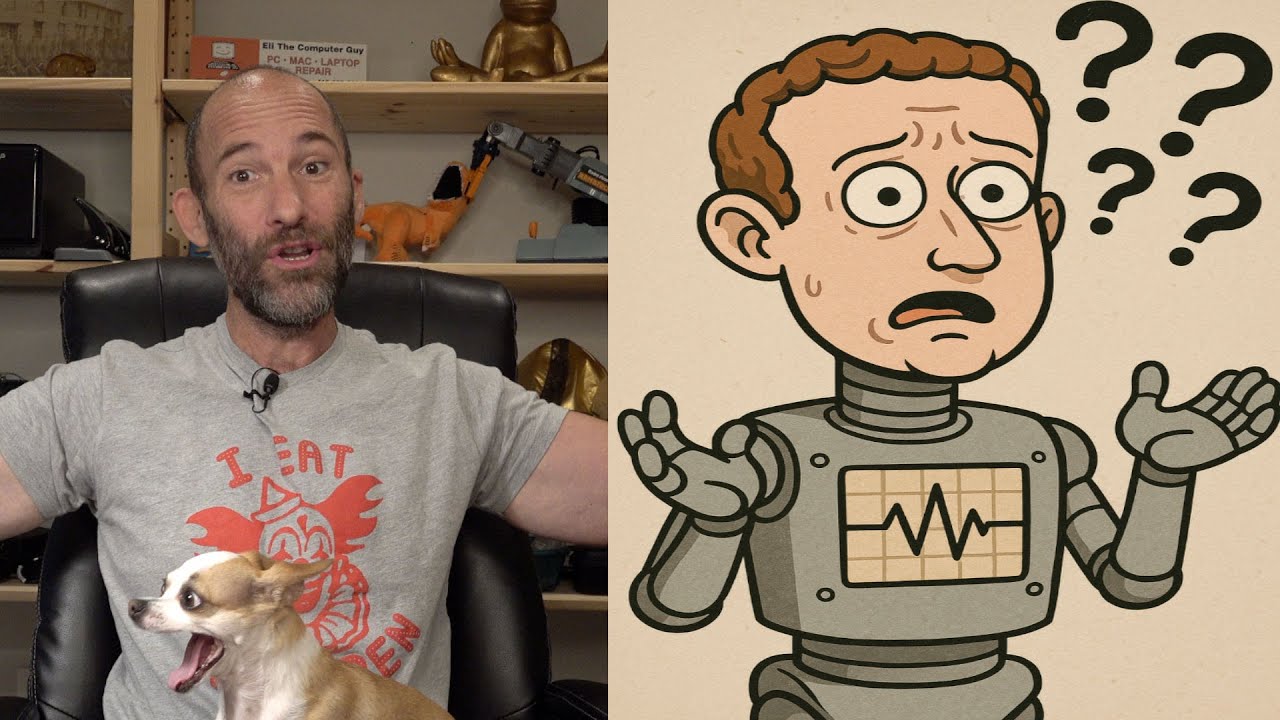
In this video, Eli the Computer Guy discusses Meta’s recent push into humanoid robotics, highlighting the company’s ongoing struggles to find a clear direction in the tech landscape of 2025. He points out that after Meta’s massive financial losses in the metaverse project, the company shifted focus to artificial intelligence, investing billions more, and now is moving into robotics. Eli expresses skepticism about the rationale behind these moves, suggesting that big tech companies, including Meta, are largely lost and simply following trends without a coherent vision or understanding of the future.
Eli critiques the broader tech industry’s rush to develop humanoid robots, mentioning Elon Musk’s Optimus robot and Nvidia’s efforts as examples. He questions the practicality and demand for such robots, arguing that most people do not need or want to own humanoid robots for everyday tasks. He emphasizes that while robotics is valuable technology, the scale and speed at which companies are investing in humanoid robots seem unrealistic and driven more by hype than actual market needs.
Focusing on Meta, Eli notes that the company has recently formed a dedicated robotics group within Reality Labs, led by experienced hardware and AI talent, including Lie Chin Miller, who previously led Meta’s smart glasses project. Despite these hires and efforts, Eli remains doubtful about what unique value Meta brings to the robotics space, given its background as a social media and advertising company. He questions the business rationale and profit potential of Meta’s humanoid robot ambitions, suggesting that the company lacks a clear plan or differentiator.
Eli also reflects on the broader state of innovation in the tech industry, lamenting that many of the so-called visionaries are actually lacking new ideas and are primarily driven by financial motives rather than genuine technological breakthroughs. He criticizes the current tech environment as being dominated by financial engineering and legal strategies to extract wealth, rather than meaningful innovation that improves the world. This, he argues, is a disappointing shift from the more visionary and impactful technology development he witnessed earlier in his 30-year career.
In conclusion, Eli invites viewers to share their thoughts on Meta’s robotics efforts and expresses a desire for insiders to explain the company’s strategy, which remains unclear even to those within Meta. He underscores the irony of Meta, a company rooted in social media, entering the humanoid robot race so late and without a clear competitive edge. Despite his skepticism, Eli continues to provide hands-on technology education through his Silicon Dojo classes, encouraging viewers to engage with and support his work.