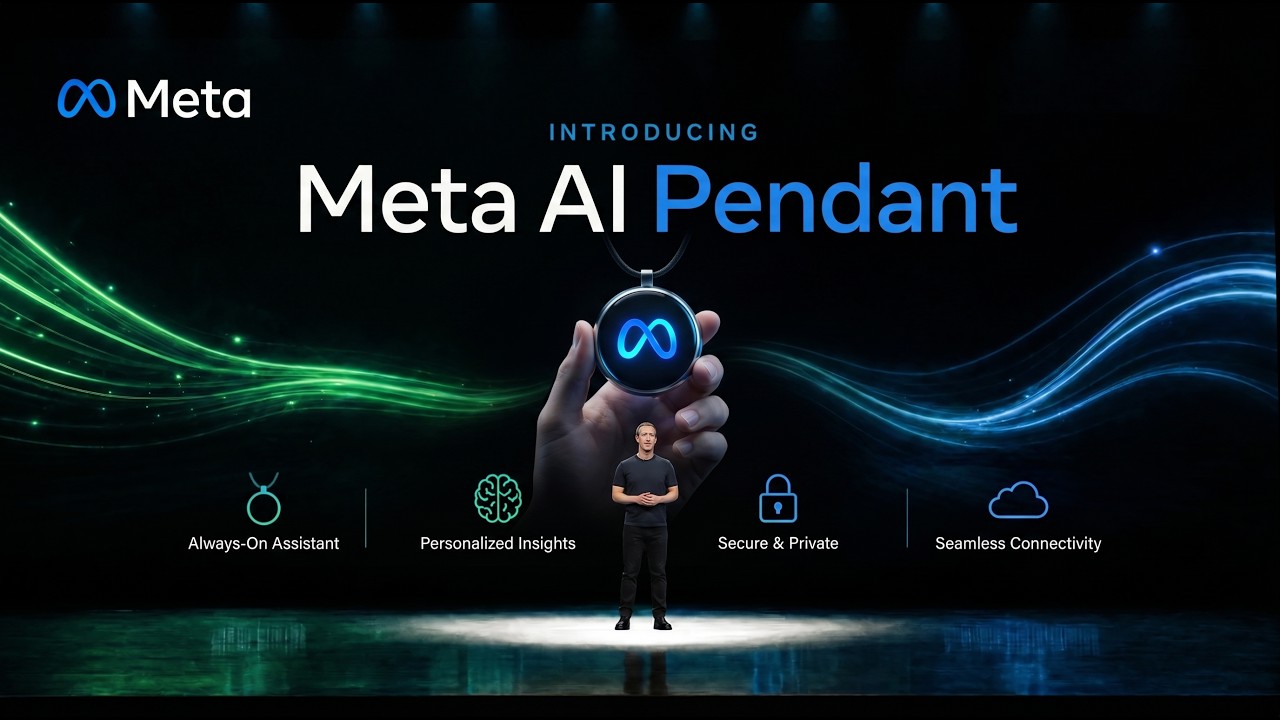
Meta has confirmed it is developing a small AI-powered pendant that continuously listens to conversations, meetings, and voice notes throughout the day, organizing the information automatically without user intervention. This clip-on device, worn on clothing or around the neck, builds on technology from a startup called Limitless, which Meta acquired in 2025. The original Limitless pendant could record up to 100 hours on a single charge, generate transcripts, and link recordings to calendars and emails for context. Meta plans to begin testing this AI pendant in 2027, though no public release date has been announced.
The pendant is part of Meta’s broader strategy to revitalize its hardware division, Reality Labs, which has been losing billions of dollars. Alongside plans to release new Ray-Ban smart glasses and enterprise-focused wearable products, the pendant aims to increase user engagement with Meta’s AI services and convert users into paying subscribers. This move aligns with the emerging trend of ambient AI, where devices run continuously in the background to capture and provide context-aware assistance without requiring manual input.
However, the device raises significant privacy concerns. Meta’s history with data privacy, including lawsuits and investigations related to its Ray-Ban glasses, has made users wary. The idea of an always-on microphone recording conversations is particularly controversial, with over half of potential buyers in the ambient wearable market citing privacy fears as a reason not to purchase similar devices. Previous AI wearables like Humane’s AI Pin and the Friend AI necklace have struggled or failed due to these concerns.
Regulatory challenges also loom large, especially in Europe, where strict laws govern recording conversations without consent. Meta will need to navigate GDPR and other regulations carefully, potentially incorporating features like audible consent tones or physical mute buttons. The company will also be watching how similar products, such as Amazon’s clip-on AI device, perform in the market before fully committing to its own version.
Ultimately, Meta’s AI pendant represents a bold bet on wearable AI technology. Success will depend on whether the device can deliver clear, practical benefits that justify its use and whether Meta can rebuild trust around privacy. The initial rollout may be best suited for enterprise environments where recording meetings is already common practice. If Meta manages these challenges well, it could pioneer mainstream adoption of AI wearables; if not, the pendant risks becoming another failed experiment in AI hardware. Testing begins in 2027, which will reveal how this ambitious project unfolds.