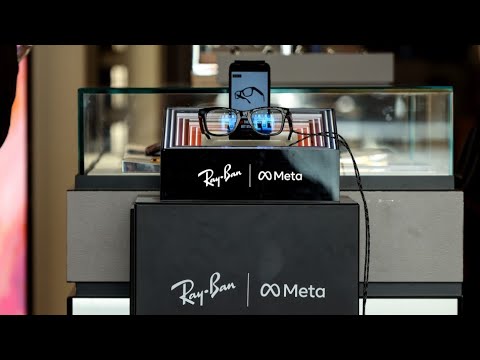
Meta’s Ray-Ban smart glasses have become a surprising success, far exceeding the company’s initial expectations. Unlike previous attempts at smart glasses, which failed to gain traction, these new Ray-Bans have seen strong demand, particularly in the U.S. As a result, Meta is asking its manufacturing partner, Luxottica, to double its annual production capacity from 10 million to 20 million units, with the possibility of increasing to 26 or even 30 million if demand continues. The popularity has even led to reduced shipments abroad to prioritize the domestic market.
The key to the Ray-Ban smart glasses’ success lies in their integration with Meta AI, a voice-based artificial intelligence system. Consumers are engaging with Meta’s AI through the glasses, making the device more than just a novelty with a camera or audio features. The next step for Meta is to incorporate a display into the glasses, moving toward augmented reality capabilities. However, some users have noted limitations, such as the inability to shoot horizontal video, which currently restricts content creation to vertical formats.
At the same time, Meta is undergoing significant restructuring, particularly within its metaverse division. The company plans to cut around 1,000 jobs from this unit, which has struggled to deliver on its promise of a virtual world accessed through VR headsets. The metaverse initiative, managed by Facebook Reality Labs, has been losing billions of dollars and has not achieved the same consumer traction as the AI-driven Ray-Ban glasses. This shift reflects Meta’s broader strategy of reallocating resources from underperforming areas to those showing more promise.
The job cuts are part of a larger trend at Meta, which has been focusing more on AI and software development, both for internal and external applications. While the metaverse division is shrinking, Meta is investing heavily in AI, including expanding compute capacity in its data centers and hiring more talent for AI projects. The company’s approach to workforce management is pragmatic, using headcount adjustments as a way to align resources with strategic priorities. Earlier, Meta had considered even larger layoffs, but ultimately settled on a more targeted reduction.
The success of Meta’s smart glasses has also prompted comparisons with competitors like Apple, which has focused on headsets rather than glasses. The discussion highlights that the everyday consumer is more likely to interact with a voice-based assistant through a familiar and wearable form factor like glasses, rather than a bulky headset. Other attempts at wearable AI, such as the Humane AI Pin, have failed to gain traction, underscoring the unique appeal of Meta’s approach. The market is now seeing a growing number of smart glass offerings, indicating a shift in how consumers may interact with technology in the future.