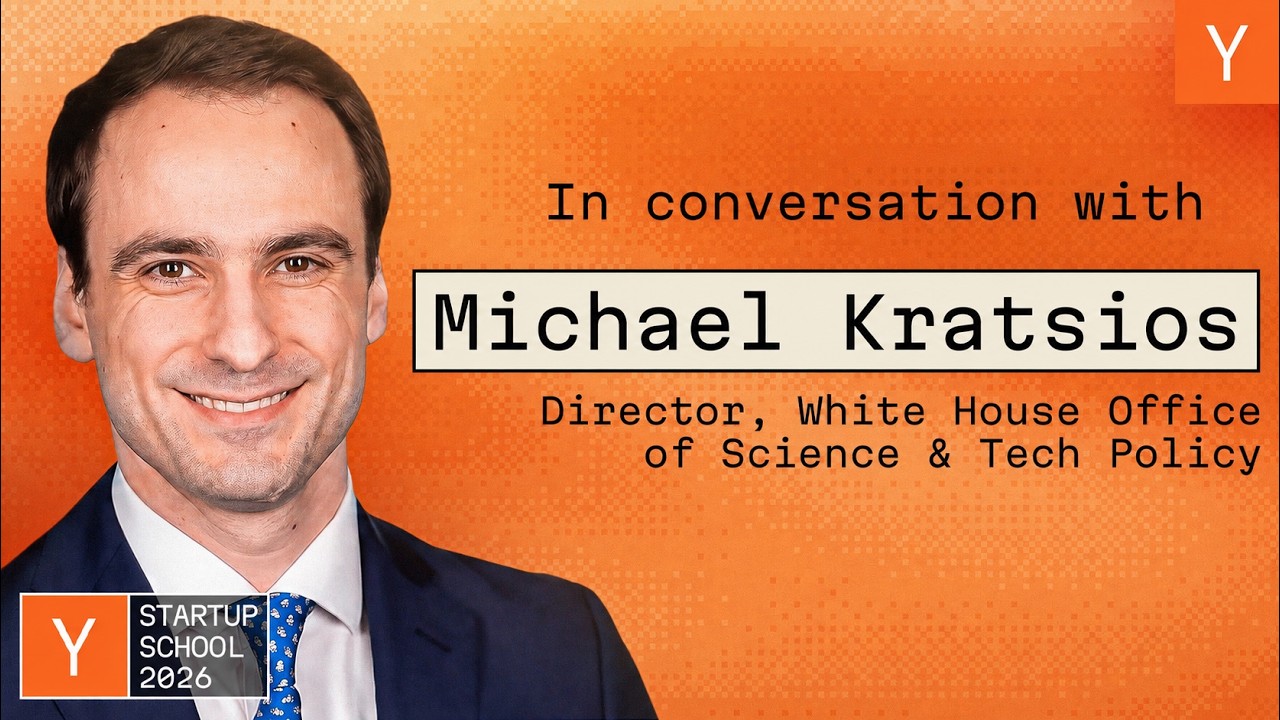
Michael Kratsios, Director of the White House Office of Science and Technology Policy and former U.S. Chief Technology Officer, shared insights into the U.S. government’s approach to AI policy and technology regulation. He emphasized his commitment to public service driven by a belief in American leadership in emerging technologies and the unique scale of problems addressed by government. Kratsios highlighted his background working with startups and venture capital, which shaped his understanding of the critical role government regulation plays in either enabling or hindering innovation across industries like autonomous vehicles and commercial drones.
Kratsios explained the complexity of technology policymaking in the U.S., noting that it is highly federated across multiple agencies rather than centralized. Effective policy requires coordination among diverse stakeholders, balancing national security, commercial interests, and scientific research. He addressed recent concerns about potential government restrictions on open-source AI models, affirming the White House’s strong support for a vibrant open-source ecosystem as essential for maintaining U.S. leadership in AI innovation.
Discussing the challenges of regulating rapidly evolving AI technologies, Kratsios cautioned against setting rigid rules that quickly become outdated, citing the EU AI Act as an example. Instead, he advocated for flexible, adaptive policies that can evolve with technological advances. He identified cybersecurity risks related to AI as a significant concern, while suggesting that some fears, such as biological risks from AI, may be overblown at present. Kratsios also stressed the importance of ensuring that AI regulation does not create barriers favoring large incumbents over startups, highlighting the administration’s efforts to promote a unified national regulatory framework to avoid a patchwork of state laws.
Kratsios described his role at the White House as coordinating science and technology policy across federal agencies, managing portfolios that include AI, quantum computing, biotech, and space. He outlined the day-to-day work involving stakeholder engagement, interagency collaboration, and advising the president on critical technology issues. He also discussed a recently released 150-page report, “Science, a New Golden Age,” which calls for revitalizing the U.S. science ecosystem to reflect the shift from government-led to private-sector-driven R&D, emphasizing AI’s transformative potential in accelerating scientific discovery through autonomous experimentation and advanced infrastructure.
Looking ahead, Kratsios identified quantum information science as a key emerging technology that will gain greater attention in Washington. He encouraged startups and technologists to engage with government and consider public service as a rewarding way to impact national technology policy. He underscored the administration’s commitment to reducing regulatory burdens and fostering an environment where innovation can thrive, urging Congress to enact legislation that supports a clear, consistent framework for AI and intellectual property protections that balance creators’ rights with technological progress.