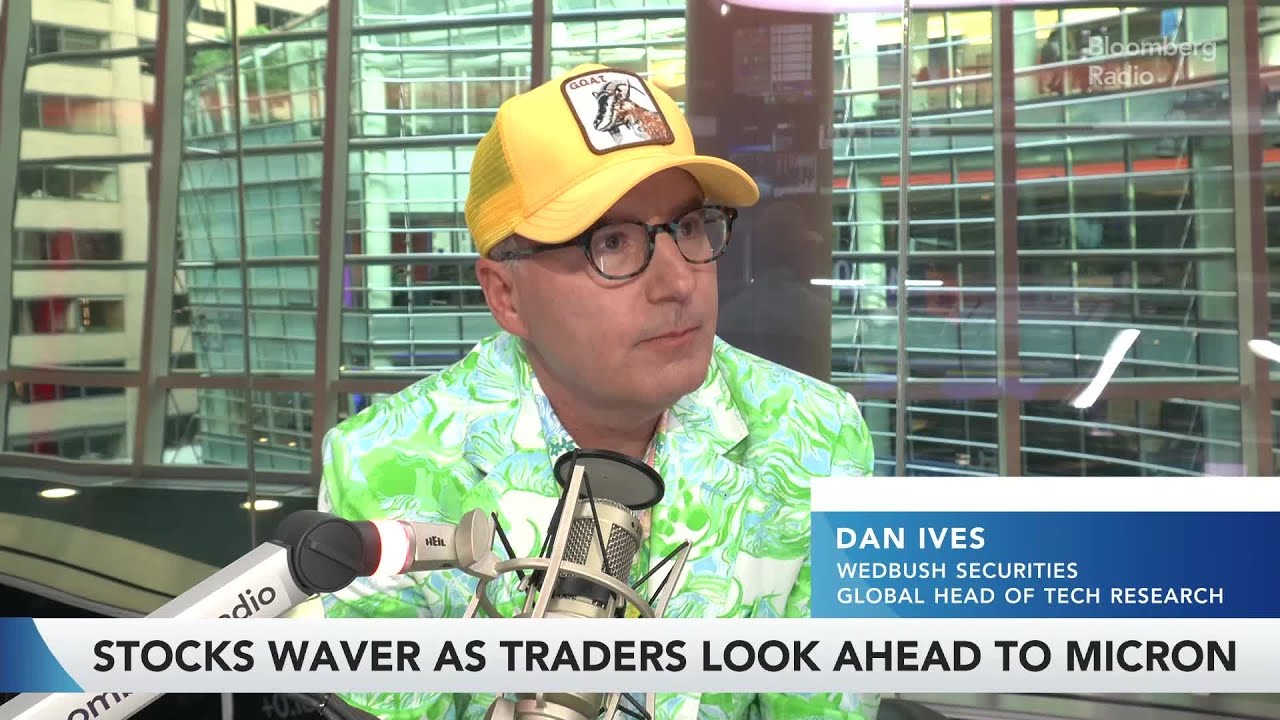
The discussion begins with an acknowledgment of a market pullback, attributed largely to recent developments in Korea and broader geopolitical concerns, particularly regarding China’s advancements in AI. Despite fears about China’s cost-effective AI capabilities, the speaker argues that the U.S. currently leads China in AI technology, citing strong performances from companies like Nvidia, Microsoft, and others. The fears surrounding China’s AI progress are viewed as somewhat exaggerated, with the U.S. maintaining a competitive edge in AI innovation and deployment.
Microsoft’s stock and growth prospects are a central focus, with the speaker noting that while Microsoft has shown strong Azure growth, it faces challenges such as competition from Amazon and Google and a rocky start with its Copilot product. The stock is described as being in a “penalty box,” implying it is undervalued or underperforming relative to expectations. The speaker suggests that Microsoft may need to take active measures, such as share buybacks or accelerating dividend growth, to regain investor confidence and demonstrate clear execution and growth in the AI space.
The conversation then shifts to the broader tech landscape, including companies like Alphabet and emerging players like SpaceX. Investors are seen as increasingly discerning, looking beyond broad tech trends to the specific characteristics and growth drivers of individual companies. AI’s influence is noted as spreading across various sectors, from space technology to cybersecurity and industrial companies like Caterpillar, highlighting the pervasive impact of AI on multiple industries and the challenge of how to best invest in this evolving landscape.
Regarding SpaceX, the speaker notes that it is viewed as a proxy for broader AI and tech trends, with investors closely watching its developments as part of the overall tech trade. The discussion touches on the integration of AI across different companies and sectors, emphasizing the importance of execution and tangible growth metrics. The speaker also mentions the potential for Tesla to be acquired by SpaceX, aligning Elon Musk’s AI ventures under one ecosystem, which could have significant implications for the future of AI-driven technologies and autonomous systems.
Finally, the conversation addresses skepticism around Tesla’s valuation and future prospects, particularly from respected critics. The speaker acknowledges the pressure on Tesla to demonstrate concrete progress in autonomous driving and robotaxi services over the next few years. While current valuations may seem high, the market is betting on Tesla’s potential to dominate the autonomous vehicle market through execution and innovation. Ultimately, the success of Tesla and other AI-driven companies hinges on their ability to deliver on ambitious growth and technology promises in the near future.