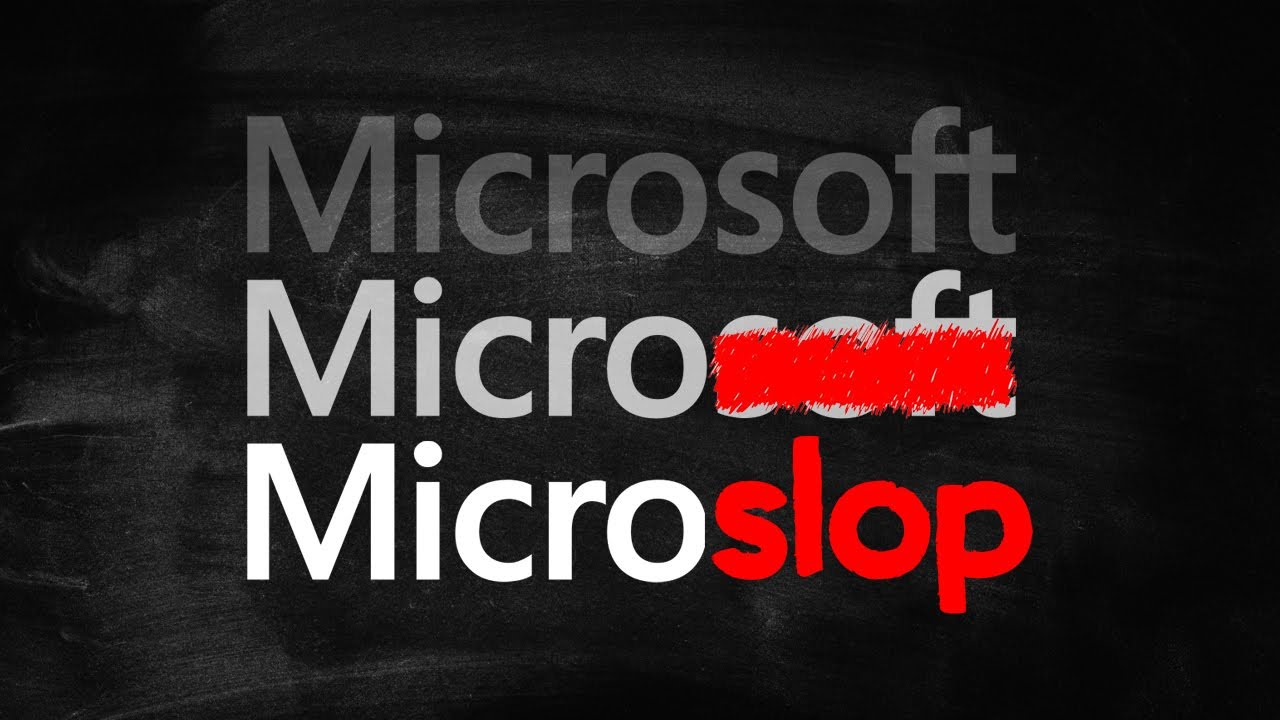
The video humorously critiques Microsoft and its CEO, Satya Nadella, for their reaction to the widespread use of the term “AI slop” to describe the proliferation of low-quality, AI-generated content online. The creator notes that “slop” was even named Merriam-Webster’s word of the year for 2025, highlighting how the term has become synonymous with digital content produced in bulk by artificial intelligence that lacks substance or quality. The video clarifies that “slop” specifically refers to this kind of low-effort, AI-generated material, not just any content someone dislikes or generic reaction videos.
Satya Nadella’s recent blog post is dissected, where he urges people to view AI as a tool to augment human potential rather than as a replacement for humans. Nadella argues that the focus should be on how people apply AI to achieve their goals, rather than on the debate between “slop versus sophistication.” The video’s creator finds this stance both amusing and contradictory, especially given Microsoft’s own actions, such as laying off thousands of workers while simultaneously championing AI transformation as a business priority.
The video points out that Microsoft is not alone in seeing AI as a replacement for human workers. CEOs from companies like Anthropic, Ford, and Fiverr have all warned that AI is poised to eliminate a significant number of white-collar jobs. However, the creator argues that these tech leaders are often out of touch with reality, sometimes making contradictory statements about AI’s impact. The video also highlights the dangers of over-reliance on generative AI, citing real-world examples where AI has caused harm, such as a man being hospitalized after following faulty AI-generated health advice.
To further debunk the narrative that AI is boosting productivity, the video references several studies and surveys. Research from Harvard Business Review and Stanford shows that while companies are pushing employees to use AI tools, these tools often result in “work slop”—output that looks passable but lacks real value and creates more work for others. Additional studies reveal that AI adoption can actually decrease productivity, slow down experienced workers, and even lead to lower competence ratings, especially for women and older employees. These findings suggest that AI is currently more of a hindrance than a help in many professional settings.
In conclusion, the creator asserts that the term “slop” is not only appropriate but should become even more widespread when referring to AI-generated content, given its current state. Satya Nadella’s optimistic framing of AI as a “cognitive amplifier tool” is criticized as misleading, with the creator arguing that generative AI can actually cause cognitive atrophy and harm users’ mental abilities. While acknowledging that AI has some potential applications, the video maintains that, for now, most AI output is low-quality slop, and this will remain the case until there is a significant improvement in the technology’s value and output.