Microsoft has launched Copilot Health, an AI-powered tool that provides personalized health insights by integrating users’ medical records and wearable data, and helps them find healthcare providers, but it is not intended to replace doctors. While the technology promises more efficient access to health information, experts warn about the risks of relying on AI for medical advice, as studies show current chatbots often provide inaccurate guidance.
Microsoft has unveiled a new feature called Copilot Health, which leverages artificial intelligence to provide users with personalized health insights. This tool can access private medical records, integrate data from wearable devices like smartwatches, and use health history provided by the user to generate actionable recommendations. Copilot Health also connects to real-time U.S. provider directories, allowing users to search for clinicians based on specialty, location, languages spoken, and insurance coverage. Microsoft positions this feature as a step toward what it calls “medical super intelligence.”
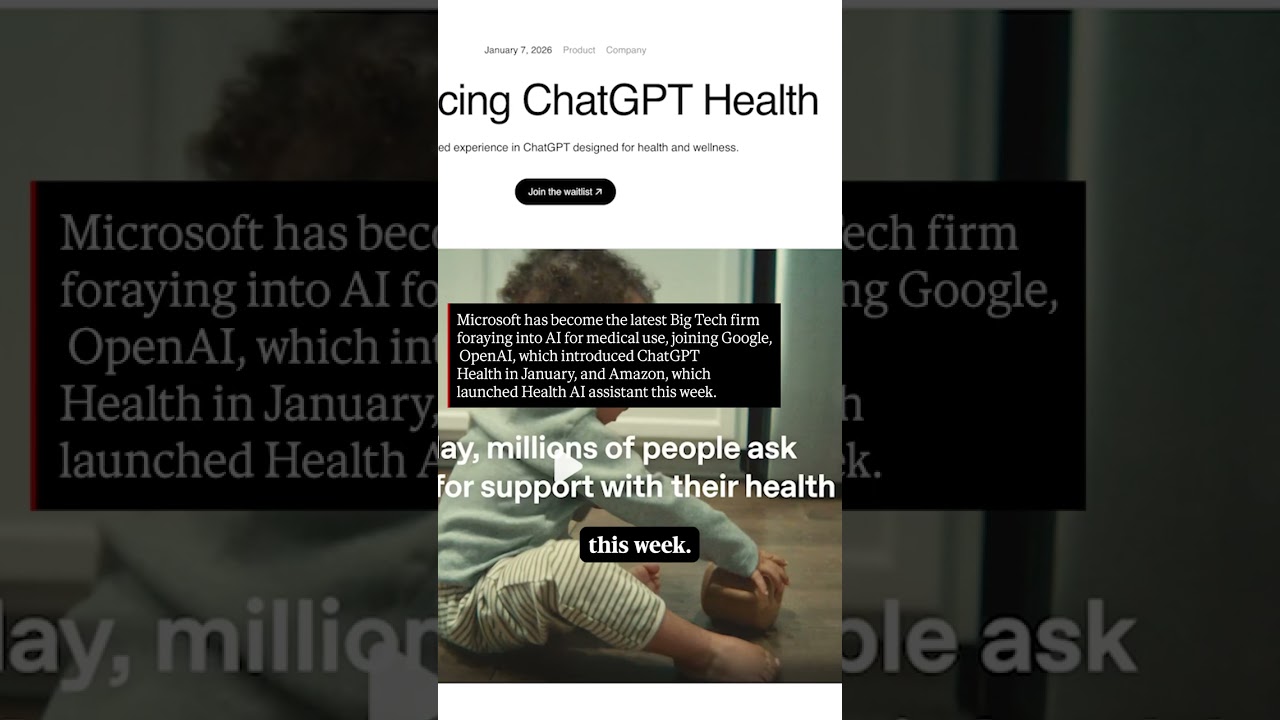
With this launch, Microsoft joins other major tech companies—such as Google, OpenAI, and Amazon—in the rapidly expanding field of AI-driven medical assistance. OpenAI introduced ChatGPT Health in January, and Amazon recently launched its own Health AI assistant. According to Microsoft, its AI systems already handle approximately 50 million health-related inquiries daily. The company emphasizes that Copilot Health is not intended to replace doctors but aims to make accessing health information more efficient for users.
Despite the technological advancements, the medical community has expressed significant concerns about the reliance on AI for medical advice. Physicians at leading institutions warn that users may place too much trust in AI-generated recommendations, potentially leading to misdiagnoses or inappropriate actions. Microsoft acknowledges these concerns and is rolling out Copilot Health gradually, starting with a waitlist opening on Thursday.
Recent research highlights the limitations of current AI chatbots in providing accurate medical guidance. A study published in Nature Medicine simulated real-world use of AI chatbots for health advice. The findings revealed that, although over 40 million people daily use ChatGPT for medical inquiries—accounting for more than 5% of its messages—the accuracy of self-diagnoses remains low. Only about one-third of participants in the study correctly identified a hypothetical condition after interacting with the bots, and fewer than half chose the appropriate next steps, such as whether to seek emergency care or stay home.
Experts caution that AI is not yet ready to replace physicians. Dr. Rebecca Payne from the University of Oxford noted that doctors are trained to ask about symptoms patients might not realize are important, something AI models currently struggle with. Her co-author, Dr. Andrew Bean, emphasized that people often do not know what information they should provide to the AI, further limiting its effectiveness. As AI continues to evolve in the healthcare space, both opportunities and risks remain at the forefront of the conversation.