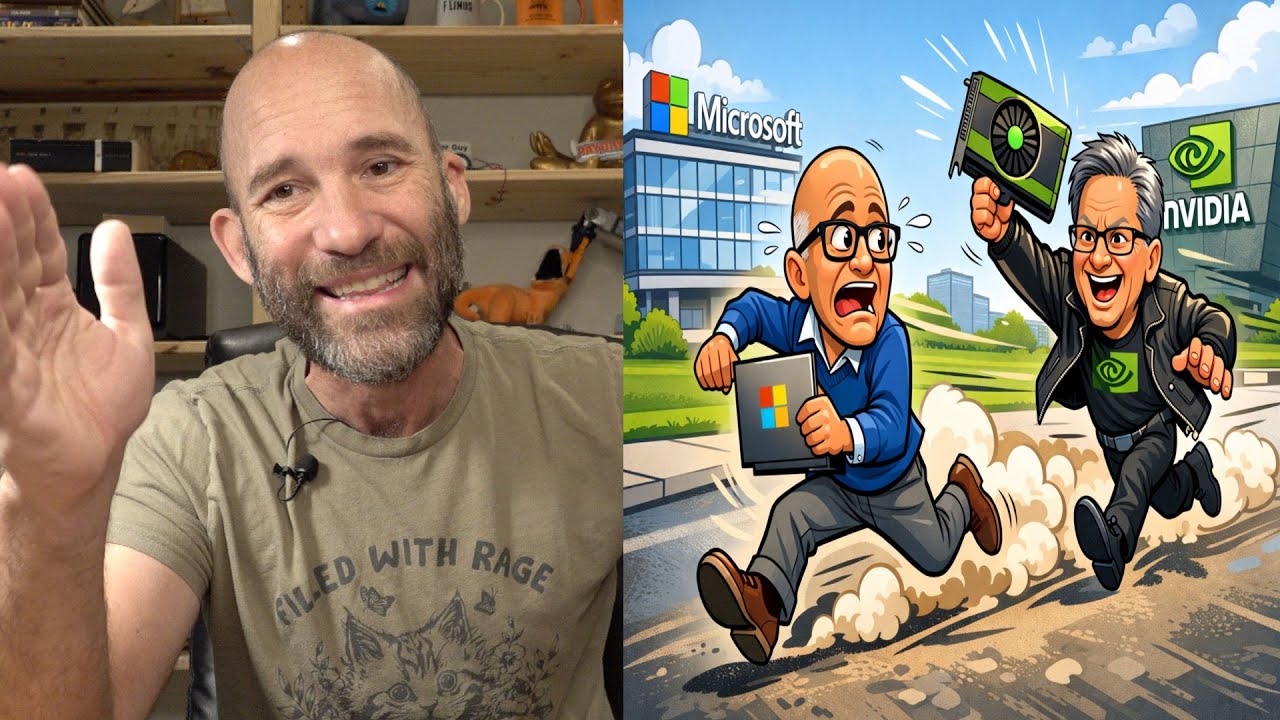
In this video, Eli the Computer Guy discusses the rapidly evolving landscape of artificial intelligence hardware, focusing on Microsoft’s new Maia 200 AI chip and its implications for the industry, particularly for Nvidia. He begins by sharing his excitement about hands-on AI projects, such as building telephone AI agents using Twilio and Eleven Labs, and emphasizes the practical value and business opportunities these technologies present. Eli draws parallels between the current AI boom and past technological shifts, like the introduction of auto-attendants in telephony, highlighting how new tools can create easy wins for those who understand and leverage them.
Eli then critiques the current state of AI development, arguing that the technology stack is still immature and that the massive investments being made—such as OpenAI’s $1.3 trillion in contracts—may not be justified by the actual value delivered. He points out that many AI tasks can be accomplished with much smaller, more efficient models (like IBM’s 350 million parameter Granite model) rather than the massive, resource-intensive models that dominate headlines. He also notes that much of the AI hype conflates societal value with business value, leading to questionable economic decisions and overbuilt infrastructure.
The core of the discussion centers on Microsoft’s Maia 200 chip, a custom ASIC (application-specific integrated circuit) designed for AI workloads. Eli explains that ASICs are tailored for specific tasks, making them more efficient than general-purpose CPUs or even GPUs. Microsoft’s move to develop its own AI chips, following similar efforts by Google and Amazon, signals a shift away from reliance on Nvidia and AMD. This trend, Eli argues, could erode Nvidia’s dominance, especially as more companies and even countries like China develop their own specialized processors.
Eli further explores the business and technical implications of this shift. He questions the long-term demand for high-end GPUs, suggesting that the current rush to build AI infrastructure is similar to the early days of network cabling—profitable now, but likely to taper off as the market matures. He also highlights practical considerations like energy efficiency and deployment speed, noting that Microsoft claims the Maia 200 can be installed and operational in data centers within days, and may offer better performance per dollar and per watt compared to competitors.
In conclusion, Eli urges viewers to focus on real-world functionality rather than marketing hype. He cautions against the narrative that only expensive, high-powered GPUs can deliver meaningful AI results, pointing out that many practical applications can run on much smaller, cheaper hardware. The proliferation of custom AI chips from major cloud providers suggests a more fragmented and competitive future for AI infrastructure, challenging Nvidia’s current market position. Eli encourages his audience to think critically about the direction of AI development and to consider the practical needs of their own projects, rather than getting swept up in industry rhetoric and inflated valuations.