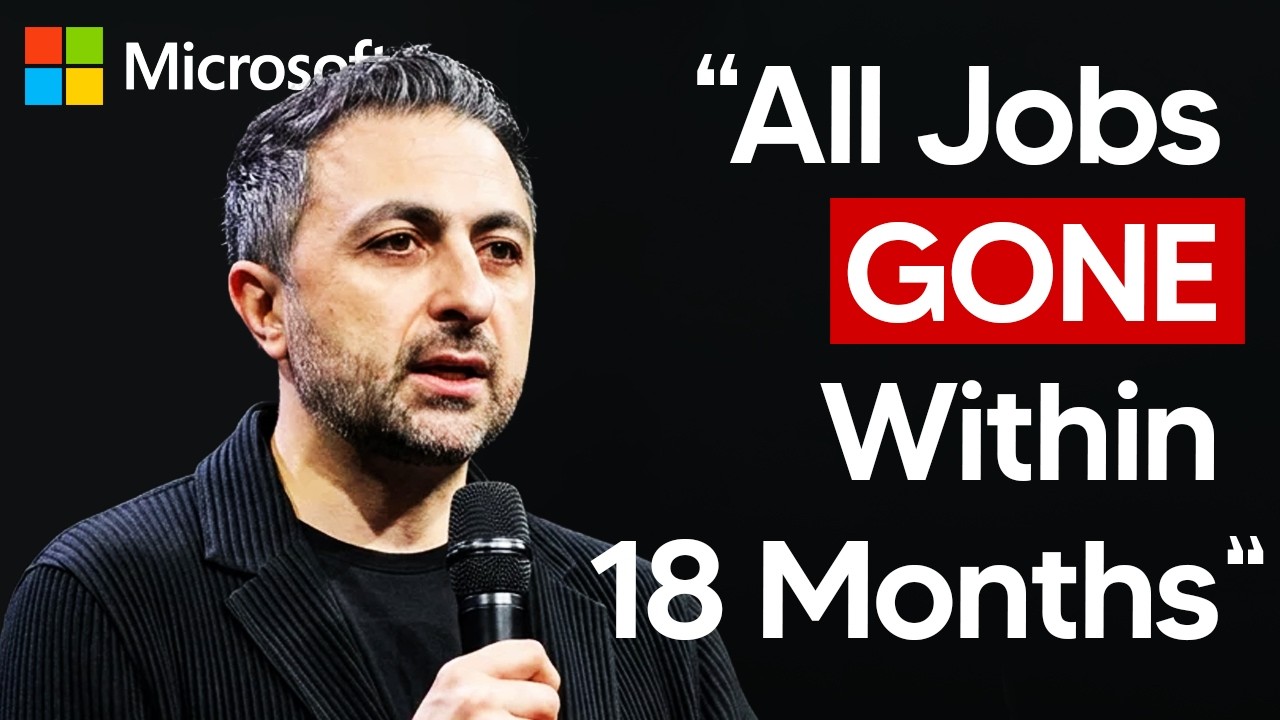
The Microsoft AI Chief, Mustafa Suleman, predicts that within the next 12 to 18 months, AI will fully automate most white-collar jobs, including roles like lawyers, accountants, project managers, and marketers. He highlights how AI-assisted coding is already transforming software engineering, shifting human roles towards more strategic tasks. This alarming forecast is echoed by other AI leaders like Dario Amodei, who warns of a potential employment crisis as entry-level white-collar jobs begin to contract due to AI automation. Current labor market data supports these concerns, showing a significant decline in white-collar job openings, indicating that the impact of AI on employment is already underway.
The economic and social implications of this shift are profound, with discussions around universal basic income (UBI) gaining traction as a potential solution to cushion the blow for displaced workers. Pilot UBI programs, such as one in Ireland supporting artists during the pandemic, have shown promising results, suggesting that guaranteed income could help stabilize those affected by job losses. However, scaling such programs to an entire economy where a majority might be unemployed remains a complex challenge. Meanwhile, some companies are already leveraging AI to reduce their workforce significantly, as seen with Block’s 40% staff cut, citing AI tools and streamlined teams as reasons for increased efficiency and profitability.
In response to AI’s growing capabilities, legislative efforts are emerging to protect certain professional fields from AI automation. A proposed bill aims to ban AI from providing advice in sensitive areas like medicine, law, and engineering, citing liability concerns. This marks the first serious attempt to shield white-collar jobs through regulation, reflecting the political power of these professions compared to blue-collar workers. However, the bill raises questions about enforcement, especially with open-source AI models, and whether it merely delays the inevitable disruption AI will bring to these fields.
Research from Anthropic and Gartner provides a nuanced view of AI’s impact on the workforce. While AI adoption is still in early stages for many high-exposure professions, there is evidence of job displacement among younger workers. Gartner predicts that AI’s overall effect on global jobs will be neutral through 2026, with job creation balancing out job losses by 2028. However, they warn of significant job market churn, requiring massive upskilling and workforce transitions. Companies rushing to replace humans with AI risk service quality declines and costly rehiring, highlighting the messy and unpredictable nature of AI-driven employment changes.
Finally, the rise of AI is reshaping hiring and skill assessment practices. Gartner forecasts that by 2027, AI literacy will become a formal credential, with many hiring processes including tests for AI proficiency and AI-free skill assessments to ensure candidates’ genuine capabilities. This shift underscores the growing importance of adapting to AI not just as a tool but as a fundamental aspect of professional competence. Overall, while AI promises efficiency and transformation, its integration into the workforce is complex, fraught with challenges, and will require careful management to mitigate social and economic disruption.