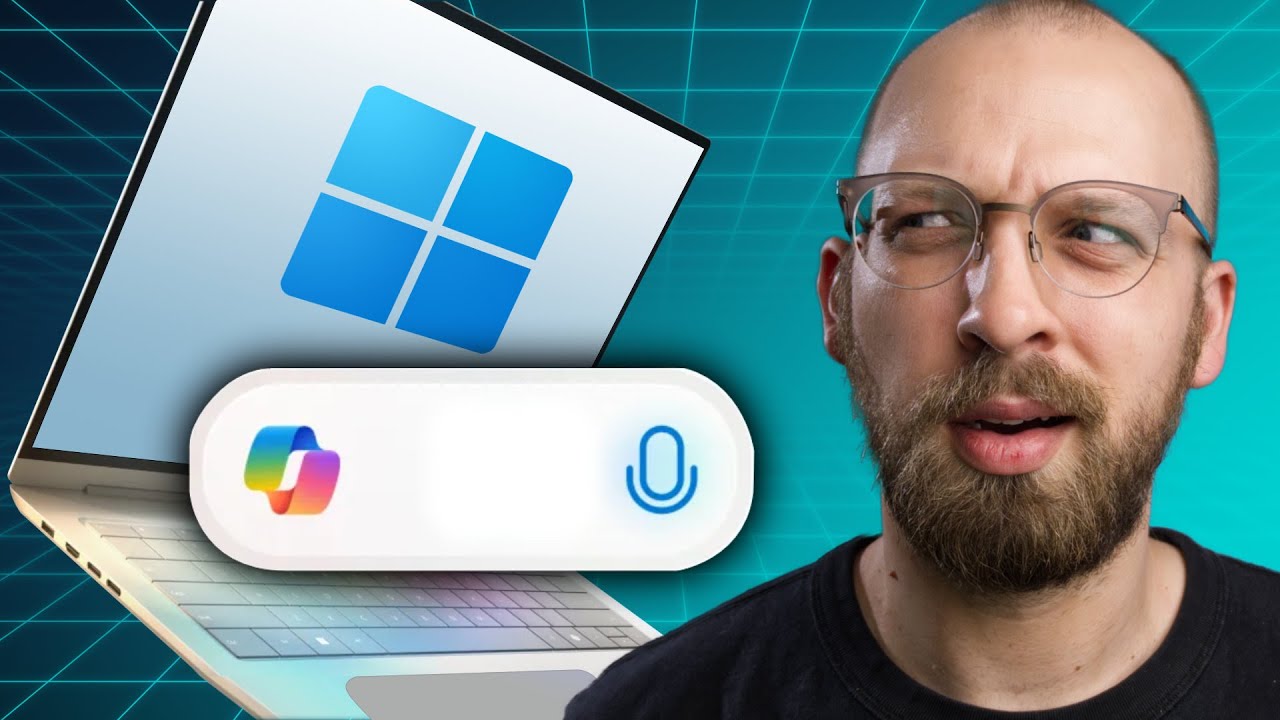
This week’s major Windows update from Microsoft introduces a suite of new features that feel like a preview of Windows 12. A standout addition is Copilot Vision, which lets you stream your screen and interact with it by talking to find products or information on screen, similar to Android’s “circle to search” but continuous. Another key feature, Copilot Action, allows the system to take control of your PC to perform tasks like fixing photo orientations or removing duplicates, showing progress step-by-step and letting users intervene anytime. There’s also a new Copilot bar in the taskbar for launching actions and connectors that integrate external apps like OneDrive and Google accounts. Microsoft markets this as a computer you can talk to and that talks back, though the presenter expresses skepticism about the practicality of voice interaction in typical office environments.
In mobile OS news, many Android brands are copying Apple’s new “liquid glass” design language introduced in iOS 16. Honor, Oppo, Vivo, OnePlus, and Samsung’s upcoming One UI 8.5 beta all show clear inspiration from Apple’s frosted glass, transparent widgets, reflections, and dynamic island elements. Vivo even copied iOS’s notification system, which is widely considered inferior to Android’s. Samsung’s approach is somewhat more restrained but still shows clear influence. The presenter notes that while frosted glass aesthetics have existed before Apple, the simultaneous adoption by many brands points to Apple’s strong design influence in the industry.
Nothing, the smartphone company, recently released videos suggesting that magnetic wireless charging is hindered by legal and technical barriers, claiming it would cost around $10 million to develop a proprietary system. However, after consulting experts and the Wireless Power Consortium, which owns the CH2 wireless charging standard, the presenter clarifies that these claims are misleading. The magnetic alignment is part of the standard, and companies that are members have access to the specs and licensing under reasonable terms. The presenter suggests that Nothing’s videos were likely made for entertainment and may have involved some miscommunication rather than intentional misinformation.
Apple announced new devices featuring their M2 chip, including an updated Vision Pro headset with a more comfortable design and higher refresh rate, a 14-inch MacBook Pro, and an iPad Pro with faster SSDs and new wireless chips. Notably, the MacBook in Europe no longer includes a charger in the box, requiring customers to buy one separately if needed. While this sparked online outrage blaming Apple or EU regulations, the presenter points out that the MacBook’s price actually dropped by about €100, making it a net positive for consumers who don’t need a charger. Additionally, Razer released new products with nostalgic white transparent plastic designs reminiscent of old Game Boy Advances.
In brief news, Samsung reportedly canceled the S26 Edge due to poor sales of its predecessor and teased a Vision Pro competitor called Project Muhan launching in October. Austria’s military is switching from Microsoft Office to LibreOffice over sovereignty concerns, and the Dutch government took control of chipmaker Nexperia citing national security issues. ChatGPT plans to roll out age verification to enable adult content safely. Google announced an improved video AI, VO 3.1, capable of generating videos with audio and specific frame instructions. Lastly, two major companies, Honor and Samsung, released AI-generated ads that were poorly received for their low quality. The video ends with a sponsor segment praising Hansen Shaving’s precision safety razors as a better, more sustainable alternative to modern multi-blade razors.