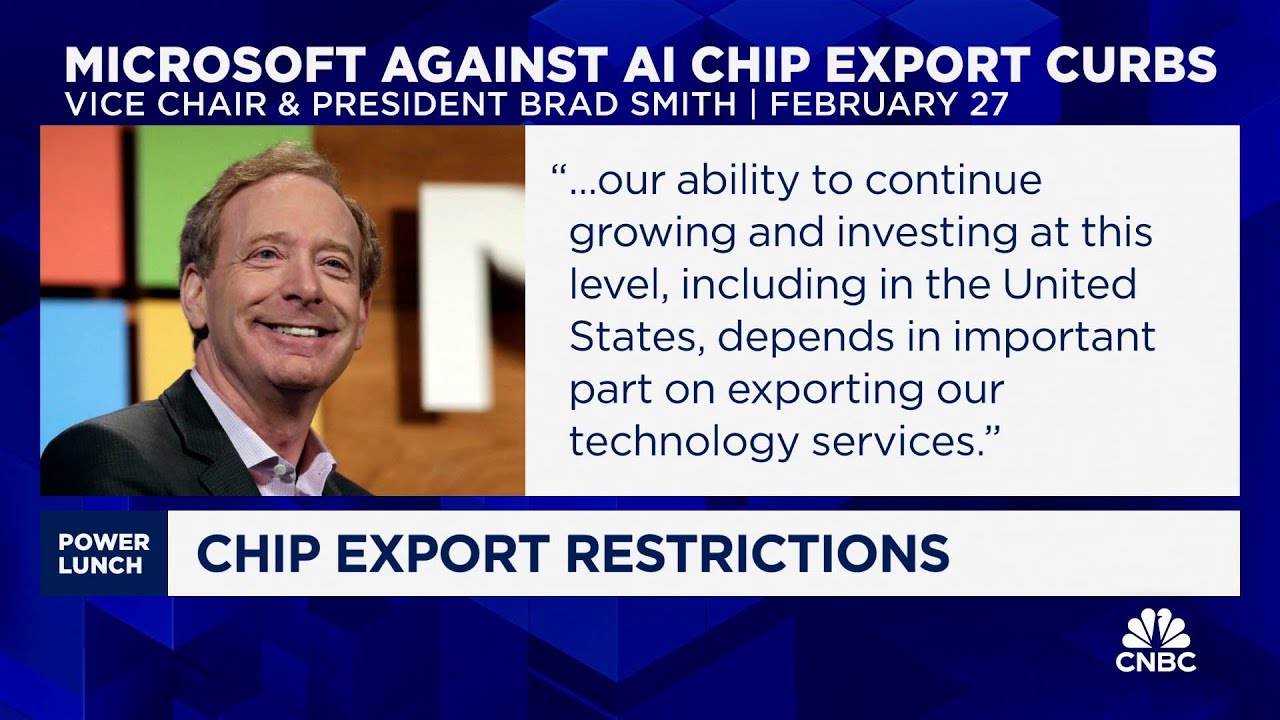
Microsoft is urging the Trump administration to relax export restrictions on advanced chips and AI models to allied countries, arguing that this would enhance global data center capabilities and ultimately benefit American jobs. The company believes that providing allies with access to top-tier technology is crucial for U.S. interests, as it helps counter China’s influence in the tech landscape while fostering stronger ties with key partners.
In a recent discussion on Power Lunch International Trade, Microsoft is advocating for the Trump administration to ease restrictions on the export of U.S. chips and AI models to allied countries. This initiative, highlighted in a blog post by Microsoft President Brad Smith, aims to allow countries such as Israel, Greece, Poland, and Saudi Arabia access to advanced technology that is currently restricted. The focus is on enhancing the capabilities of data centers that Microsoft is building globally, which they argue will ultimately benefit American jobs as well.
Microsoft’s push for these changes comes in light of the Biden administration’s diffusion rule, implemented in January, which restricts the export of advanced chips and AI models for national security reasons. This regulation categorizes countries into tiers, with many allies being placed in a second tier that limits their access to top-tier technology. While Microsoft supports the overall intent of the diffusion order, they believe it overreaches by restricting access for allies who are crucial partners in the tech ecosystem.
The company argues that providing allies with access to the best AI technology is not only beneficial for their operations but also serves U.S. interests by preventing China from stepping in to fill the technological void. By fostering stronger ties with allied nations through technology sharing, Microsoft aims to create a more robust ecosystem that counters China’s influence in the global tech landscape.
The discussion also touches on the broader implications of this export policy, likening it to historical geopolitical dynamics during the Cold War. The idea is to solidify the U.S. position as a leader in technology by ensuring that allied nations remain within its sphere of influence rather than turning to rival nations like China for technological support.
Overall, Microsoft’s initiative reflects a collective sentiment among various tech companies, suggesting that many would support a more lenient export policy. The goal is to balance national security concerns with the need for collaboration and innovation among allies, ensuring that the U.S. maintains its competitive edge in the rapidly evolving AI and tech sectors.