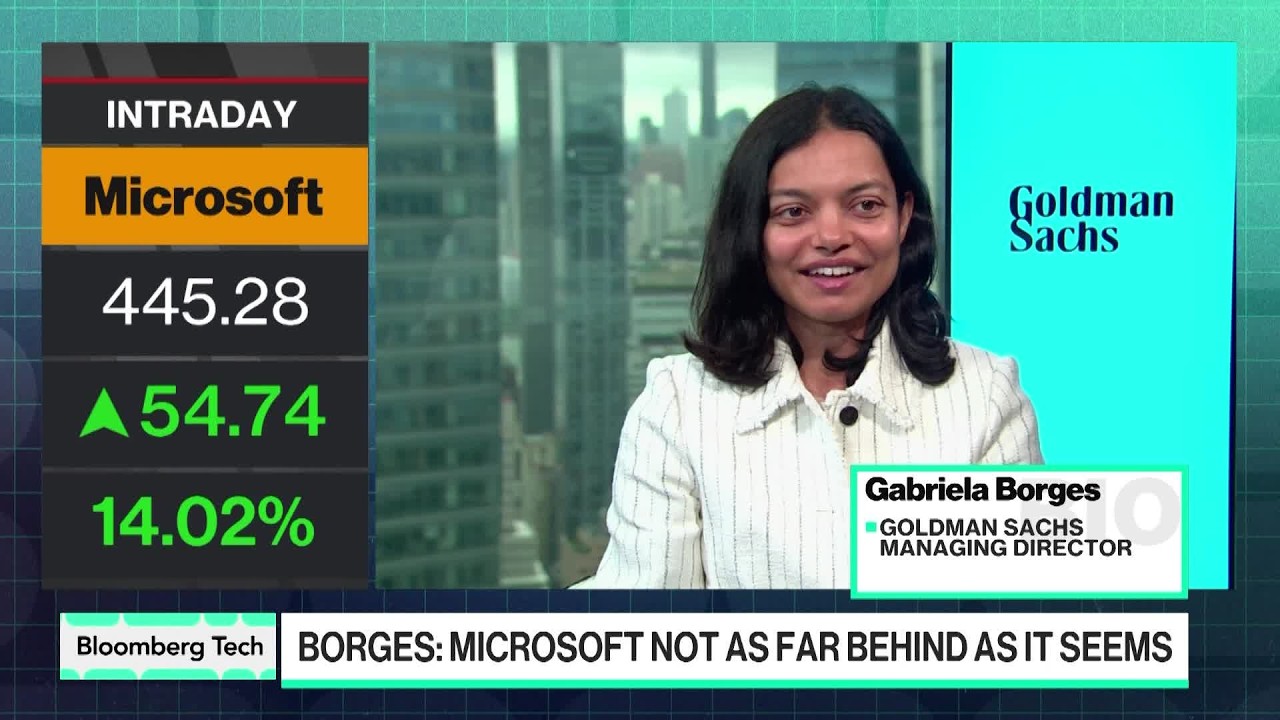
Goldman highlights that Microsoft’s AI strategy, particularly through products like Copilot and its expanding Azure infrastructure, is showing significant but still emerging value, with ongoing improvements and rapid scaling positioning the company strongly in the AI and cloud markets. Despite skepticism about its AI leadership compared to competitors, Microsoft’s behind-the-scenes advancements and evolving monetization models suggest a promising trajectory that investors and users are beginning to recognize.
The discussion begins by examining Microsoft’s ability to monetize its investments in Azure, highlighting that while external indicators like component pricing and CapEx are visible, the true return on investment is less transparent. An example is GitHub’s shift to a consumption-based monetization model, which aligns customer usage with Microsoft’s revenue. This reflects a broader trend of Microsoft leveraging various monetization strategies within its AI and cloud services, signaling a more nuanced approach to capturing value beyond straightforward hardware investments.
Attention is then drawn to Microsoft’s AI product, Copilot, which has seen significant growth with 30 million installed seats by the end of the quarter, up from 20 million earlier in the year. Despite initial criticisms about Copilot’s performance, ongoing improvements such as enhanced organizational context integration, better semantic search, and the incorporation of advanced frontier AI models have led to increasingly positive industry feedback. This momentum suggests that Microsoft is successfully refining its AI offerings, which is crucial for sustaining growth and competitive positioning.
The conversation also touches on Microsoft’s rapid expansion of computing capacity, with a notable reduction in deployment times for new GPUs and plans to double overall capacity within two years. This aggressive scaling supports the growing demand for AI and cloud services. Additionally, an accounting change affecting CapEx figures is discussed, with analysts adjusting their models accordingly. The broader industry context includes a shift towards diverse AI algorithms and models, including open-source and proprietary solutions, emphasizing the importance of software platforms in maximizing the value derived from hardware investments.
When comparing Microsoft to competitors like Alphabet and Amazon, the concept of “discovery value” is introduced. Microsoft has faced skepticism about its AI leadership, often perceived as trailing behind Google in areas like AI models and silicon strategy. However, the analysis suggests that Microsoft’s progress is more substantial than commonly believed, with significant improvements occurring behind the scenes. This hidden advancement presents an opportunity for investors and the market to reassess Microsoft’s position as its AI strategy becomes clearer over the next year.
Finally, the discussion reflects on the user experience and adoption of Microsoft’s AI tools at the individual level. The current phase is characterized as one of experimentation and discovery, where multiple approaches are tested to find the best product-market fit. While some early implementations may not fully meet user needs, ongoing innovation and refinement are expected to enhance utility. Drawing from personal and organizational experiences, the speakers express confidence that Microsoft’s AI offerings will increasingly contribute to productivity and become more accessible and valuable to end users in the near future.