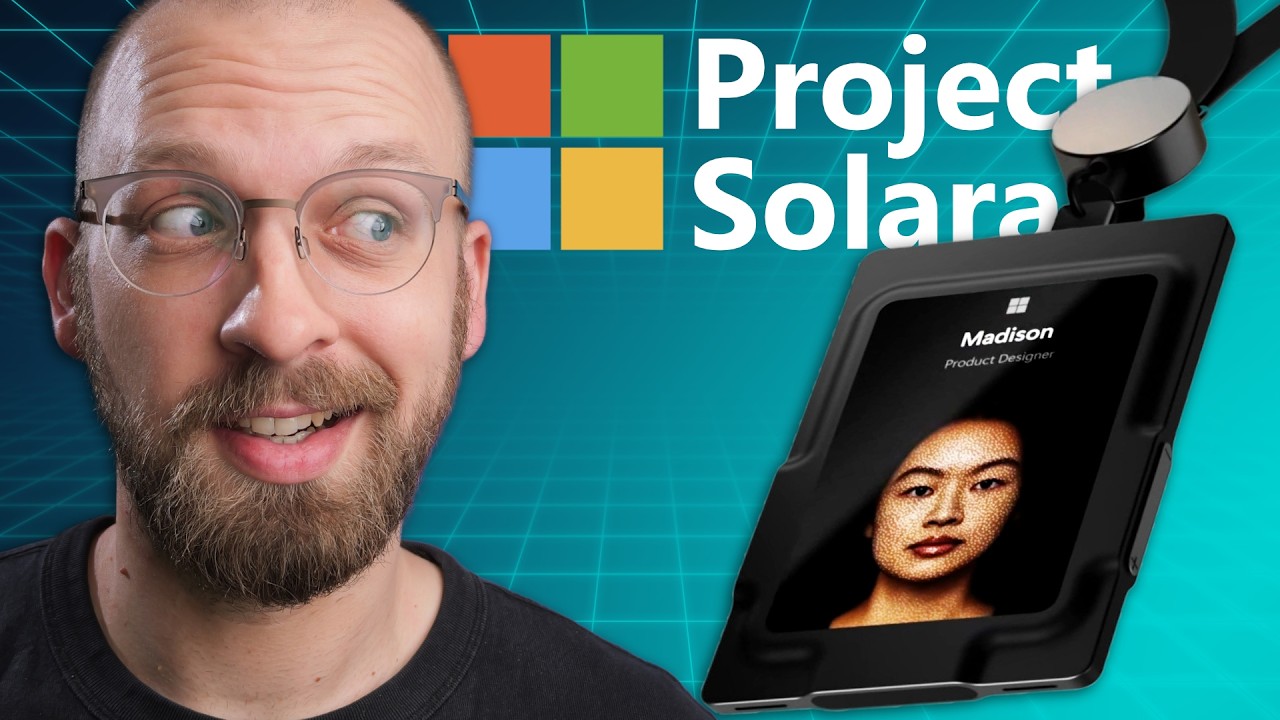
In this week’s update, Microsoft unveiled several significant announcements at their annual Build conference. The highlight was Project Solar, a new AI-centric operating system based on Android but with a completely revamped user interface focused on AI agents. Microsoft showcased two initial hardware form factors: a corporate smart screen and a wearable device resembling a hybrid between an employee badge and an Android phone, designed for quick task management on the go. The OS is expected to expand to other devices, including smart glasses. Additionally, Microsoft revealed their own suite of AI models called the MAI family, developed independently from OpenAI, optimized to run efficiently on their custom silicon named Maya. They also introduced Myana 2, their next-generation quantum chip boasting qubit lifetimes of up to a minute, marking a notable advancement in quantum computing.
Nvidia joined the news with the announcement of the RTX Spark chip, a high-end ARM-based SoC designed for Windows devices. This chip combines a MediaTek CPU with an Nvidia GPU comparable to the RTX 5070 and includes 128GB of shared memory, targeting powerful gaming and creator laptops. Microsoft plans to integrate this chip into upcoming Surface devices, and Nvidia is working to ensure broad software compatibility, including popular anti-cheat systems. The chip is also optimized for local AI workloads, promising enhanced performance for AI applications on Windows ARM machines.
The PC industry responded to Apple’s MacBook Neo with a wave of affordable yet premium Windows laptops powered by Intel’s new Wild Lake processors. These laptops, from brands like Dell, HP, Acer, Asus, and Lenovo, aim to offer competitive performance at entry-level prices around $599 to $699. Unlike the MacBook Neo, these machines allow RAM upgrades and feature metal builds and quality displays. Early reports suggest that Intel’s Wild Lake chips can match or even outperform the MacBook Neo in some scenarios, signaling a renewed push for value in the Windows laptop market.
Other notable tech updates include Wings’ release of the Body Fit smart scale at a reduced price, Asus’s return to tablets with the Pent T3201 featuring a high-refresh-rate OLED screen, and the ROG LIX20 gaming device with a transparent body and bundled AR glasses. The EU announced an open-source strategy to support critical technology development and public sector adoption. Meanwhile, Oppo and Vivo are reportedly developing high-resolution gimbal cameras to compete with DJI’s Osmo Pocket, and Insta360 teased a gaze-tracking accessory for their upcoming Luna camera.
In brief, PewDiePie launched Adysius, an AI workspace for personal hardware; Apple’s Vision Pro roadmap has been scaled back to focus on smart glasses rather than VR headsets; smartphone shipments are forecasted to decline sharply due to economic and geopolitical factors; and a lost Pixel Watch 5 was recovered underwater, hinting at potential dive certification for future models. Xiaomi added AirDrop-like functionality to its phones, completing major manufacturer support. Lastly, the host highlighted Hers’ new noise-cancelling earbuds designed specifically for sleep, praised for their comfort and effectiveness, with a special discount offered to viewers.