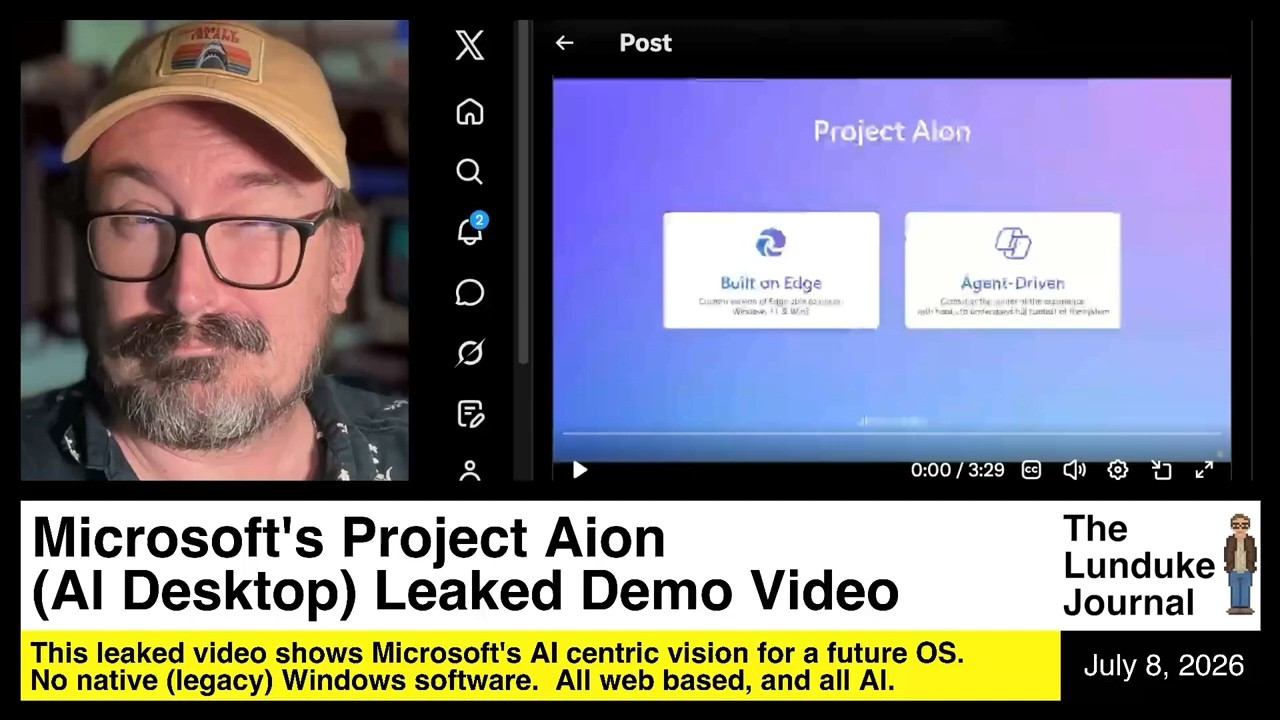
A leaked internal demo video from Microsoft, believed to be from late 2024, reveals Project Ion, an ambitious AI-driven desktop operating system designed to replace the traditional Windows desktop experience. Unlike conventional Windows, Project Ion is a web-based agent OS built on a modified Microsoft Edge browser, focusing entirely on AI integration and web apps rather than native Windows software compatibility. The system features a unique “Copilot start menu” powered by advanced AI models and Microsoft 365 data, aiming to provide a fast, lightweight, and highly responsive user experience centered around AI tasks rather than traditional applications.
Project Ion introduces a novel concept called “spaces,” which replace traditional application windows with AI-driven task clusters. Each space represents a specific AI task or goal, such as research or content creation, and is contextually grounded to enhance AI responsiveness. The OS eliminates the traditional app-centric approach, instead organizing work around these AI spaces. While native Win32 applications cannot run directly, users can stream legacy Windows apps remotely via Microsoft 365, requiring a paid subscription. This design emphasizes Microsoft’s push towards integrating AI deeply into the user workflow while encouraging reliance on its cloud services.
The AI capabilities in Project Ion are extensive, with the system able to crawl the DOM of web pages to gather full contextual information, enhancing the AI’s understanding and responsiveness. The Copilot start menu includes a multimodal omnibox that supports browsing, tool execution, and contextual suggestions, all powered by Microsoft 365 data. Interactive AI plugins allow users to automate tasks such as drafting and sending emails, effectively delegating communication to AI bots. This level of AI integration raises privacy and control concerns, as the system continuously accesses and processes vast amounts of user data to function effectively.
Despite the innovative approach, the presenter expresses strong personal dislike for Project Ion, criticizing its removal of traditional software control and the heavy reliance on AI to manage user tasks. The vision of an AI-centric desktop where applications are replaced by AI spaces is seen as limiting and intrusive, with concerns about losing the power and flexibility users currently have with conventional software. The presenter doubts the practicality and appeal of such a system for many users, emphasizing a preference for direct control over software rather than delegating tasks to AI.
Ultimately, Project Ion offers a glimpse into Microsoft’s experimental directions for the future of desktop computing, highlighting their interest in AI and cloud integration. However, it remains unclear whether this concept will be fully realized or adopted, given Microsoft’s ongoing exploration of various AI integration strategies, including Project Solaris and enhanced Copilot features in Windows 11. The video serves as an insightful but controversial look at potential shifts in how operating systems might evolve, balancing innovation with user autonomy and privacy concerns.