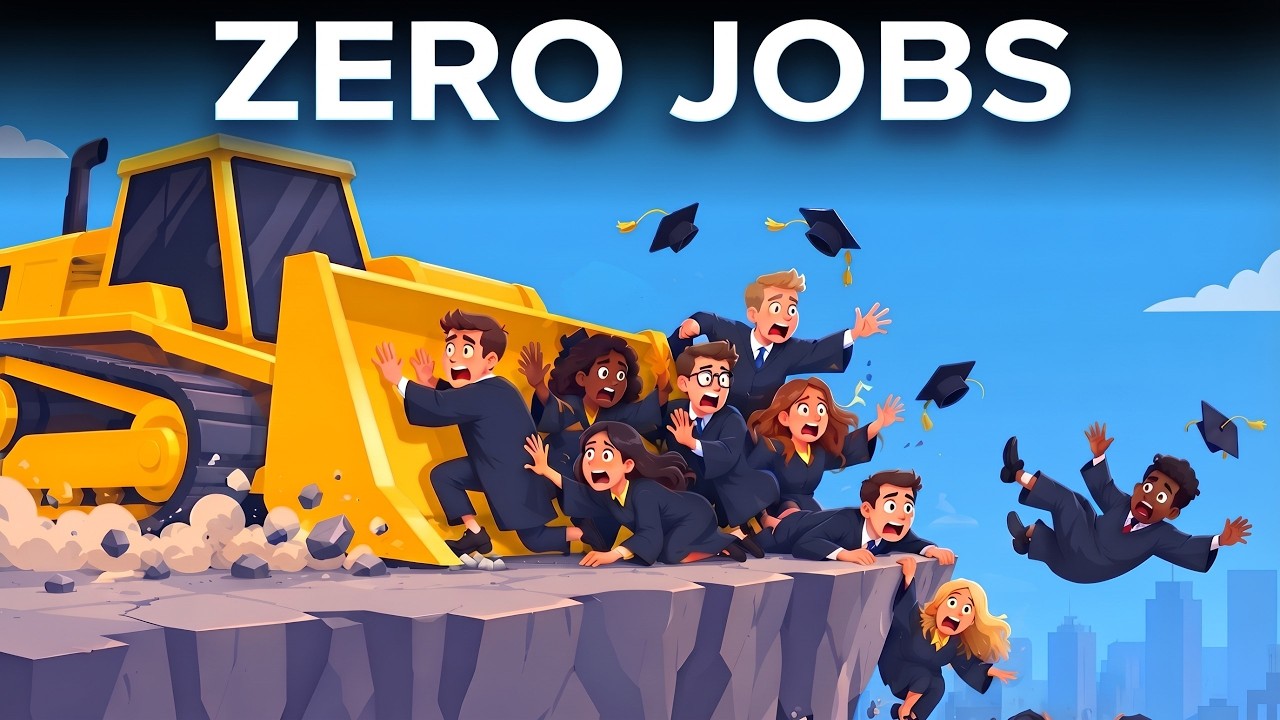
The video discusses the profound impact AI is having on the job market, particularly highlighting how entry-level positions are being systematically eliminated. Instead of widespread layoffs of experienced workers, companies are using AI to enhance the productivity of senior employees, effectively multiplying their workloads while shutting out new graduates and entry-level workers. This shift disrupts the traditional career ladder, where entry-level jobs served as essential training grounds for young professionals to gain experience and develop skills necessary for advancement.
MIT researchers developed the “Iceberg Index” to measure how much human work AI can replace across various occupations. Their findings reveal that AI is highly effective at performing routine, entry-level tasks that rely on knowledge from textbooks and manuals, which form much of AI’s training data. Conversely, AI struggles with complex tasks requiring experience, intuition, and nuanced judgment, which are typically handled by senior staff. As a result, senior employees are benefiting from AI tools that boost their efficiency, while entry-level roles are disappearing, leaving graduates with fewer job opportunities.
This trend creates a paradox where overall employment numbers remain stable, and companies report increased productivity and profits, but a significant portion of the workforce—particularly new entrants—is being excluded. The video explains this through economic concepts of “crashing waves” and “rising tides,” with AI acting more like a gradual rising tide that slowly transforms the workforce. Unlike past technological shifts, AI uniquely targets apprentice-level roles, causing anxiety among younger generations about their career prospects and leading to declining enrollment in traditionally popular fields like computer science.
The consequences extend beyond immediate job losses. The elimination of entry-level positions threatens the future talent pipeline, as fewer young professionals gain the experience needed to become mid-career managers and leaders. This talent vacuum could destabilize companies and industries in the long term. Meanwhile, students are increasingly cautious about their education choices, fearing that even AI-related skills may not guarantee employment without broader industry experience.
Ultimately, the video warns that while AI is boosting productivity and profits for senior employees and companies today, it is creating a dangerous imbalance in the workforce. The short-term economic gains come at the cost of the future workforce’s development, risking a collapse in the talent pipeline that companies will regret in the coming years. The reality of AI’s impact on jobs is far more complex and troubling than mainstream media narratives suggest, with significant challenges ahead for both workers and employers.
Useful Links