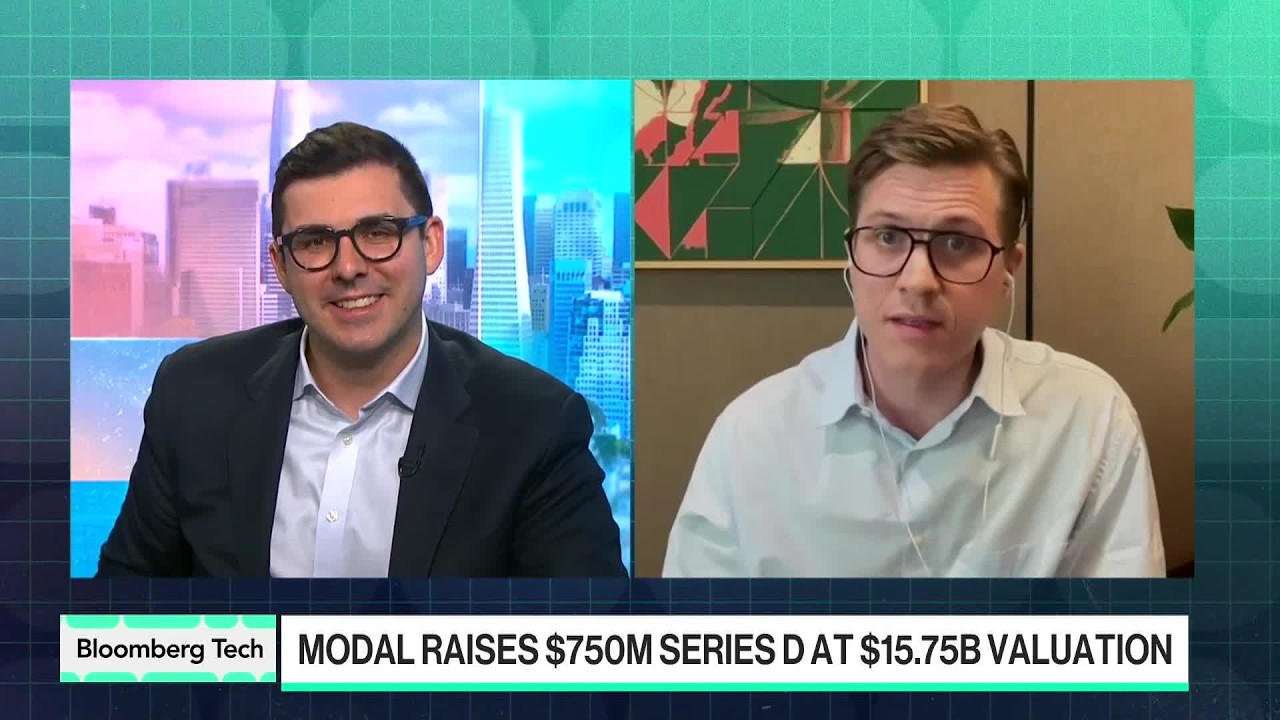
Modal, an AI cloud startup, recently closed a $750 million Series D funding round, boosting its valuation to $15.75 billion. CEO Erik Bernhardsson highlighted the company’s rapid growth, citing over 3 billion sandboxes run for customers as a key metric. He emphasized that the AI industry is entering a new era of software, driven by innovative applications that require new building blocks for development, including inference, training, and sandbox environments. The capital raised will be used to accelerate growth, launch new products, and expand capacity to meet increasing demand.
Bernhardsson explained the concept of sandboxes, which Modal began developing three years ago to provide isolated environments where AI agents can safely execute code without escaping containment. Initially launched in 2023, sandboxes saw explosive growth with the advent of advanced models capable of generating full applications. This surge in demand has made sandboxes a critical component of AI development, generating approximately $300 million in annual revenue for Modal. The technology supports a wide range of AI applications beyond cybersecurity, including coding and reinforcement learning.
The discussion touched on the broader industry context, referencing incidents like the OpenAI and Hugging Face sandbox environments, which demonstrated the importance of controlled testing spaces for frontier AI models. Bernhardsson noted that while cybersecurity is a significant use case, sandboxes are foundational for many AI applications, enabling companies to build and test sophisticated coding models. Modal’s platform supports various clients, including Cognition and Ramp, who leverage these environments for internal development and innovation.
Regarding tokenomics, Bernhardsson highlighted that falling token prices have driven increased demand for AI inference services. Modal views inference as one part of a larger platform that includes reinforcement learning and sandbox environments. The company has observed rapid adoption of new AI applications, such as JAV’s classification model, which quickly reached millions of users. This trend underscores the growing importance of scalable infrastructure to support diverse AI workloads and evolving business models.
Finally, Bernhardsson discussed Modal’s recent launch of VM sandboxes, which provide AI agents with access to full virtual machines running Linux, with plans to support Windows and Mac in the future. This advancement enables agents to perform more complex, long-running tasks, such as personal assistant functions and coding activities. The VM sandbox technology represents a significant step toward empowering AI agents to interact more effectively with computing environments, enhancing their utility and broadening their application scope.
Useful Links