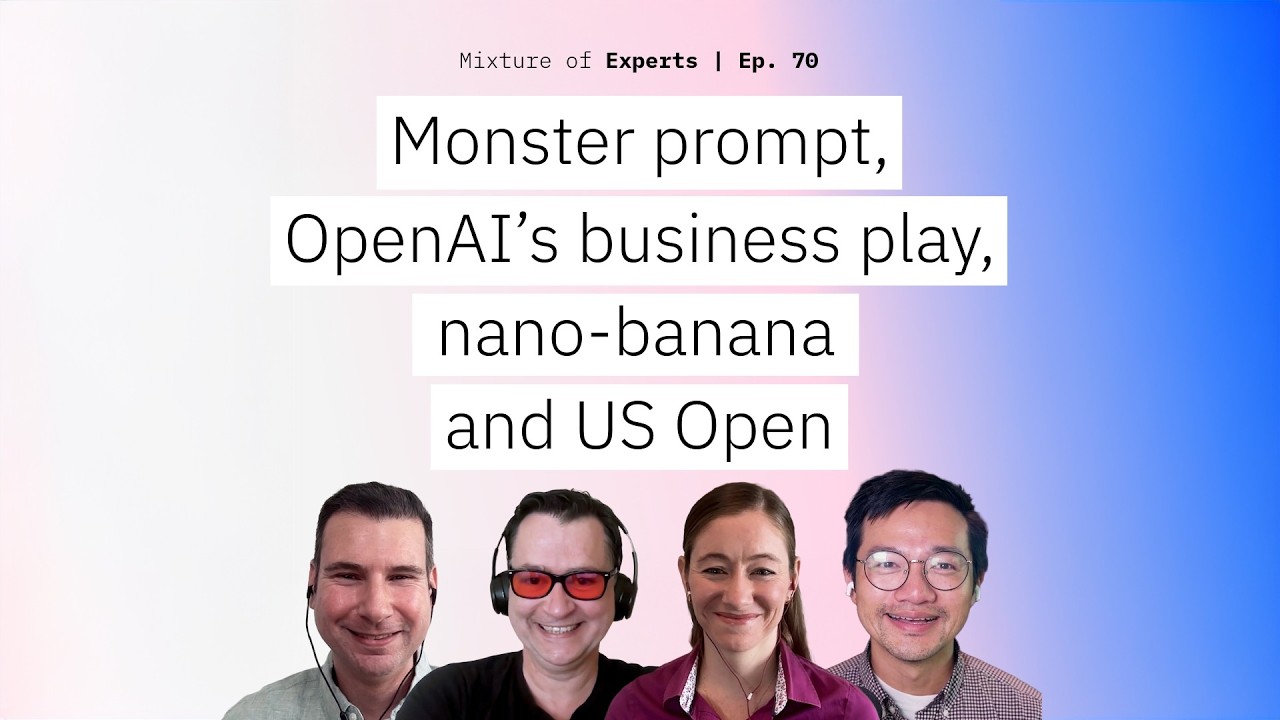
In this episode of Mixture of Experts, the panel discusses several cutting-edge developments in artificial intelligence, starting with a fascinating story about KPMG’s AI agent, Taxbot. Taxbot uses an unusually long 100-page prompt to aggregate tax advice and generate detailed advisory opinions, highlighting the evolving complexity of prompt engineering. The panel debates whether prompt engineering is becoming more important rather than obsolete, especially in specialized domains where models lack embedded knowledge. They also touch on the challenges of fine-tuning versus prompt length and the practicalities of deploying such systems in real-world professional settings like accounting.
The conversation then shifts to OpenAI’s potential new business strategy, where the company might start selling access to its underlying AI infrastructure rather than just its models. This move is compared to Amazon’s evolution into AWS, leveraging surplus or older-generation GPUs for commercial use. The panelists discuss the rapid pace of hardware obsolescence in AI, the economics behind renting out infrastructure, and the competitive landscape involving cloud providers and open-source inference engines. They consider whether OpenAI can successfully pivot into this infrastructure market amid strong competition and the growing influence of open-source technologies.
Next, the discussion turns to Google’s new image generation model, Nano Banana, which the panelists praise as a significant leap forward in quality and capability. Unlike many earlier image models, Nano Banana excels at text rendering within images and supports advanced editing features like face swapping and style transfer with remarkable fidelity. The panel highlights its potential impact on creative industries, from content creation to image editing tools like Canva, and notes Google’s resurgence in AI innovation. They also reflect on the ethical implications of increasingly realistic AI-generated images and the importance of accountability and safety in deploying such powerful tools.
The episode concludes with a showcase of AI-driven enhancements at the US Open tennis tournament, where IBM and partners have integrated real-time AI features to enrich the fan experience. These include a match chat assistant that answers live questions, key point summaries for quick insights, and a live likelihood-to-win prediction model that updates dynamically during matches. The panel demonstrates how these tools provide deeper engagement for millions of fans worldwide, combining predictive modeling, natural language processing, and user-friendly interfaces. This segment illustrates practical AI applications in sports analytics and fan interaction, emphasizing the ongoing innovation in AI-powered experiences.
Overall, the episode offers a rich exploration of AI’s expanding role across industries, from enterprise tax advisory and cloud infrastructure to creative media and sports entertainment. The panelists provide expert insights into the technical challenges, business strategies, and societal implications of these advances. They underscore the dynamic interplay between proprietary and open-source AI developments and highlight the importance of thoughtful design and ethical considerations as AI technologies become increasingly sophisticated and integrated into everyday life.