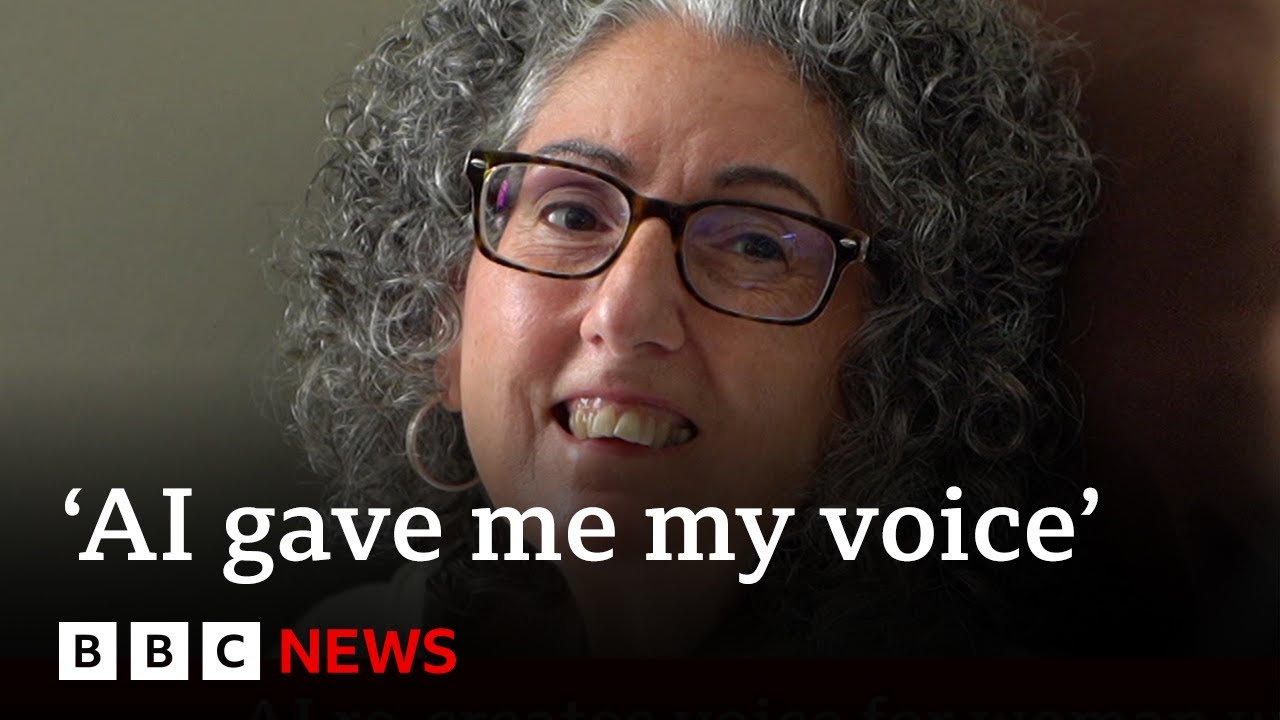
Sarah Ezekiel, diagnosed with motor neurone disease over 25 years ago, lost her voice but was able to regain it through AI technology that recreated her original Cockney accent from an old VHS recording. This breakthrough not only restored her sense of identity and emotional expression but also deeply moved her family, strengthening their connection and highlighting the transformative power of innovation for people with disabilities.
Sarah Ezekiel was diagnosed with motor neurone disease (MND) over 25 years ago, which gradually took away her mobility and voice. Initially, she struggled with isolation and communication, relying on a computer that tracked her eye movements to type out words and speak through a synthetic, robotic voice. Although this technology was transformative, it did not reflect her true voice or personality, leaving her feeling disconnected from her original self.
A breakthrough came when Sarah discovered an old VHS tape containing an eight-second recording of her natural Cockney accent from before her diagnosis. Using this low-quality audio sample, a team of experts employed artificial intelligence to recreate her original voice. Despite the limited and imperfect recording, the AI was able to generate a voice that closely resembled Sarah’s natural speech, bringing back a deeply emotional and personal connection for her.
Hearing her recreated voice for the first time was a powerful and moving experience for Sarah. She described it as a miracle and felt a strong sense of identity and authenticity that had been missing for years. Her new voice sounded clear, expressive, and distinctly her own, allowing her to communicate with more emotion and personality than the robotic voice she had used previously.
Sarah’s children were also profoundly affected by the restoration of her voice. They had never heard her speak with her original accent and were surprised and delighted by the revelation. The new voice helped them feel closer to their mother, seeing her not just as a person with a disability but as a vibrant individual with emotions and character. It transformed their family dynamic and deepened their connection.
Beyond being a mother, Sarah is an artist, playwright, and advocate for others living with motor neurone disease. The restoration of her voice through AI technology represents a significant milestone for her and her family, symbolizing hope, identity, and the power of innovation to improve the lives of people with disabilities. For Sarah, the greatest gift has been the ability to let her children hear her true voice again.