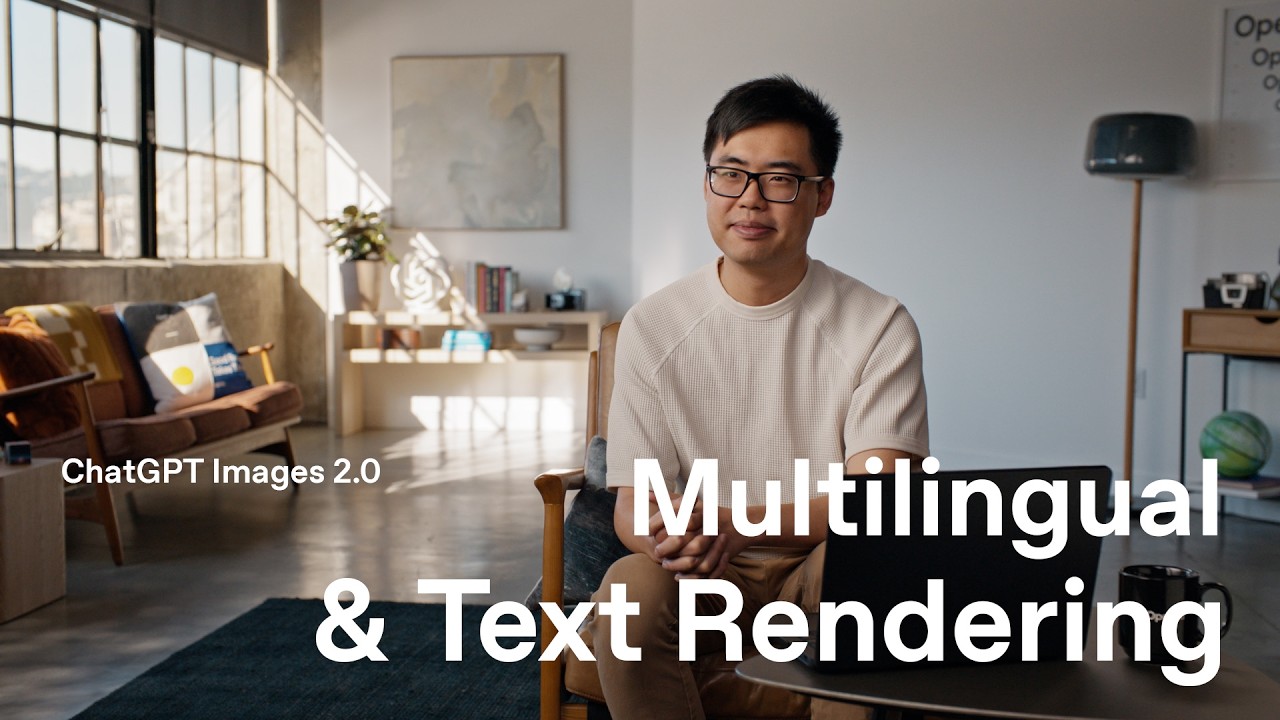
The video showcases ChatGPT Image Gen 2’s significant improvements in accurately rendering multilingual text, including complex scripts like Korean, Japanese, and Bengali, as well as dense paragraphs of small text. These advancements enhance global usability and inclusivity, enabling clearer, more detailed AI-generated images across diverse languages and scripts.
The video discusses the advancements in ChatGPT’s image generation capabilities, particularly focusing on multilingual text rendering in the new Image Gen 2. While English speakers may have found previous versions satisfactory, users from other linguistic backgrounds experienced errors. The latest update addresses these issues, enabling the model to accurately generate text in every language, marking a significant improvement in global usability.
To demonstrate this, the creator showcases a poster about their hometown, Wuxi, including a dense paragraph about its history. The results are impressive, with the text rendered clearly and correctly. This example highlights the model’s ability to handle complex and detailed text within images, which was traditionally challenging for image generation systems.
Further examples include posters in Korean, Japanese, and Bengali, representing Seoul, Tokyo, and Chittagong respectively. Each poster features authentic scripts and characters, such as Korean Hangul, Japanese Kanji, and Bengali script, all rendered accurately. These demonstrations emphasize the model’s versatility and its potential to serve diverse linguistic communities effectively.
The video also highlights the model’s capacity to handle dense paragraphs of small text, a task that has been difficult for image generation models in the past. By translating a technical paper into Chinese and rendering it as an image, the creator shows how the higher resolution and improved text rendering capabilities allow for clear and legible small text, even when zoomed in.
Overall, the advancements in ChatGPT Image Gen 2 represent a major step forward in multilingual support and text rendering quality. This progress not only enhances the user experience for non-English speakers but also broadens the practical applications of AI-generated images across different languages and scripts, making the technology more inclusive and accessible worldwide.