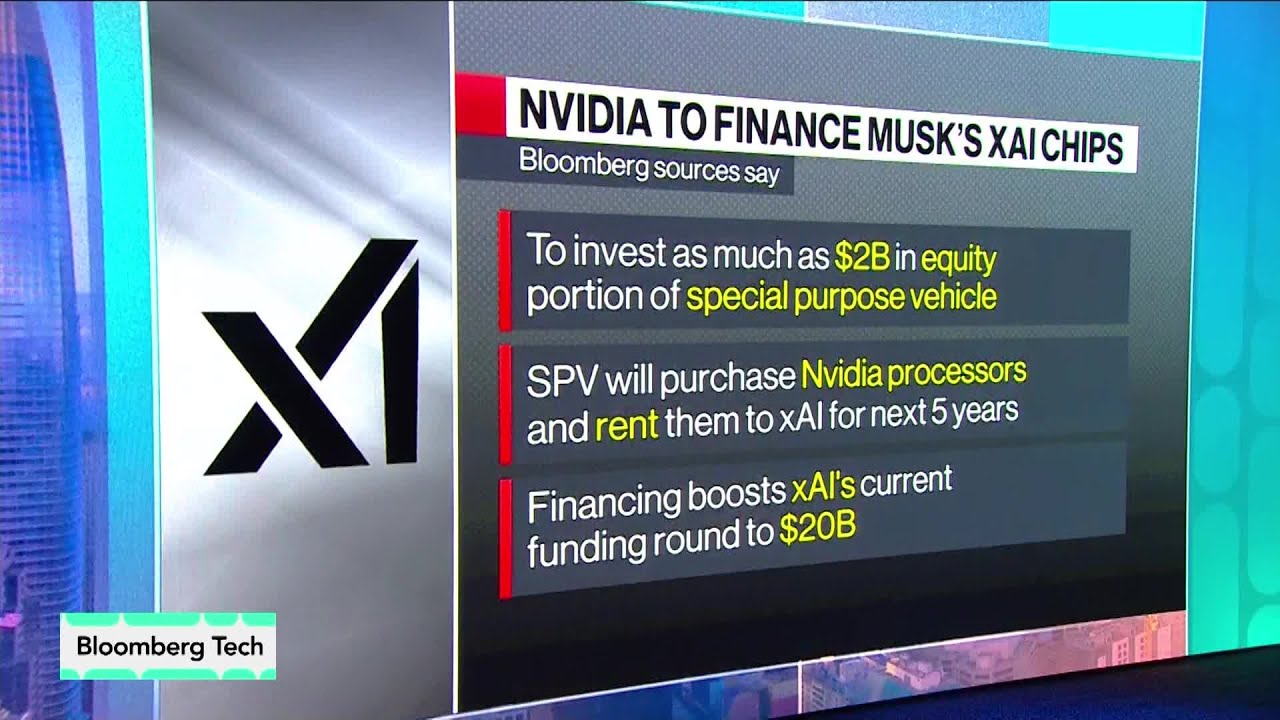
Elon Musk’s xAI secured $20 billion in funding through a creative structure involving special purpose vehicles (SPVs) that lease Nvidia GPUs to xAI, allowing investors to earn lease payments and retain residual asset value after five years. This innovative approach, supported by Nvidia and Wall Street investors, enables large-scale tech infrastructure financing without adding traditional debt to the corporate balance sheet, signaling a growing trend in asset-backed funding models.
The recent financing round for Elon Musk’s xAI has introduced a creative and somewhat unconventional structure involving special purpose vehicles (SPVs) to fund the purchase of GPUs. While SPVs are commonly used on Wall Street to leverage assets as collateral instead of incurring corporate debt, this approach is becoming increasingly popular among tech giants. The motivation behind this trend is to avoid placing excessive debt on the corporate balance sheet, making such financing mechanisms more attractive and likely to become more frequent in the future.
The financing round for xAI is structured around a $20 billion capital raise, predominantly composed of debt with some equity mixed in. Nvidia’s CEO Jensen Huang confirmed Nvidia’s participation in this round, which is notable because Nvidia is effectively investing in a fund that will use the capital to purchase Nvidia chips. The chips are intended for use in a data center located in Memphis, and the debt portion involves various Wall Street investors, including Apollo and Centerbridge. The equity side includes investors like Valor, who is leading the financing effort.
A key aspect of this financing structure is the creation of an SPV that rents and leases the GPUs to xAI over a period of about five years. This leasing arrangement allows the investors to receive lease payments, which serve as a mechanism to amortize the debt over time. Essentially, the investors are paid back through these regular lease payments, which cover their debt obligations and provide a steady return on their investment.
At the end of the five-year lease term, the GPUs still retain some residual value, which remains within the SPV. This means that the investors not only benefit from the lease payments but also hold an asset with ongoing value after the lease period concludes. This dual benefit of lease income plus residual asset value makes the financing structure appealing and innovative, blending elements of asset-backed lending with equity investment.
Overall, this financing approach reflects a sophisticated and creative way to fund large-scale technology infrastructure without burdening the corporate balance sheet with traditional debt. It highlights a growing trend among tech companies to use asset-backed SPVs for capital raising, leveraging the intrinsic value of hardware assets like GPUs. As this model gains traction, it could reshape how tech firms finance their expensive infrastructure projects in the future.