The video explains how to build a portable AI operating system within Claude Code that minimizes vendor lock-in and remains functional during Anthropic outages by structuring the system into five vendor-agnostic layers and enabling cross-model compatibility with alternatives like Codex. It emphasizes continuous testing, monitoring, and flexible workflow management to ensure resilience and seamless failover between AI models.
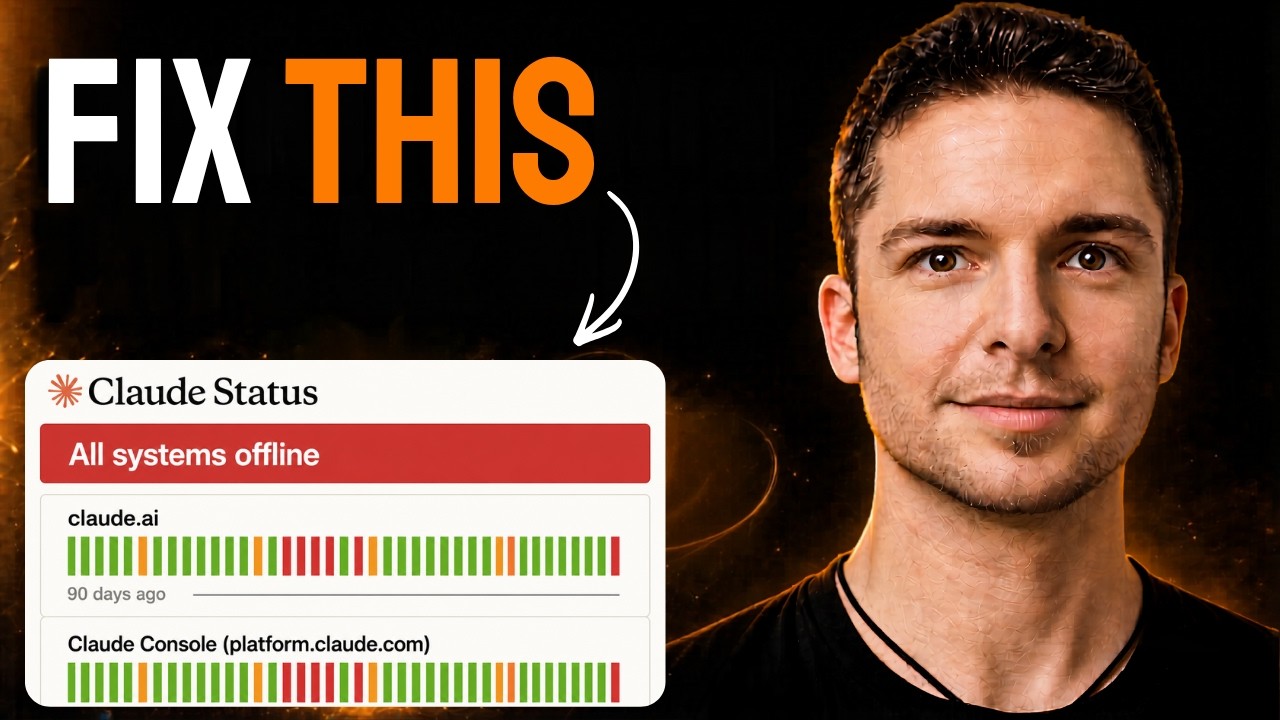
The video discusses building a portable AI operating system (AI OS) within Claude Code, addressing concerns about vendor lock-in and service outages, particularly when Claude experiences downtime. The creator emphasizes the importance of designing the AI OS with separated layers to avoid dependency on a single vendor. They highlight that Claude has experienced multiple outages over the past 90 days, affecting various components differently, but this does not necessarily mean the entire system is unusable. The video aims to provide practical solutions to maintain functionality during such outages.
The AI OS is structured into five tiers, starting with the context layer, which includes knowledge stored in markdown files, memory that the AI learns over time, and state tracking workflows. These elements are vendor-agnostic since markdown files and common databases like Google Sheets or Airtable can be accessed by any model, reducing lock-in risks. The second tier involves skills and agents, which are repeatable workflows that can be tested and run across different AI models like Claude and Codex. The creator stresses the importance of cross-model testing to ensure compatibility and smooth failover.
The third tier covers the middleware and APIs, which are largely universal and portable between models. Configuration differences exist but are manageable with proper setup. The fourth tier is the interface layer, which provides observability and monitoring of the AI OS. While the creator’s command center is built around Claude Code, similar monitoring can be adapted for Codex. This layer is crucial for detecting outages and triggering alerts but does not cause vendor lock-in since it is customizable and optional.
The final tier is the runtime environment, where users interact with the AI OS through tools like VS Code or desktop apps. Plugins and projects are used to organize skills, and these are transferable between Claude and Codex with minor adjustments. Although Anthropic’s routines currently lack a direct Codex equivalent, the routines are based on GitHub repositories, meaning users still retain ownership and control. This design minimizes vendor lock-in and allows users to switch providers without losing their workflows.
To handle outages, the creator recommends continuous testing during development, using Claude as the primary model and Codex for failover testing. They suggest triaging skills by their criticality and deciding which require automatic failover, manual reruns, or can be dropped if delayed. Monitoring tools alert users to outages, enabling them to switch workflows to Codex automatically or manually. The video concludes by encouraging viewers to maintain open, portable structures like agents.md for seamless switching between AI models, ensuring resilience and flexibility in their AI OS.