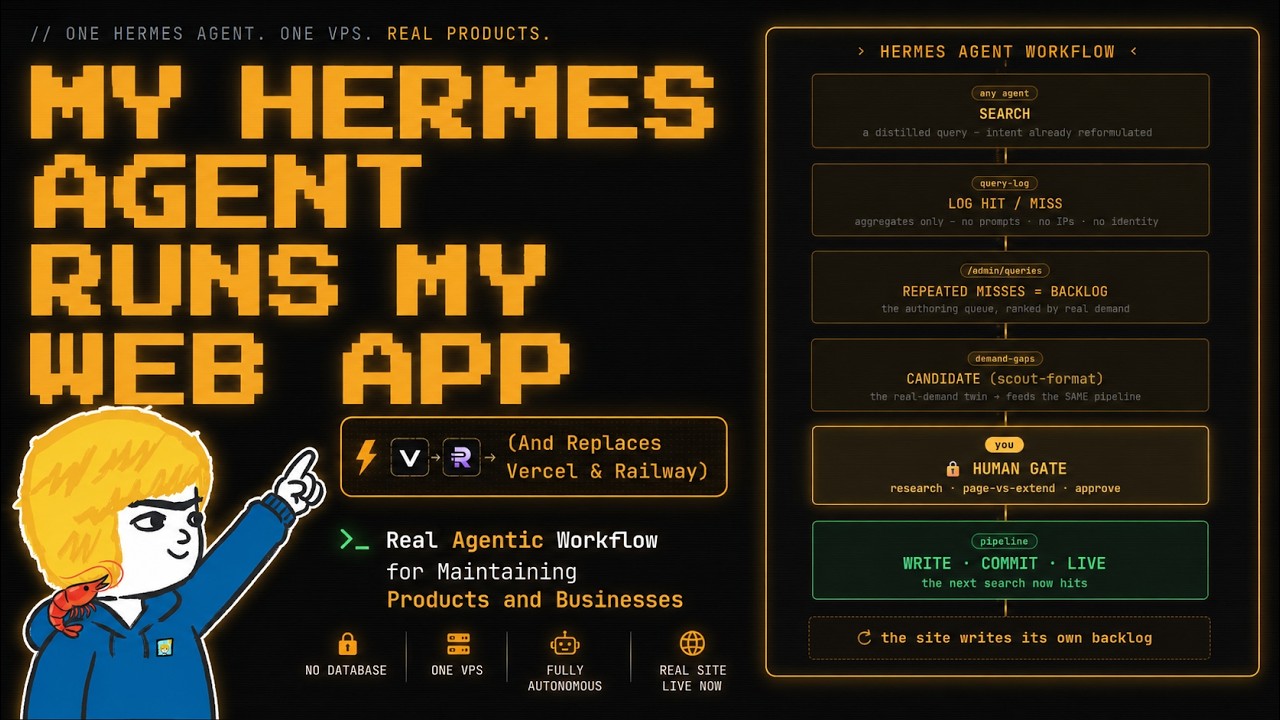
The video explores how the creator uses a single $6 VPS running a Hermes agent to deploy and maintain web apps, effectively replacing popular platforms like Vercel, Railway, and Supabase. Initially, many AI coding tools recommend these platforms for deployment and database management, but the creator demonstrates a more cost-effective and autonomous approach. The video focuses on the setup, workflows, and agentic processes that enable this system, highlighting its efficiency and autonomy in managing web content and business operations.
The first example showcased is Agent Wikis, a live site consisting of multiple public knowledge bases built entirely with markdown files and Git as the database. This site requires no traditional database or build step, relying on Git for content management and deployment. The VPS runs a Hermes agent that autonomously updates and maintains the site by pulling changes from Git, rebuilding search indexes only when necessary, and serving content without restarts. This setup is lightweight and ideal for documentation, blogs, and wikis, demonstrating how Git can serve as a CMS and deployment pipeline.
The Hermes agent operates on a modest VPS with 1 vCPU and 1 GB RAM, accessible via Telegram for direct communication and control. The agent runs scheduled workflows that scout for updates, research new content, deduplicate information, and propose changes through a human approval gate via Telegram. Once approved, the agent commits updates to Git, making them live within minutes. This multi-agent, multi-profile pipeline ensures the site remains current and accurate with minimal manual intervention, showcasing a highly automated content management system.
A unique feature of the system is the demand loop, which tracks user queries that the knowledge base cannot answer. The agent collects these gaps, researches answers autonomously, and proposes content additions or edits for human approval. This feedback loop allows the knowledge base to evolve based on real user needs, improving its relevance and completeness over time. The entire process happens within the VPS, ensuring data privacy and security, with only minimal human oversight to maintain quality control.
The video concludes by acknowledging the limitations of this approach for more complex applications requiring databases, regulated data handling, or high availability. For such cases, managed services like Railway or Vercel may still be necessary. However, for solo developers or small projects, this VPS-based agent system offers a cost-effective, autonomous alternative to traditional cloud platforms. The creator plans a follow-up video demonstrating how to deploy a database-dependent game app on the same VPS, promising further insights into this innovative deployment strategy.