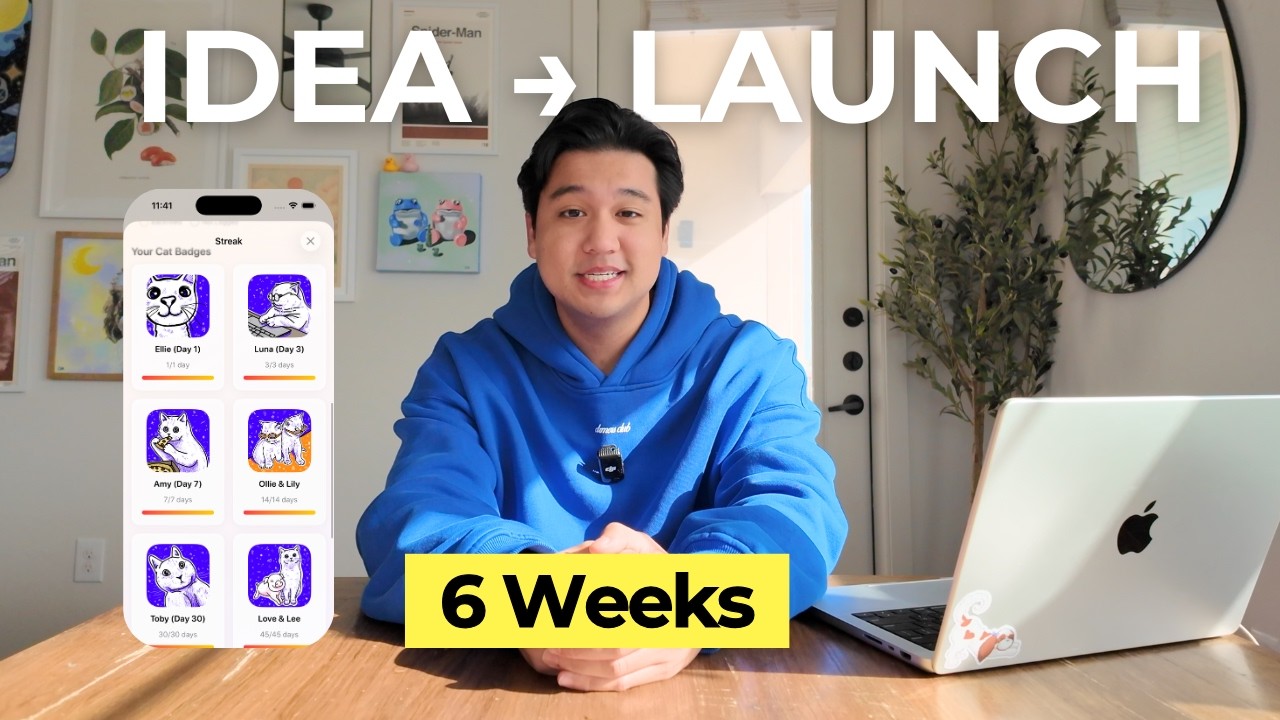
In this video, Chris shares the exciting news that his new app, Amy, a calorie tracking app designed in the style of Apple Notes, is finally live on the App Store after six weeks of development, documentation, and sharing progress. Amy allows users to simply type the food they ate, and the app automatically finds and displays the calorie count. Chris provides an unfiltered look at the journey from beta testing to launch, explaining that although he initially planned for more beta testing, financial constraints forced him to accelerate the launch to start monetizing and stop incurring losses.
Chris discusses the critical decision of pricing the app, settling on a subscription model of $10 per month or $100 per year, which is higher than his usual starting price due to the expensive AI models powering the app. He explains that the operational costs per user range from $4 to $15 monthly, making $10 the minimum viable price to avoid losses. To encourage users, he implemented a 3-day free trial and designed a paywall with engaging animations and a trial timeline to set clear expectations, which he believes will improve conversion rates. Additionally, he added a transparency section explaining the app’s pricing to build trust with users.
The video also covers the essential preparations for the App Store launch, including creating compelling app store screenshots with the help of his fiancée, Ciccilia, who contributed to the design and branding by incorporating the app’s mascot, Amy. Chris emphasizes the importance of these visuals as they form the first impression for potential users. He also built a landing page to showcase the app’s features and included necessary legal documents like the terms of service and privacy policy to comply with Apple’s requirements.
Chris set up an email system using a service called Loops to manage user communications, such as welcome emails and targeted sequences to encourage trial activation and feature engagement. He also added a feature allowing users to delete their accounts and data, a requirement to avoid App Store rejection. Despite thorough preparation, the app faced two rejections from Apple related to the paywall presentation and missing legal information in the app description. Chris quickly addressed these issues by adjusting the pricing display and adding the required legal links, leading to eventual approval.
Finally, Chris shares the emotional moment of approval and the initial user response, with about 50 users starting trials on the first day, many of whom are fellow app builders testing the product. He plans to monitor retention and conversion rates closely and share these insights in future videos, along with marketing strategies. Chris invites viewers to follow his journey on Instagram and TikTok for more content about building productivity apps and encourages subscriptions to his channel for ongoing updates.