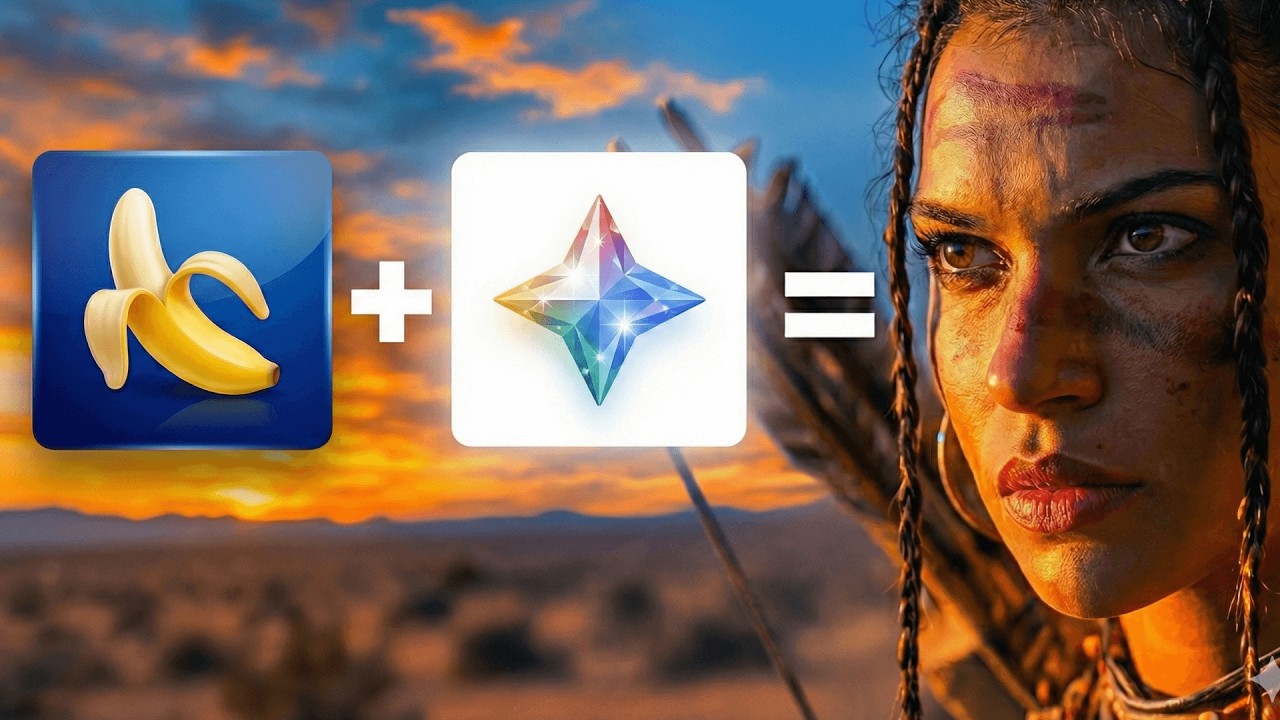
The video explores how to create consistent and coherent AI-generated film sequences using Nano Banana Pro and Gemini 3. While AI images can be stunning individually, building a sequence often results in inconsistencies. The presenter, AI Samson, demonstrates a method to take a single base image of a character and generate an infinite number of consistent angles and shots using a single prompt. This approach maintains the same character, world, and style throughout, unlocking the potential for real storytelling through AI-generated sequences.
The process begins with creating a strong base image of the character, ideally showing the upper body with clear lighting, pose, and background. This base image can be generated using various AI image models such as Nano Banana Pro or MidJourney. The presenter provides foundational prompts that work across multiple AI generators, making it easy for viewers to replicate the process. Using Nano Banana Pro, multiple shots of the character are generated in different compositions, such as extreme long shots, medium shots, and close-ups, which are then extracted individually for further use.
Next, the video shows how to animate these images into video sequences using tools like Google V3.1 inside Google Flow for premium users or Grock Imagine for a free alternative. The animation process involves defining a start frame and optionally a last frame to create smooth transitions between shots, enabling cinematic storytelling with continuity and coherence. This technique allows for seamless one-shot sequences that mimic real film grammar, including wide, medium, and close-up shots, enhancing the narrative flow.
To add narrative depth, the presenter introduces an advanced prompt version that not only generates multiple shots but also builds a story arc from the base image. This version, enhanced by contributors Tech Hala and Underwood, produces a sequence of shots that tell a more complete story rather than just a montage of unrelated images. The video also highlights a sponsor tool, Idiogram, which helps maintain character consistency across different scenes and projects, ideal for branding and storytelling continuity in graphic design and social media.
Finally, the video presents the most advanced workflow, where a user inputs a short story synopsis along with the base image. This director’s cut prompt generates nine detailed shots that map out the entire narrative arc, maintaining character and stylistic consistency. The presenter demonstrates animating these shots into a cohesive story sequence. Additionally, an automated storyboard tool by the Door Brothers is introduced, which simplifies part of the process but offers less control. Overall, the video showcases how a single AI-generated image can evolve into a full cinematic story using these innovative AI tools and workflows.