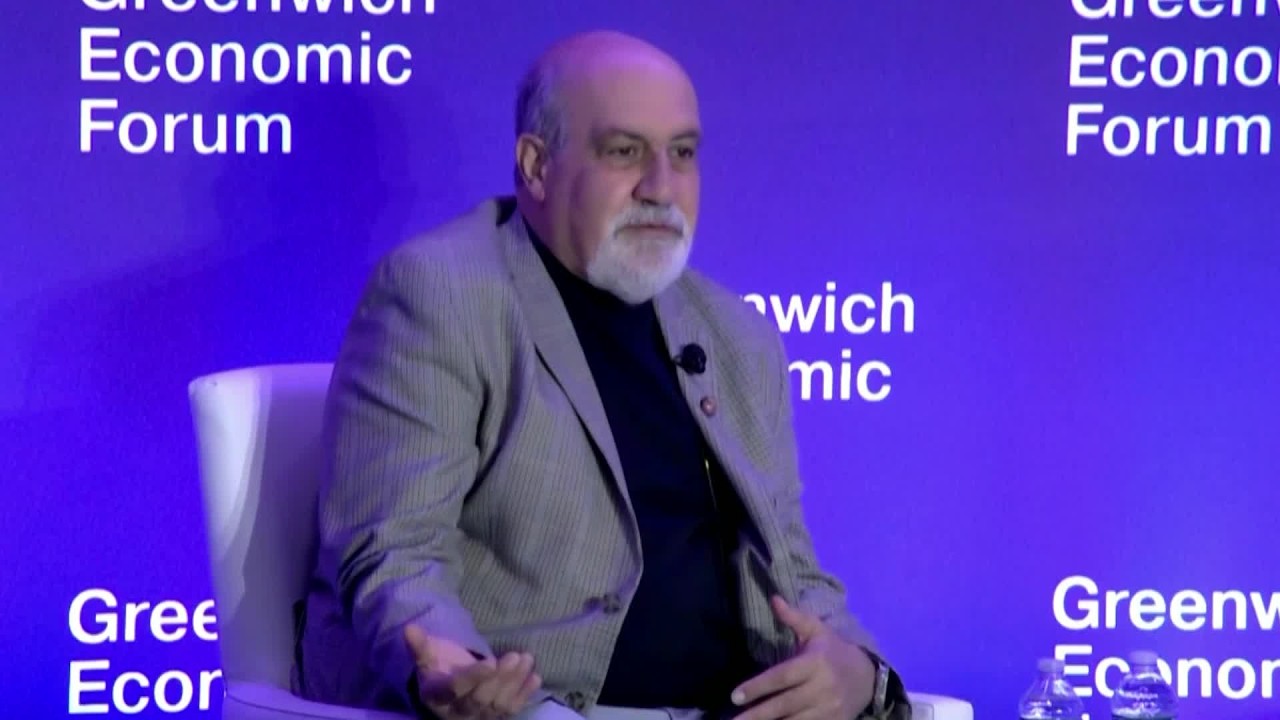
Nassim Taleb describes the stock market as a “trap,” cautioning against simplistic, first-order thinking about market movements. He explains that while investors might expect the market to fall after certain events, the market often continues to rise because it attracts and retains money, creating a sticky upward momentum. However, this rise builds hidden risks in a counterintuitive way, and eventually, the market will experience a significant downturn. Taleb emphasizes that the market’s behavior is complex and driven by volatility rather than straightforward cause-and-effect relationships.
Taleb highlights that the stock market often moves in ways that defy logical expectations. For example, gold and stocks sometimes rally simultaneously, even though conventional wisdom suggests they should move in opposite directions. This phenomenon illustrates the market’s unpredictable nature and the importance of thinking beyond simple cause and effect. Instead of predicting market direction, Taleb suggests focusing on the increasing risks that accumulate over time, which can lead to sudden and unexpected reversals.
Regarding current market trends, Taleb criticizes investors who are overly optimistic about AI and technology stocks. He calls these investors “naive” for assuming that AI will straightforwardly change the world and that investing in AI-linked firms is a guaranteed path to success. Drawing on historical examples, he points out that the companies that initially pioneered transformative technologies often did not become the ultimate winners. For instance, early personal computer innovators like Apple and Sir Clive Sinclair faced significant struggles or bankruptcy, while other companies eventually dominated the market.
Taleb further explains that technology sectors are highly competitive and unpredictable, with companies constantly threatening each other’s dominance. This makes it difficult to identify which firms will ultimately benefit from technological advancements like AI. As a result, investing based on current hype around AI companies can be risky and misleading. Taleb warns that valuations of some tech companies may be inflated, and these firms might not survive or lead the market in the long term.
Finally, Taleb draws parallels to past investment bubbles and industries that faced similar fates, such as airline companies, automakers, and the Nasdaq bubble. Many companies that were central to the early internet boom, including those behind the first web browsers, went bankrupt or failed to sustain their initial success. This historical perspective reinforces his cautionary message: investing in the apparent winners of new technological waves is fraught with risk, and investors should be wary of getting caught in market traps driven by hype and volatility.
Useful Links