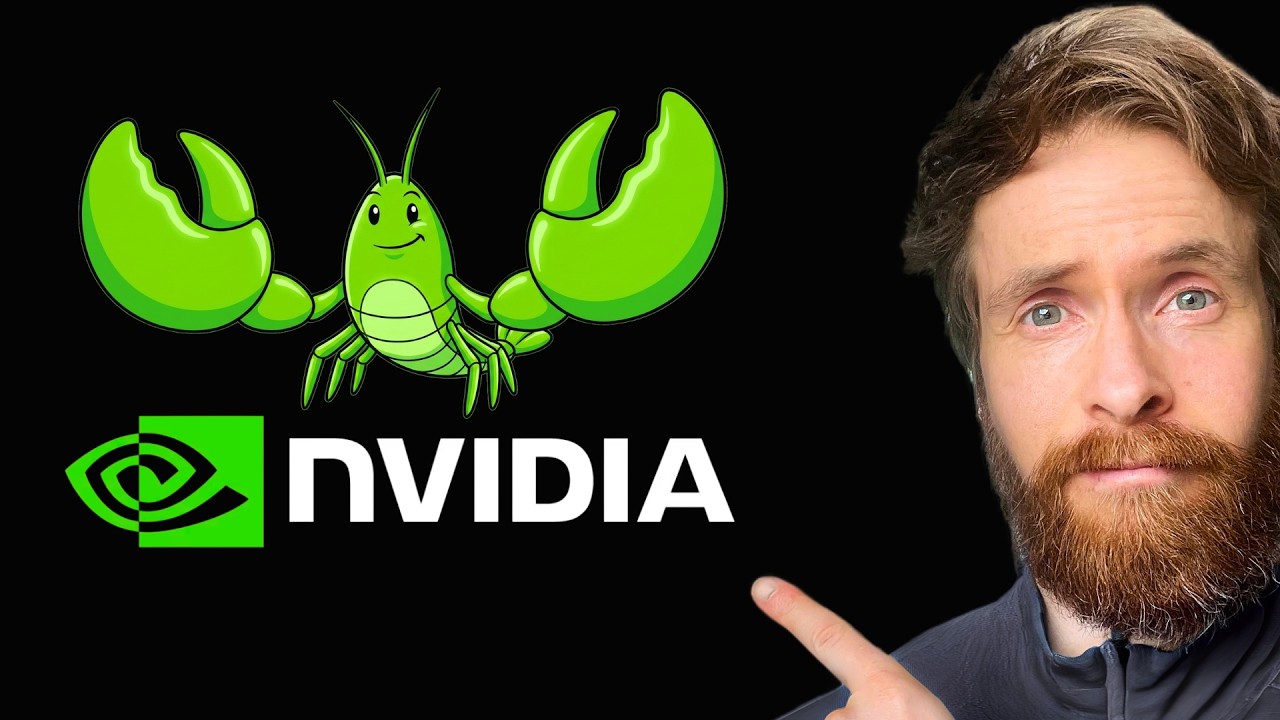
The Nvidia GTC 2026 conference showcased several exciting developments, with a significant focus on the Open Claw project and Nvidia’s own Nemo Claw. The keynote by Jensen Wong highlighted Open Claw as one of the fastest-growing projects on GitHub, emphasizing its popularity and Nvidia’s interpretation through Nemo Claw. The presenter demonstrated how easy it is to set up Nemo Claw locally, running it on a Mac with Apple M3 Pro, and showed its capabilities, including configuring inference providers and running local models like Quen 3.54B. The setup is designed to be user-friendly, encouraging exploration and experimentation with these AI agents.
Another major topic at the conference was the concept of token factories, with Nvidia positioning itself as a leader in inference hardware. A thought-provoking idea discussed was the notion of employees having token budgets, where engineers might be expected to consume a significant amount of tokens relative to their salary to justify their value. For example, Jensen Wong suggested that a $500,000 engineer should be using at least $250,000 worth of tokens annually, raising interesting questions about the economics of AI usage in the workplace and how companies might balance salary costs with token consumption.
The conference also featured an open-source panel moderated by Jason Hong, including CEOs from companies like Cursor and Perplexity. The discussion centered on the integration of open-source models with proprietary solutions, highlighting hybrid approaches that leverage the cost benefits of open source while maintaining the strengths of proprietary models. Nvidia reaffirmed its commitment to supporting open-source AI development, particularly through its Neimatron models and hardware inference capabilities, signaling ongoing investment in this ecosystem.
Hardware advancements were another key focus, with Nvidia unveiling new GPUs and data center systems aimed at enterprise customers. While these developments may be less relatable to individual users, they underscore Nvidia’s strategy to enhance inference speed and scalability. The presenter also shared a personal experience testing Nvidia’s L2 self-driving system in downtown San Francisco, noting the impressive performance and ongoing development toward more advanced autonomous driving levels, including potential future L4 systems.
In summary, Nvidia GTC 2026 emphasized the growing importance of AI agents like Nemo Claw, the evolving economics of token usage in AI workflows, and the balance between open-source and proprietary models. Nvidia continues to push the boundaries in hardware and software to support these trends, with exciting prospects for both enterprise and individual users. The presenter expressed gratitude for the invitation to the conference and encouraged viewers to explore Nemo Claw and participate in a related giveaway, reflecting a positive and forward-looking outlook on the AI landscape.