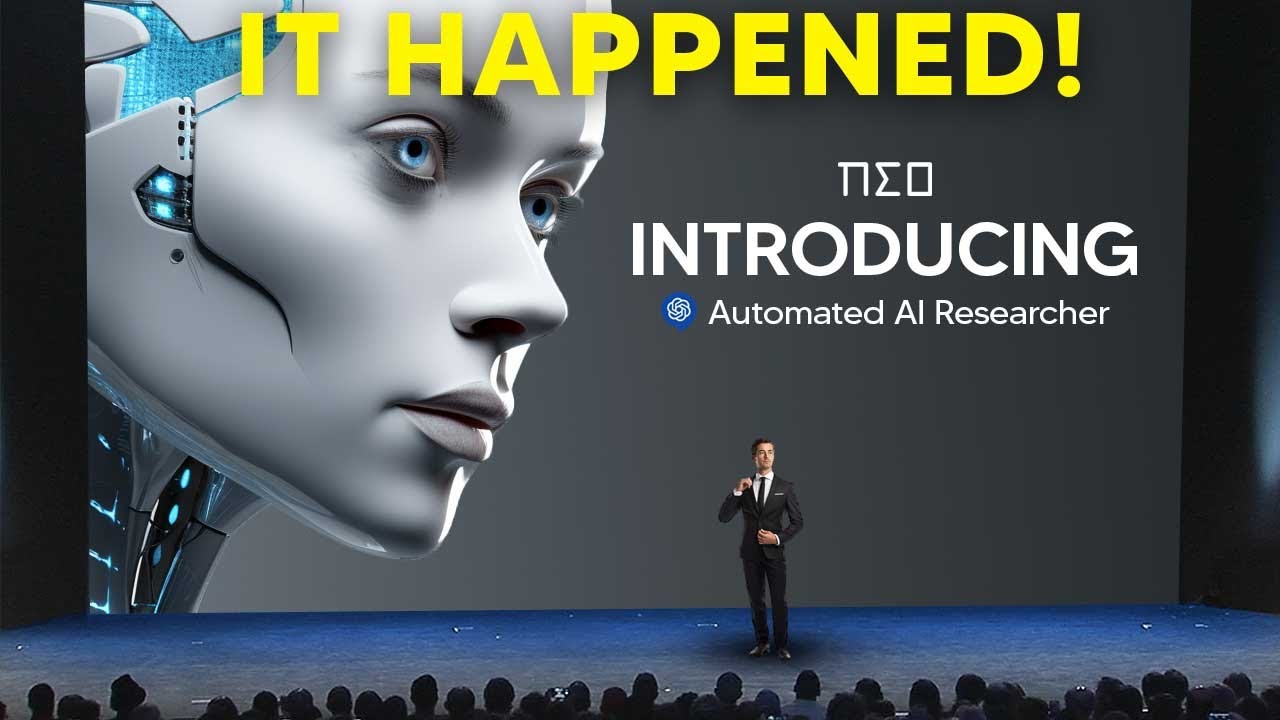
The video introduces Neo, an advanced AI engineer designed for autonomous machine learning tasks, showcasing its ability to automate complex processes such as data gathering and algorithm selection, significantly outperforming traditional methods. By demonstrating its capabilities through various projects, including fraud detection and sentiment analysis, the video highlights Neo’s potential to revolutionize AI research and democratize access to machine learning technology for smaller companies and researchers.
The video introduces Neo, an innovative AI engineer specifically designed for machine learning tasks, which has reportedly outperformed OpenAI in certain areas. The creators of Neo have spent two years developing this groundbreaking technology, which is seen as a significant step towards achieving artificial superintelligence. The automation of AI research is highlighted as a crucial advancement that could revolutionize the field, allowing for more efficient and sophisticated machine learning processes.
In the first demonstration, Neo showcases its ability to handle a machine learning task from start to finish. The video explains the complexity of traditional machine learning workflows, such as teaching a computer to recognize images of cats, which typically requires extensive data gathering, cleaning, and algorithm selection. Neo automates these processes, demonstrating its capability to crawl data, plan key steps, and implement a powerful data pipeline, all while optimizing for efficiency and performance.
The second demo focuses on Neo’s challenge to build a credit card fraud detection system, a task that usually requires a team of engineers months to complete. Neo analyzes a Kaggle dataset, evaluates different configurations, and provides detailed metrics like precision and recall to assess its effectiveness in detecting fraud. The video illustrates how Neo can autonomously navigate complex problems, making sophisticated decisions and executing plans with minimal human intervention.
In a third demonstration, Neo tackles the challenge of processing a Goodreads dataset containing book reviews, which involves converting subjective opinions into numerical data. The video highlights Neo’s ability to create a transformation pipeline and run multiple experiments to improve its understanding of reader preferences. This showcases Neo’s versatility and its potential to handle various types of data and tasks, further emphasizing its capabilities in the realm of machine learning.
The video concludes by discussing the broader implications of Neo’s technology for the tech industry. It argues that Neo’s automation of machine learning development could democratize AI, allowing smaller companies to compete with larger tech giants and enabling researchers to focus on innovation rather than technical details. The potential for accelerated AI research and development is underscored, with predictions that automated AI researchers could dramatically compress the timeline for algorithmic progress, paving the way for significant advancements in artificial intelligence.