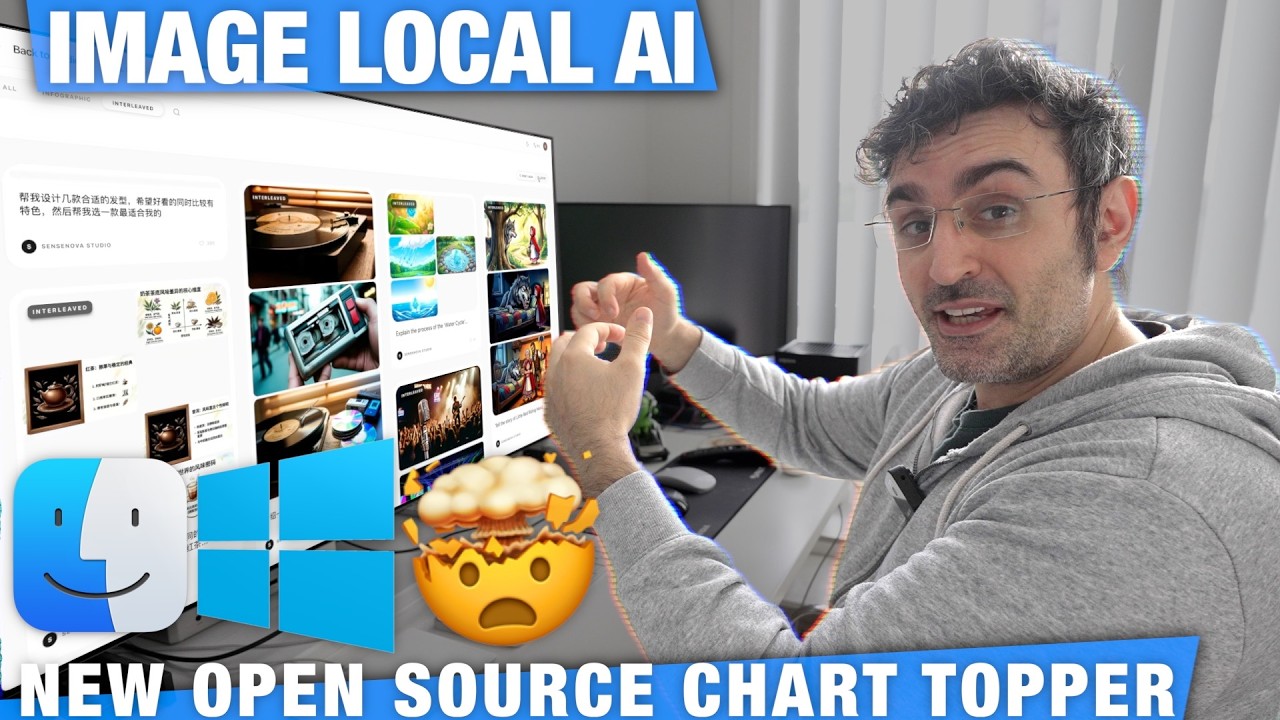
The video introduces SenseNova-U1, a leading open-source image generation AI model that recently won the Infographic Edition award. According to benchmarks, SenseNova-U1 outperforms other open-source models like GPT Image and Nano Banana, scoring 46.6. What sets this model apart is its integration of three components into one unified system: a large language model (LLM) called Queen 3, a vision coder, and an image generation coder. This allows for advanced interleaved reasoning, where the model can generate text, create images based on that text, analyze the images, and continue generating content in a seamless loop.
SenseNova-U1 specializes in creating infographics but also supports a variety of use cases including text-to-image generation, image editing, and visual understanding. The video showcases several impressive examples such as detailed infographics, research paper visuals, and even comic book storytelling. The model provides prompts used for generating these images, enabling users to replicate or customize creations. The presenter demonstrates the model’s capabilities through the SenseNova website, highlighting its fast inference and the ability to toggle interleaved reasoning for complex tasks like designing futuristic aircraft or explaining scientific processes visually.
For those interested in running SenseNova-U1 locally, the video guides viewers through the setup process using GitHub. It explains how to clone the repository, set up a Python virtual environment, and install necessary dependencies. The inference script allows users to input custom prompts, specify image dimensions, and adjust quality settings such as the number of diffusion steps. The presenter notes that the model requires significant memory—around 40GB—to run optimally, but it can still function on systems with less memory by spilling over into shared GPU memory, albeit with longer processing times.
The video also compares image outputs generated at different quality levels, showing that increasing the number of diffusion steps from 25 to 50 significantly improves image detail and layout precision. While compressed versions of the model exist to reduce memory requirements, they come at the cost of image quality. The presenter shares examples of infographic posters created on both Mac and Windows systems, demonstrating the model’s versatility and high-quality results across platforms. The overall impression is that SenseNova-U1 currently represents the best open-weight open-source image generation model available.
In conclusion, SenseNova-U1 offers a powerful, flexible, and open-source solution for advanced image generation tasks, especially infographics. Its unique combination of language and vision models enables sophisticated interleaved reasoning, making it suitable for creative and research applications alike. Users can either run the model locally with sufficient hardware or use the online platform for faster results. The video encourages viewers to explore the model’s capabilities and share their experiences, highlighting the exciting potential of open-source AI in visual content creation.