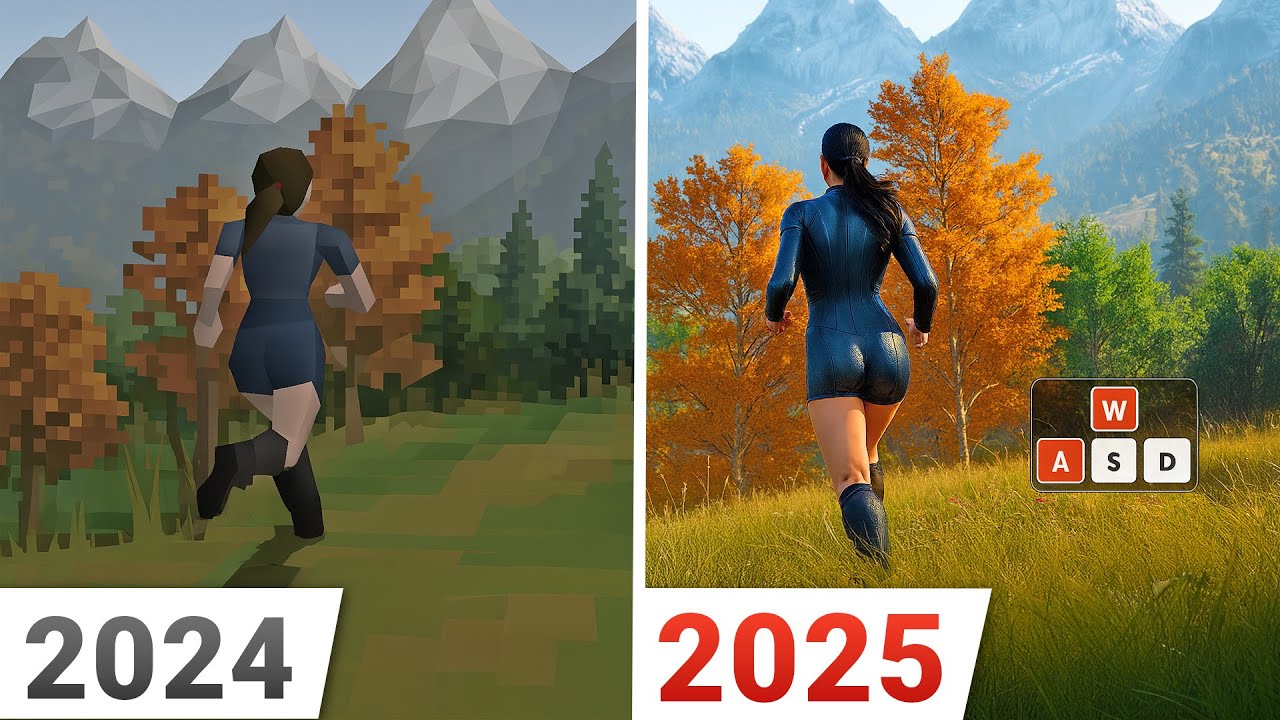
The video introduces an exciting new AI technology called Magica 2, which can transform a single image into a playable video game. This innovative tool allows users to input any image—whether a real-world photo, a painting like Van Gogh’s Starry Night, or a simple drawing—and watch it come alive as an interactive game world. While the generated games are not perfect and tend to lose fidelity over time, the results are impressive, especially considering the rapid advancements in AI-driven game generation within just one year.
The presenter compares Magica 2 to Google DeepMind’s earlier projects, Genie 2 and Genie 3. Genie 2 had very limited memory and produced low-quality, short gameplay sequences, while Genie 3 improved visual consistency and extended gameplay duration to about ten minutes with near-instant interaction latency. Magica 2, however, runs on a single consumer GPU rather than a large data center, making it more accessible. Although there is no research paper available yet for Magica 2, the presenter notes its potential as a significant step forward in AI-generated games.
Magica 2’s underlying architecture is likely similar to Genie 2’s diffusion world model, which simplifies video frames and predicts the next frame based on previous ones and user actions. This process is likened to a storyteller flipping through a flipbook, creating a continuous narrative based on player input. The presenter encourages viewers to try Magica 2 themselves, though he admits his own experience was mixed, with some controls being unresponsive or inconsistent. Nonetheless, others have reported better results, highlighting the variability typical of early-stage technology.
The video also showcases various examples generated by Magica 2, including quirky cities made of paper and pencil sketches turned into explorable worlds. Despite some limitations like imperfect character control and occasional unresponsiveness, the AI demonstrates remarkable progress in creating diverse and visually engaging game environments from static images. The presenter humorously notes moments where the AI-generated characters behave unpredictably, emphasizing the technology’s experimental nature.
In conclusion, Magica 2 represents a groundbreaking advancement in AI-driven game creation, building on the foundation laid by previous models like Genie 2 and Genie 3. While still in its early stages and far from perfect, it offers a glimpse into a future where anyone can generate interactive game worlds from simple images. The presenter urges viewers to keep their expectations realistic but remain excited about the rapid pace of innovation in this field, anticipating significant improvements in the near future.