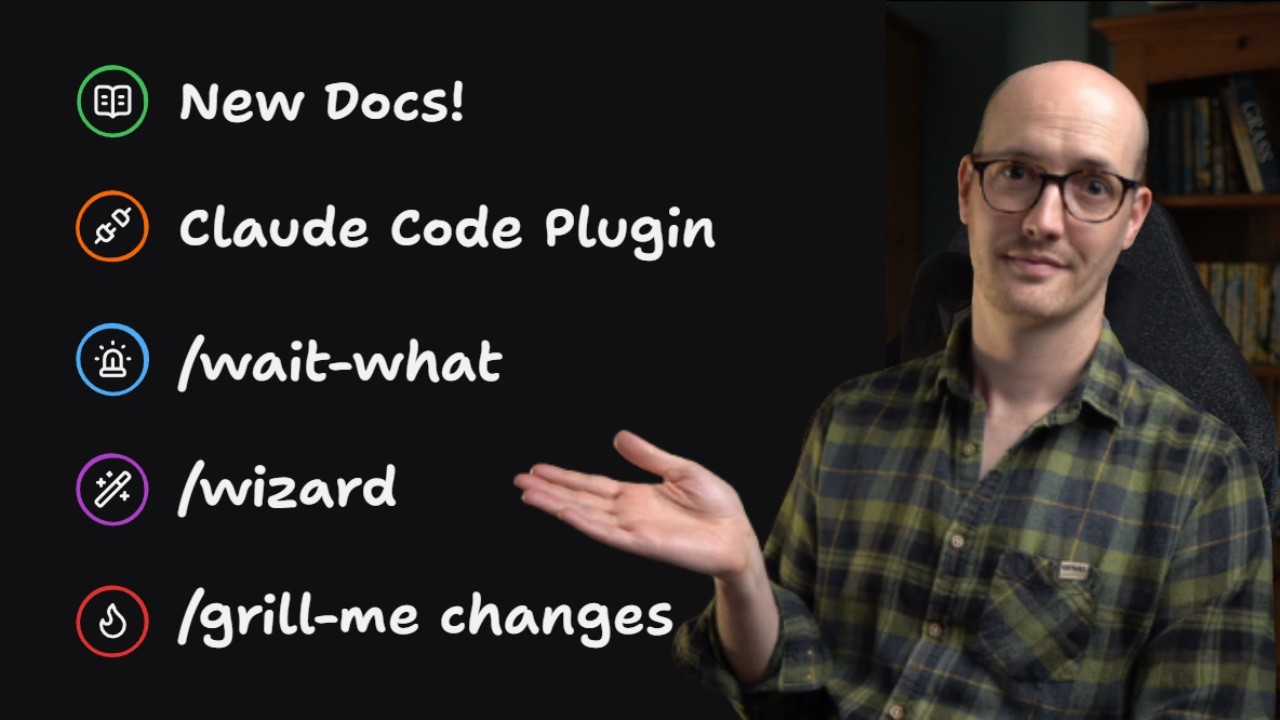
Version 1.2.0 of the skills repository introduces several significant updates and new features, enhancing the already popular engineering skills set. The repository has grown to become the 24th most starred on GitHub, prompting the creation of comprehensive documentation available at aihero.dev/skills. This documentation includes detailed skill references, common questions sourced from a personal wiki, and an AI coding dictionary to help users understand AI coding concepts deeply. The documentation site is designed for easy navigation, helping users learn both the skills and the underlying AI coding principles effectively.
A major integration update is the inclusion of the skills in the Claude Code official plugin marketplace, allowing users to install and receive automatic updates directly within Claude Code. For OpenAI Codex users, the release now includes OpenAI.YAML files for every skill, enabling seamless compatibility and supporting features like “allow implicit invocation false,” which improves how skills are invoked and hidden until needed. This enhancement ensures a smoother experience across different AI platforms and interfaces.
One of the standout new skills is “wait what?,” designed to address issues with the Opus 5 model’s verbose and confusing outputs. This skill instructs the agent to use simplified technical English and ground responses in the user’s established language context, making the agent’s replies clearer and more understandable. Another significant update is to the popular “Grill Me” skill, which now supports multiple questions per turn organized in rounds. This approach speeds up the questioning process by handling dependent questions in a logical sequence, improving the efficiency and user experience during grilling sessions.
The release also introduces the “writing for agents” skill, which helps improve the clarity and performance of agent-related documents like agents.mmd or claw.md. This skill is useful for writing and editing skills and agent configurations, making the output more concise and predictable. Additionally, a new “wizard” skill provides an interactive bash wizard to guide users through complex infrastructure provisioning tasks, such as AWS setup, making these processes more manageable and less error-prone by walking users through each step with a deterministic script.
Lastly, the “two questionnaire” skill facilitates collaboration by converting grilling session decisions into a markdown document that can be shared and reviewed with others, such as stakeholders or team members. This skill addresses the current challenge of collaborating with agents, especially for users not integrated into AI-native environments like Slack. The video also mentions an upcoming AI coding crash course designed to provide a stable, self-paced learning experience, reflecting the current maturity of AI coding tools. Overall, version 1.2.0 brings valuable improvements and new capabilities aimed at making AI skills more accessible, efficient, and collaborative.