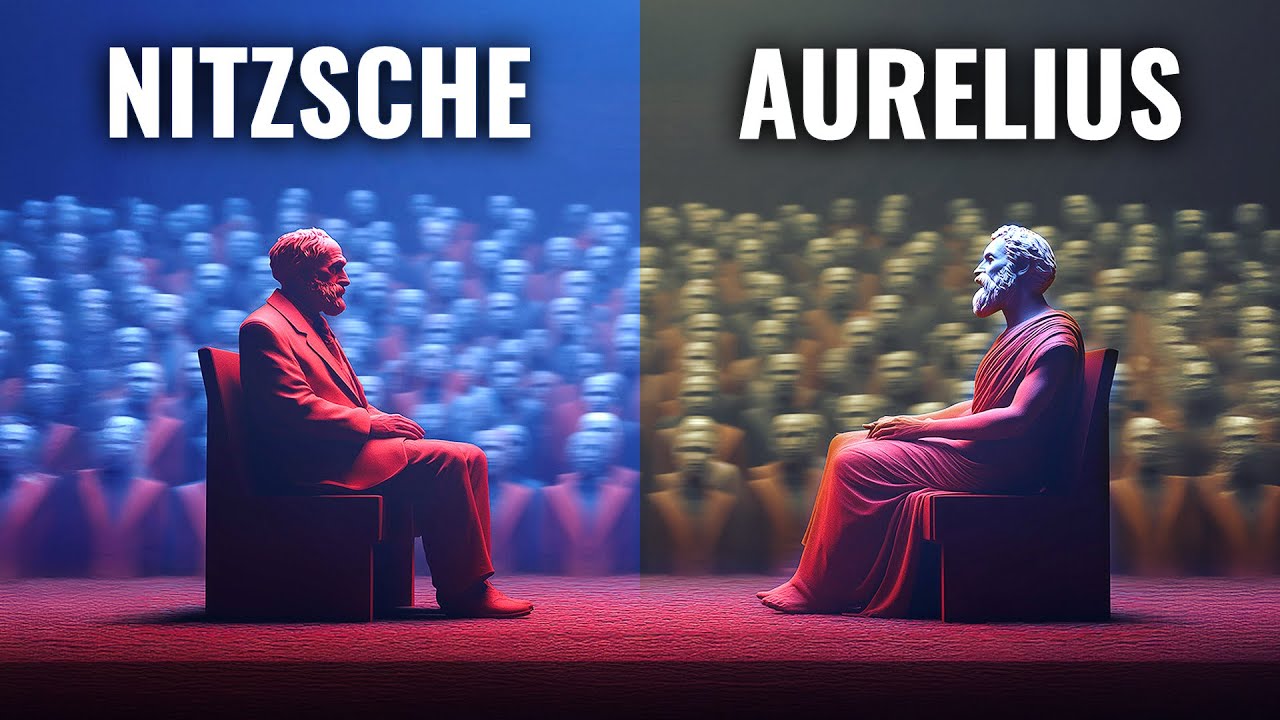
The video features a philosophical debate between AI-generated Nietzsche and Marcus Aurelius, contrasting Stoic acceptance of virtue and reason as paths to overcoming self-hatred with Nietzsche’s call to reject traditional morals and create new, life-affirming values that embrace individual strength and imperfection. While Marcus emphasizes disciplined virtue and social order for human flourishing, Nietzsche challenges these inherited ideals as suppressive, advocating for honest confrontation of power and radical self-creation.
The video presents a profound philosophical debate between two AI-generated characters embodying Friedrich Nietzsche and Marcus Aurelius, exploring the nature of self-hatred and the human response to personal disappointment. Marcus Aurelius, representing Stoic philosophy, argues that self-disgust arises from mistaking the transient physical body for the true self, which is the rational soul capable of virtue. He advocates for accepting one’s cosmic role with dignity and playing it virtuously, emphasizing reason, justice, and self-control as sources of true freedom and strength. For Marcus, virtue is not passive surrender but a powerful discipline that enables individuals to act rightly despite internal and external challenges.
Nietzsche counters this Stoic resignation by critiquing the origins and effects of traditional virtues, which he sees as born from the resentment of the weak and serving to suppress natural instincts and the will to power. He challenges the idea that inherited moral standards are inherently virtuous, suggesting instead that they often perpetuate self-hatred and life-denying values. Nietzsche calls for the creation of new values by the strong and life-affirming, urging individuals to embrace their chaotic imperfections and rebel against oppressive moral constraints. He warns that blind acceptance of old virtues risks maintaining systems of control disguised as universal laws.
Marcus acknowledges the corruption of Stoic virtues by later Christian interpretations but maintains that reasoned choice of justice and courage remains essential for societal flourishing. He warns against the dangers of unrestrained individualism, citing historical examples where the rejection of traditional limits led to tyranny and chaos. Marcus emphasizes the importance of shared standards for social trust and cooperation, arguing that these values have been tested over centuries and provide a foundation for human thriving. He sees disciplined reason as a necessary counterbalance to raw impulses, fostering peace and justice on a large scale.
Nietzsche responds by highlighting the failures of these “tested” values, pointing to historical atrocities and widespread self-loathing as evidence of their toxicity. He critiques the Stoic ideal of self-control as a form of self-denial that stifles vitality and creativity. Nietzsche advocates for honesty about power dynamics and the need to forge new, joyous values that celebrate strength and life rather than guilt and submission. He acknowledges the risks of corruption in any value system but insists that only by confronting power openly can humanity hope to transcend the limitations of inherited morality.
The debate concludes with both philosophers recognizing the complexity of addressing self-hatred and moral failure. Marcus offers practical guidance focused on controlling immediate choices and cultivating virtue through discipline, suitable for ordinary people facing daily struggles. Nietzsche challenges this approach as merely managing symptoms rather than curing the underlying disease of toxic values, urging a deeper questioning of why certain traits are deemed shameful. Ultimately, the dialogue underscores the tension between accepting inherited virtues for stability and the radical revaluation of values to foster authentic self-creation and human flourishing.