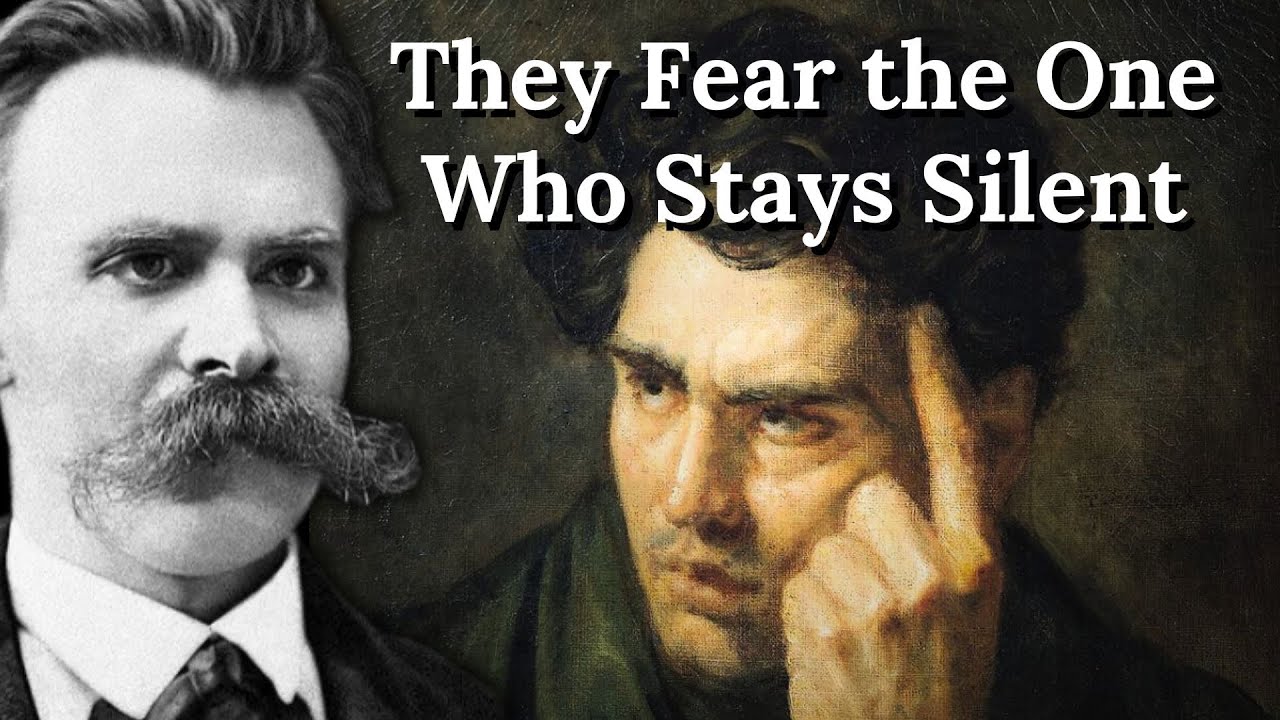
The video emphasizes that true power in discussions comes from the strategic use of silence rather than dominating conversations with loud arguments, highlighting how silence can disrupt the flow of debate and convey authority. It explores Nietzsche’s concept of the “will to power,” suggesting that real strength lies in self-mastery and knowing when to engage or withhold words, ultimately shaping reality with intention.
The video explores the concept of power in debates and discussions, emphasizing that true strength lies not in dominating conversations with loud arguments but in the strategic use of silence. It illustrates a scenario where two individuals engage in a heated debate, each trying to outsmart the other. However, when one person chooses silence instead of continuing the verbal battle, it disrupts the flow of the argument and conveys a sense of control and authority. This moment reveals a profound truth: power is not about who speaks the most but about knowing when to engage and when to withhold words.
The video delves into the psychological aspects of arguments, highlighting that many debates are less about discovering truth and more about protecting one’s ego and identity. People often argue not to learn but to validate their beliefs and maintain their self-image. This emotional reactivity can lead to chaotic exchanges where the focus shifts from understanding to winning, ultimately resulting in a loss of clarity and productive discourse. The video argues that those who recognize this dynamic can gain a significant advantage by choosing their battles wisely.
Friedrich Nietzsche’s concept of the “will to power” is discussed, emphasizing that true power is about shaping reality through self-mastery rather than overpowering others. The ideal figure, the Übermensch, embodies this principle by engaging only in battles that serve personal growth rather than ego. The video contrasts two types of individuals in a business meeting: one who speaks frequently but lacks substance and another who listens intently and speaks with purpose. The latter wields real power by influencing outcomes rather than merely participating in discussions.
Strategic silence is presented as a potent psychological weapon. The video explains that silence can create discomfort and uncertainty, forcing others to reveal their vulnerabilities. It highlights historical figures like Socrates and Steve Jobs, who effectively used silence to control conversations and influence outcomes. By withholding immediate reactions, they maintained the upper hand, demonstrating that silence can be a deliberate and powerful choice in communication.
In conclusion, the video asserts that power is not found in endless arguments or proving oneself right but in the ability to control the conversation through strategic silence. It encourages viewers to reflect on their engagement in discussions, asking whether a particular battle is worth fighting or if silence would be the more powerful response. Ultimately, it emphasizes that true power belongs to those who can master their impulses and choose their words wisely, shaping reality with intention rather than being shaped by it.